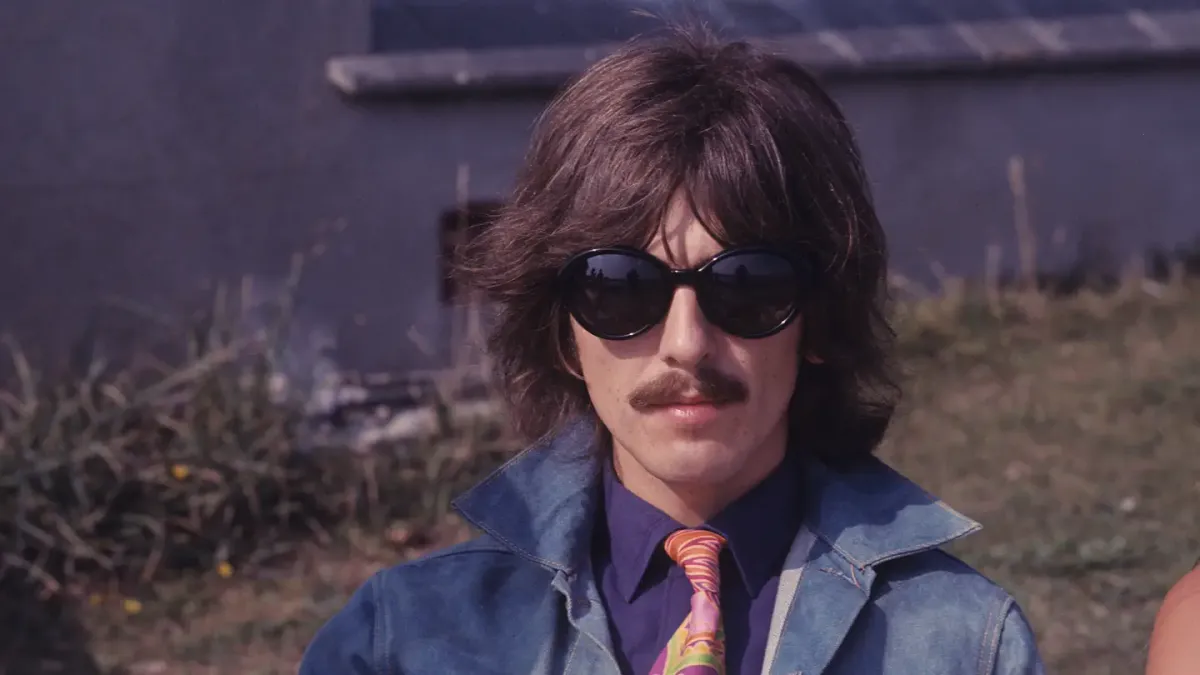
George Harrison first encountered the sitar while filming Help! This sparked his lifelong passion for Indian music. He helped introduce the instrument and its unique sound to Western audiences, notably featuring it in The Beatles' song "Norwegian Wood."
In 1966, Harrison traveled to India to study with sitarist Ravi Shankar. During this time, Harrison's interest in Indian philosophy deepened. Shankar then gave him a book that would profoundly impact his life. This book also helped popularize Vedic philosophy globally.
George Harrison and Autobiography of a Yogi
Ravi Shankar later recalled giving Harrison his first copy of Autobiography of a Yogi. Shankar said this is where Harrison's interest in Vedic culture and "Indian-ness" began. He felt Harrison was like a son to him.
We're a new kind of news feed.
Regular news is designed to drain you. We're a non-profit built to restore you. Every story we publish is scored for impact, progress, and hope.
Start Your News DetoxHarrison also remembered the moment clearly. He shared the story in a video about the author, Paramahansa Yogananda. Harrison said that while in India with Shankar, he expressed a desire to learn about Himalayan yogis. Shankar and his brother, Raju, then gave him Autobiography of a Yogi.
Harrison described it as an Indian copy with English text. He said Yogananda's eyes on the cover "zapped" him, and "that was it—it was all over!"
The book was a turning point. Harrison said reading it gave him "goose bumps." He felt completely convinced by every word, believing Yogananda's "pureness and his heart just flowed out of it." Harrison kept stacks of the book at home, giving them out constantly. He recommended it to people needing "regrooving," saying it "cuts to the heart of every religion."
Harrison's admiration for Yogananda was so strong that he included photos of Yogananda, his guru Sri Yukteswar Giri, Yogananda’s grand guru Lahiri Mahasaya, and Mahasaya’s guru Sri Mahavatara Babaji on the cover of Sgt. Pepper’s Lonely Hearts Club Band. Harrison intended these images as subtle hints about his spiritual journey, which had become more important than creating hit songs.
He told artist Peter Max he would "give up everything if I could be a monk walking from one side of India to the other." Harrison also infused Indian spirituality into his Sgt. Pepper’s song, "Within You Without You." He recorded it with Indian musicians and filled the lyrics with spiritual insights, like "When you have seen beyond yourself you may find peace of mind is waiting there."
Over the years, Harrison often spoke about Yogananda's influence. He said Yogananda was "probably been the greatest inspiration to me," even though they never met. Harrison felt Yogananda had a "terrific influence" on him for "some very subtle reason." He believed many of his feelings were a result of Yogananda's teachings.
The Story of Autobiography of a Yogi
Autobiography of a Yogi was published by Yogananda in 1946. The book covers his early life, his connection to his guru, the development of his spiritual school, and his journey to America.
Yogananda shares extraordinary stories of meeting gurus and figures who performed miracles. One saint, he writes, survived for decades without eating. Yogananda explains these feats are achieved through deep meditation and spiritual practice. These practices allow individuals to transcend their bodies and life's limits by understanding their true, divine nature.
Yogananda is often called the Father of Yoga in the West. He played a significant role in bringing Vedic philosophy worldwide. At his guru's request, he established an ashram in Los Angeles. There, he shared Vedic insights, including the science of yoga and self-realization.
Yogananda's teachings were unique because he often blended Hinduism and Christianity. He wrote that Jesus achieved Christ Consciousness, a perfect oneness with God. The book's core message is that life's purpose is to find God, and God can only be found within oneself. This, he taught, comes through deep meditation and presence, which helps one realize there is no separation between oneself and the divine.
Harrison shared this perspective. He said in 1974 that from the Hindu view, "each soul is potentially divine." The goal is to show this divinity. He noted that God has "a million names," and it doesn't matter what you call him, "as long as you call him."
Harrison Dives Deeper Into Spirituality
After The Beatles broke up, Harrison explored Indian music and spirituality even more. His song "My Sweet Lord" included mantras and repeated "Hare Krishna" alongside "Hallelujah."
Harrison explained he wanted to show that "Hallelujah" and "Hare Krishna" are "quite the same thing." His music helped popularize Indian spirituality in the West. It fueled a movement of people seeking deeper spiritual meaning, purpose, and peace.
Ravi Shankar continued to perform with Harrison and at festivals like Monterey and Woodstock. He became popular with the hippies of that era. However, Shankar was concerned about the commercialization and oversimplification of Vedic philosophy at the time.
He expressed unhappiness about the "superficiality of it all." Shankar specifically mentioned "wrong information" spread by people like Dr. Timothy Leary, who suggested everyone in India took drugs. He felt it became a "hodgepodge of Kama Sutra, Tantra, yoga, hash and LSD," and the true spiritual quality of their music was "almost completely lost."
Despite these concerns, Harrison and Shankar remained friends until Harrison's death in 2001. Harrison continued his spiritual work. At one point, he even gave a copy of Autobiography of a Yogi to President Gerald Ford when they met.
The former Beatle often spoke about his devotion to spirituality and his desire to awaken others. He once said he "always felt at home with Krishna," believing it was "something that’s been with me from my previous birth."
Harrison stated he would "rather be one of the devotees of God than one of the straight, so-called sane or normal people who just don’t understand that man is a spiritual being, that he has a soul." After his death in 2001, Harrison's family brought some of his ashes to the Self-Realization Fellowship Lake Shrine in Pacific Palisades, California, which Yogananda established.
Autobiography of a Yogi's Influence on Other Fans
Autobiography of a Yogi has inspired many spiritual seekers over the years. Elvis Presley was a fan, taking it on tour with other spiritual texts. At Steve Jobs' funeral, guests received a copy of the book. The Apple founder first read it in high school and reread it every year. His biographer, Walter Isaacson, noted Jobs credited the book with helping him access the intuition needed to create Apple.
Harrison remains one of the book's most dedicated advocates. Yogananda's open-hearted philosophy lives on in many of Harrison's spiritual songs. These songs encourage listeners to be wary of the world's allure.
In 1974, Harrison said, "Every one of us has within us a drop of that ocean and we have the same qualities as God." He believed everyone is "looking for something and we are it." He concluded, "We don’t have to look anywhere—it’s right there within ourselves."