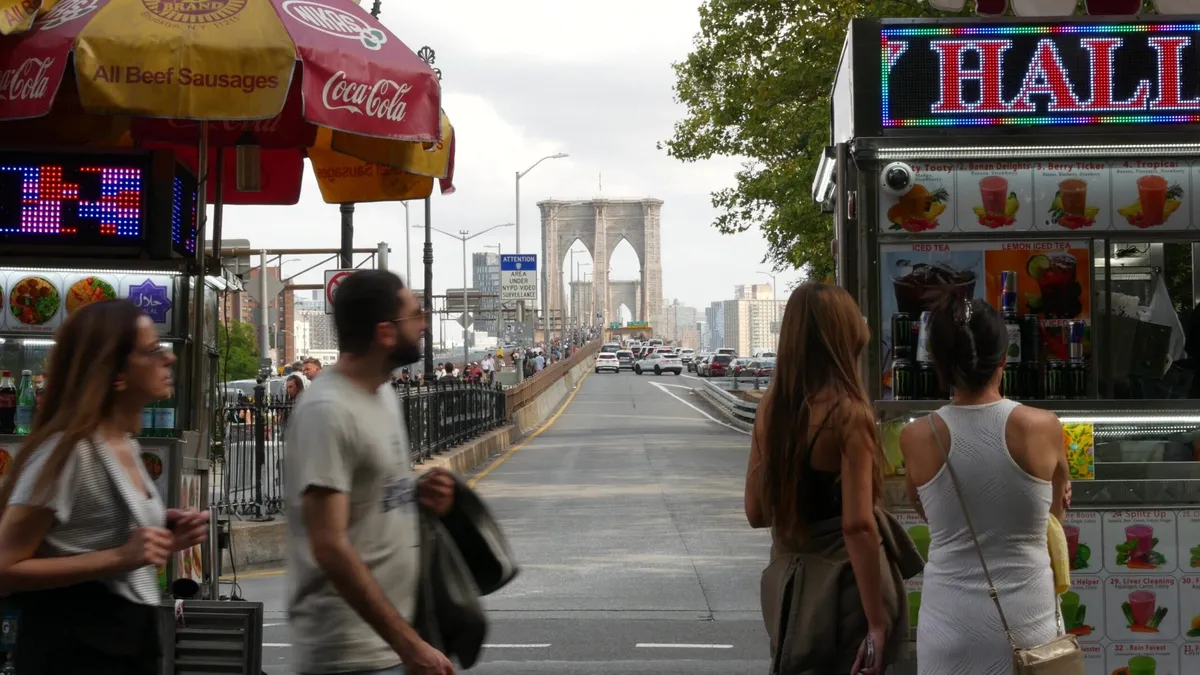
Ever wonder what New York City actually sounds like, beneath the honking and the sirens? Apparently, artist Jacek Smolicki did. He's been leading "soundwalks" through Manhattan and Brooklyn, essentially turning a stroll into an auditory deep dive.
He recently took a writer and photographer along, armed with microphones so sensitive they could probably pick up a pigeon's internal monologue. Their finds? A pond in Central Park, the sizzling of a hot dog cart, and the mysterious hiss of steam from a street vent. It's a reminder that maybe, just maybe, we should all try listening a bit more in our visually-overloaded lives.
This isn't just about finding the city's hidden symphonies. It's a preview of an upcoming series diving into how all that environmental noise impacts our health. Because, let's be honest, New York is one of the loudest cities on Earth, and our ears probably deserve a break — or at least a better understanding of what they're enduring.
We're a new kind of news feed.
Regular news is designed to drain you. We're a non-profit built to restore you. Every story we publish is scored for impact, progress, and hope.
Start Your News DetoxThe Unexpected Heroes Archiving America's Past
When most people visit a national park, they snap photos of majestic landscapes. You know, the Grand Canyon, Yosemite, maybe a particularly photogenic squirrel. But a new band of volunteers has a different target: the signs.
Yes, the signs. These aren't just any signs; they're the informational placards found in national parks and historic sites, and they're facing an existential crisis. A project dubbed "Save Our Signs" is racing against time to archive them, because the federal government might be pulling the plug on them soon.
Turns out, the current administration has been busy scrubbing historical details from websites and physical signs — everything from U.S. history and slavery to, rather conveniently, climate change. So, while most of us are busy scrolling, hundreds of amateur archivists are out there, cameras in hand, documenting these disappearing pieces of public history before they vanish into the ether. Because apparently, that's where we are now: relying on citizen archivists to save the signs.