
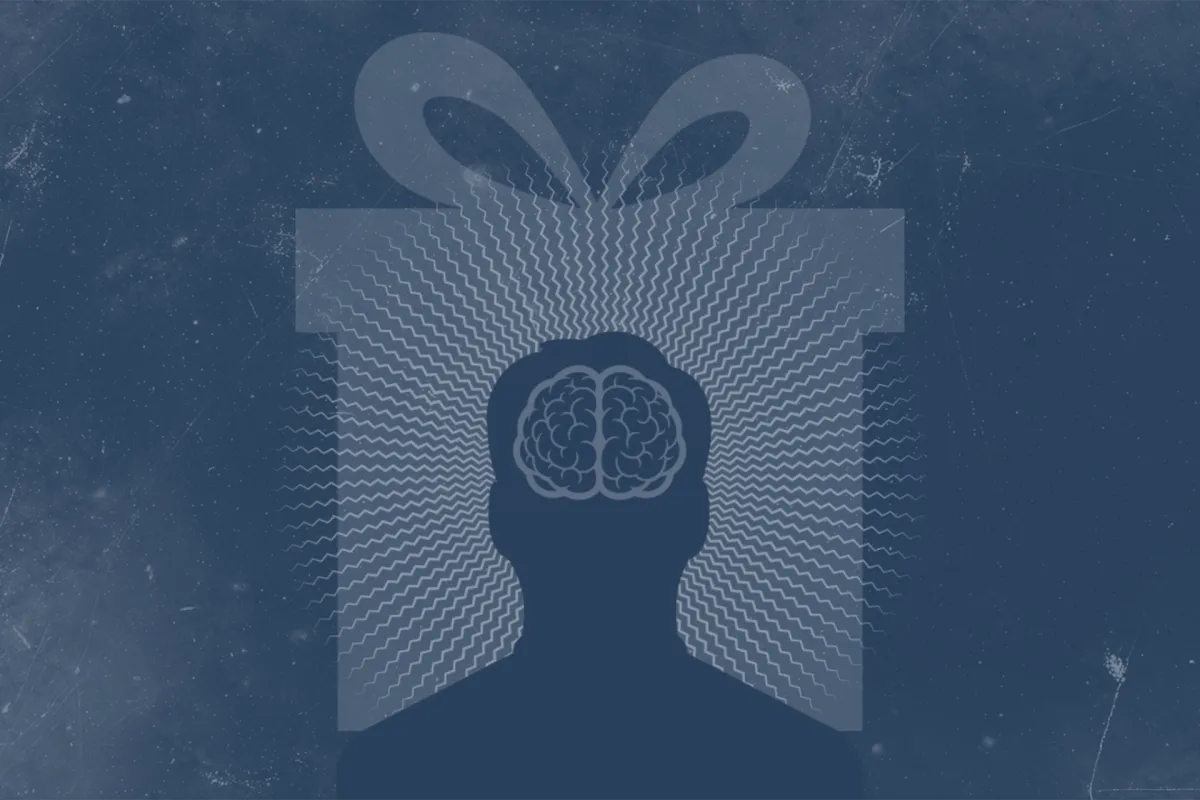
The word "gifted" carries weight. It suggests something innate, something you either have or don't — and that can feel exclusionary. Ellen Winner, a senior research associate at Harvard's Project Zero, has spent years untangling what we really mean when we call a child gifted, and whether the label even matters anymore.
Giftedness has never been a fixed thing. In hunter-gatherer societies, it meant sharp eyesight and endurance. Polynesian navigators valued spatial intelligence so highly they could cross oceans without instruments. In Jewish tradition, early mastery of sacred texts could set a child on a path to become a rabbi or scholar. What counts as "gifted" shifts with what a culture actually needs.
Then came industrialization, mass schooling, and the IQ test. In 1905, Alfred Binet designed the IQ test to help the French government spot children who needed extra support — but it became the tool for identifying giftedness instead. Suddenly, "gifted" meant school-smart: high grades, standardized test scores that soared. That narrow definition stuck.
We're a new kind of news feed.
Regular news is designed to drain you. We're a non-profit built to restore you. Every story we publish is scored for impact, progress, and hope.
Start Your News DetoxMost people recognize giftedness in music, art, athletics, dance, emotional intelligence. But when we hear "gifted child," we think test scores. And there's a real problem baked into that: schools are built for typical learners. Gifted children are atypical. They have what Winner calls a "rage to master" — an intense internal drive that leaves them restless in classrooms designed for average pace. They get bored. They act out. Or they just check out.
Schools have tried fixes: grade-skipping, pull-out programs, specialized tracks. None of them solve it cleanly. And some worry these programs feed perfectionism and fear of failure in kids who are already under pressure.
The AI wrinkle
Here's where it gets interesting. AI tutors could change the entire equation. Imagine a system that knows exactly where each child is, adjusts in real time, and lets them move at their own pace — no labels needed. A gifted kid wouldn't need to be identified and sorted into a special program. They'd just... advance. A child struggling with fractions would get the support they need without feeling singled out. Everyone gets individualized instruction.
In that world, "gifted" might become irrelevant. The concept dissolves not because giftedness doesn't exist, but because every child gets an education tailored to where they actually are. The elitism concern evaporates. The pressure eases.
But Winner raises a harder question: in an age when machines seem to do everything better than humans, what will giftedness even mean? If AI can write, calculate, and analyze faster than any person, what distinctly human capacity becomes worth recognizing and nurturing? That's the real puzzle we're facing — not whether we should identify gifted children, but what we're actually trying to develop in them when the old measures of excellence start to feel beside the point.