

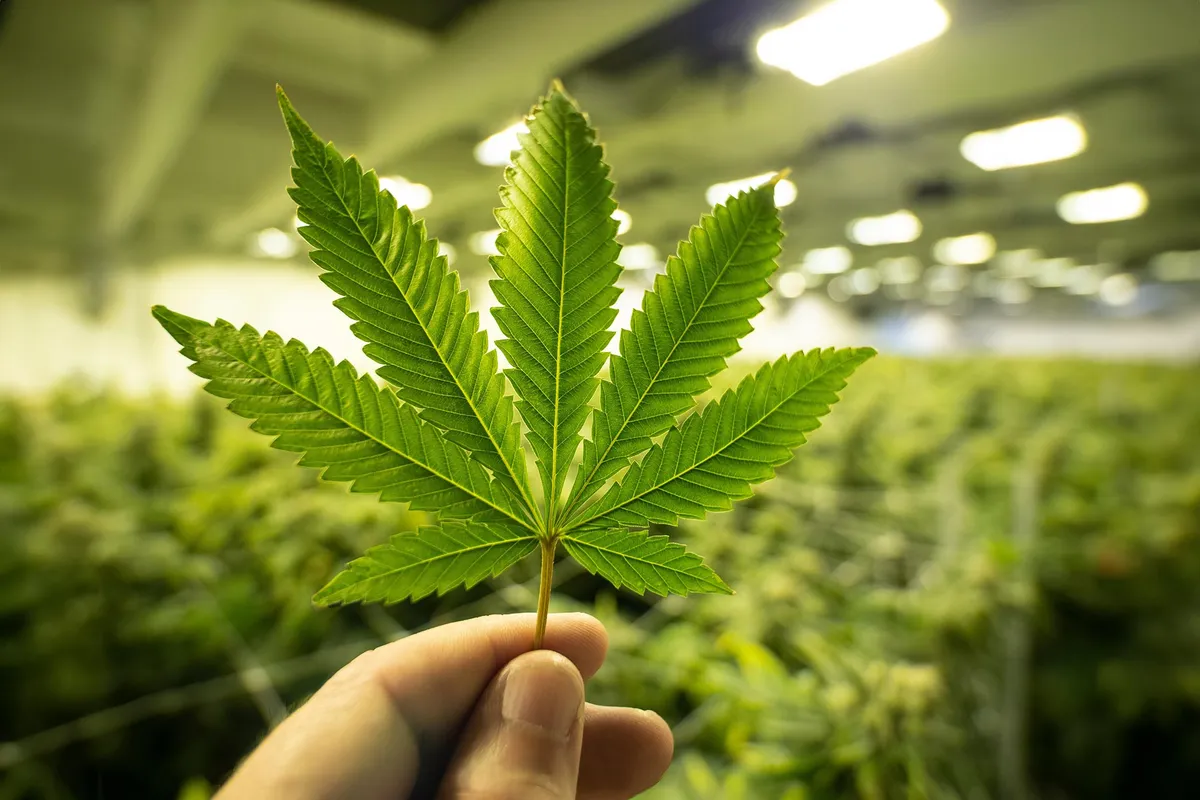
Scientists have reconstructed enzymes that existed millions of years ago — and they're better at making medicine than modern ones.
Researchers at Wageningen University & Research traced the evolutionary history of cannabinoids (THC, CBD, and others) by reverse-engineering the ancestral enzymes that produced them. The finding is straightforward but powerful: early cannabis plants had one generalist enzyme that made multiple compounds at once. Over time, gene duplications allowed these enzymes to specialize — one focused on THC, another on CBD, another on CBC. Evolution, in other words, made them narrower and more precise.
But here's where it gets interesting. The team used ancestral sequence reconstruction — comparing DNA across modern plants to estimate what ancient enzymes actually looked like — then built these extinct enzymes in the lab and tested them. What they found was unexpected: the ancient, "unfinished" versions were more robust and flexible than their modern descendants.
We're a new kind of news feed.
Regular news is designed to drain you. We're a non-profit built to restore you. Every story we publish is scored for impact, progress, and hope.
Start Your News DetoxWhy this matters for medicine
Cannabinoids are increasingly produced using biotechnology rather than grown in plants. Yeast cells and microorganisms can be engineered to manufacture them more efficiently and consistently. The problem has always been that modern cannabinoid enzymes are finicky — they require specific conditions and don't scale well in industrial fermentation.
The ancestral enzymes, by contrast, are easier to work with. They're more tolerant of different chemical environments and produce higher yields. "What once seemed evolutionarily unfinished turns out to be highly useful," says WUR researcher Robin van Velzen. "These ancestral enzymes are more robust and flexible than their descendants, which makes them very attractive starting points for new applications in biotechnology and pharmaceutical research."
One reconstructed intermediate enzyme produces CBC — a cannabinoid with anti-inflammatory and pain-relieving properties — with unusual specificity. No cannabis plant naturally produces high levels of CBC. But introducing this ancient enzyme into a modern plant could create new medicinal varieties, tailored for specific therapeutic uses rather than the broad-spectrum products available today.
The research shows how fundamental evolutionary biology can unlock practical applications. Understanding how plants developed their chemistry opens doors to redesigning it. This work was published in Plant Biotechnology Journal in 2025.





