Mariocy, a 39-year-old Venezuelan mother in rural Arauca, had nowhere to turn when her children fell sick. Finding work felt impossible. Accessing a doctor felt like crossing a war zone—because in many ways, it was. For her family and thousands like hers, a mobile clinic arriving in the village wasn't just healthcare. It was permission to breathe.
Arauca sits in northeastern Colombia, pressed against the Venezuelan border. Since 2022, fighting between armed groups has fractured the region, but the real damage shows up in statistics that feel abstract until you meet someone living them: 34 percent of the population has been officially recognized as victims of armed conflict. Schools are empty. Food is scarce. And getting medical care means crossing territory controlled by people with guns.

When armed groups control movement and healthcare disappears, something subtle happens to communities. Fear calcifies into mistrust. Newcomers—especially Venezuelan migrants—become scapegoats. Rumors spread faster than facts. The social fabric doesn't just fray; it tears along predictable lines: us versus them, safe versus dangerous, deserving versus disposable.
We're a new kind of news feed.
Regular news is designed to drain you. We're a non-profit built to restore you. Every story we publish is scored for impact, progress, and hope.
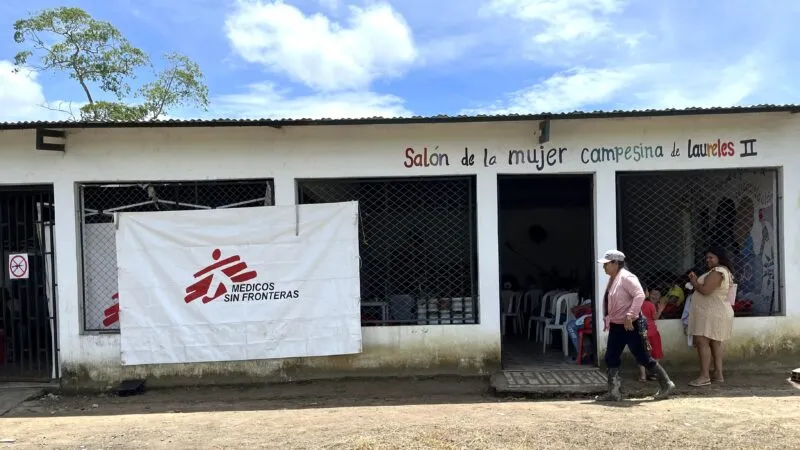
Start Your News DetoxMédecins Sans Frontières (MSF) started operating mobile clinics across Arauca in March 2025 with a quiet insight: healthcare could work differently here. Instead of asking people to risk their lives reaching distant clinics, they brought care directly to the villages—Tame, Arauquita, Puerto Rondón—where people actually live. Between March and November, the clinics logged 4,899 general medical visits, 801 reproductive health consultations, and 314 mental health sessions.
But numbers don't capture what actually shifted. In Laureles II, mothers brought children who'd never completed vaccination courses. Kids arrived with stomach illnesses traced to contaminated water—problems that had festered invisibly for months. A pregnant Venezuelan woman who'd migrated without official papers found herself in a waiting room where treatment depended on medical need, not immigration status. "The children get sick all the time," she told MSF staff. "I don't have a permit or a card but thank God I was found by a foundation and they are the ones helping me."
The Unexpected Power of Neutral Care
Here's what's often missed in conflict reporting: healthcare workers aren't peacekeepers, but they operate in a space peacekeepers can't reach. MSF's approach—showing up consistently, treating everyone, asking no questions about allegiances—creates something fragmented communities desperately need: shared ground. Host communities and Venezuelan migrants sit in the same waiting areas. They rely on the same staff. For the first time in years, fairness isn't theoretical; it's the rule of the clinic.
This matters more than it sounds. When people experience fairness together, even in small doses, something shifts psychologically. Fear doesn't disappear, but it stops being the only story. Trust begins to rebuild in the margins—not between armed groups, but between neighbors who've been taught to see each other as threats.
The work remains precarious. Violence damages clinics. Health workers flee. Supply chains break. Roads get blocked without warning, and a clinic might close at the sound of gunfire. But MSF's presence—neutral, independent, persistent—has kept care moving forward in places where almost everything else has stopped.
Arauca won't be healed by mobile clinics alone. But in a region where peace has become synonymous with the ability to reach a doctor without dying, these clinics represent something that often goes unnoticed in conflict coverage: the slow, unglamorous work of rebuilding trust one patient at a time.