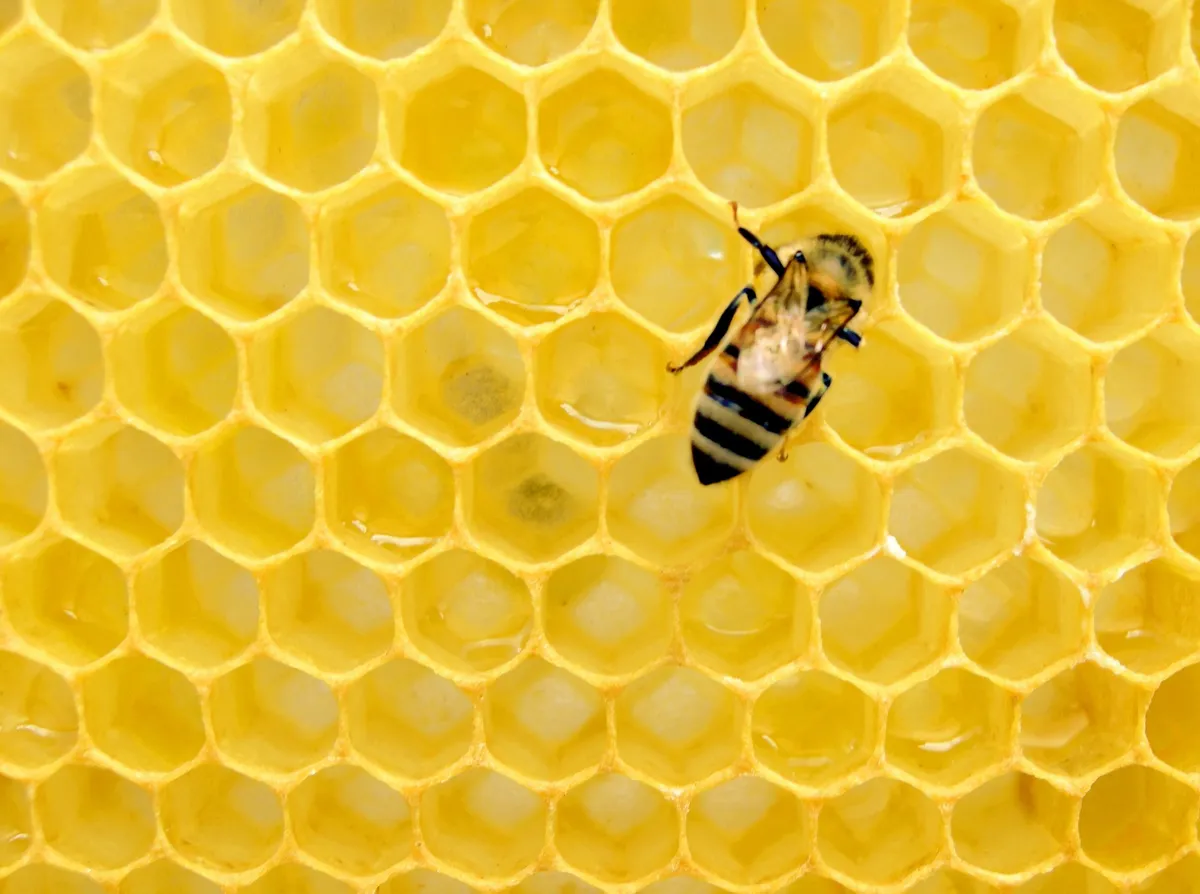
Honey bees are built to handle heat. Their colonies have sophisticated cooling systems—workers fan their wings, spread water across the hive, and cluster strategically to protect developing young. But a new study from Arizona shows that when summer temperatures push past 40°C (104°F) for weeks on end, even these finely-tuned mechanisms start to fail.
Researchers monitored nine honey bee colonies through three scorching months, tracking how well they maintained the precise 34–36°C temperatures that developing bees need to survive. The colonies managed to hit that target on average. But the daily swings told a different story.
Bees developing in the heart of the brood spent roughly 1.7 hours each day too cold and 1.6 hours too hot. At the edges of the brood—where the youngest, most vulnerable bees live—conditions were far worse: nearly 8 hours per day outside the safe range. That's not a minor fluctuation. It's stress that compounds across a season, weakening colonies when they're already stretched thin.
We're a new kind of news feed.
Regular news is designed to drain you. We're a non-profit built to restore you. Every story we publish is scored for impact, progress, and hope.
Start Your News DetoxSize matters more than we thought
The most striking finding: colony size made a dramatic difference. Large colonies maintained internal temperature swings of about 6°C at their edges. The smallest colonies? Up to 11°C. That extra stability meant bigger hives could protect their young far more effectively during heat stress.
It's a reminder that bee health isn't just about individual resilience—it's about collective capacity. A strong, populous colony has more workers to share the cooling load, more bodies to generate the right microclimate. A weak one is fighting a losing battle.
What this means as the planet warms
The timing of this research matters. Climate models project global temperatures rising 2.7°C by 2100 under moderate warming scenarios, with heat waves becoming more frequent and more intense. In many regions, humidity will climb alongside temperature, which makes things worse: it strips away the bees' primary cooling tool, evaporative cooling, leaving them with fewer options.
Beekeepers are already adapting. Providing water sources near hives, shading structures, improved hive insulation, and ensuring bees have access to quality forage—these aren't new ideas, but they're becoming essential. The research suggests that as summers intensify, these practices will shift from optional to non-negotiable.
The study doesn't paint an apocalyptic picture. Bees aren't helpless, and beekeepers have tools. But it does clarify the challenge: maintaining strong, healthy colonies is going to take more active management in a warming world. The bees can adapt. The question is whether we'll help them.