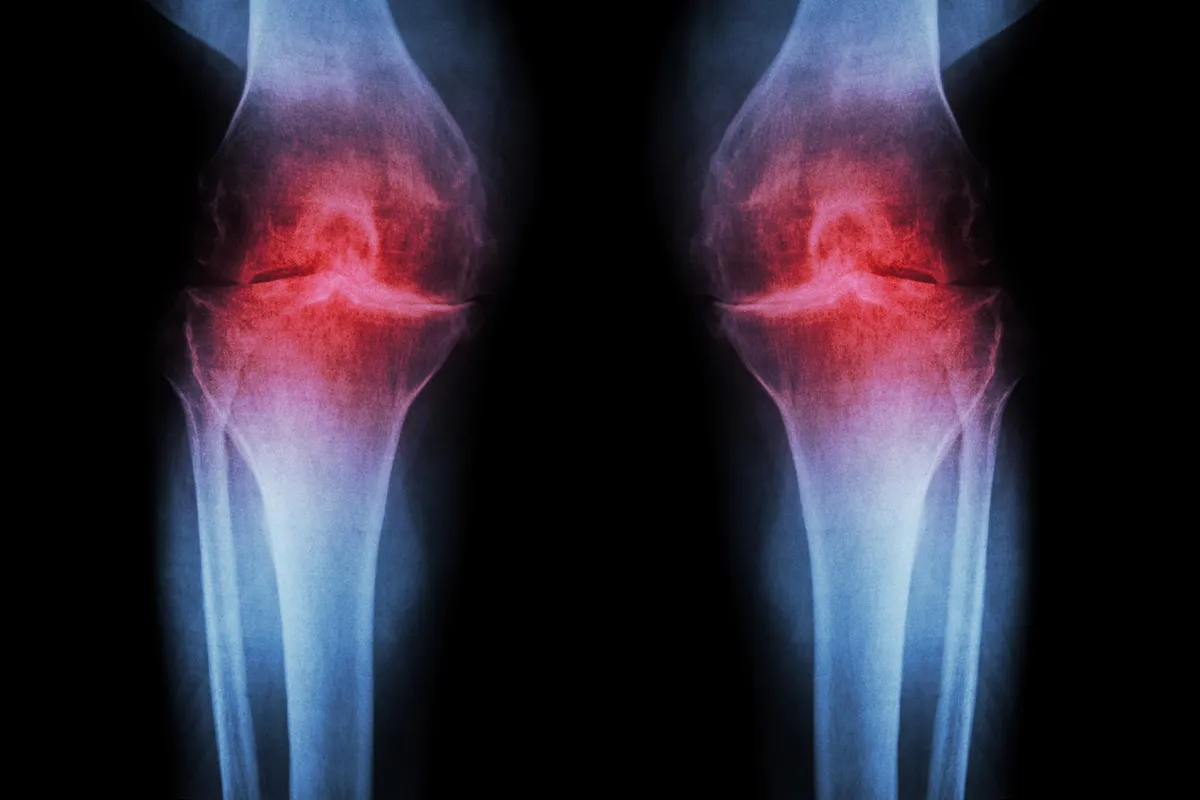
Imagine your knees, but instead of slowly grinding themselves into oblivion, they just… fixed themselves. Because apparently, that's where we are now.
Researchers at Stanford Medicine have pinpointed a protein that effectively tells your joint cartilage, "Nope, no self-repair for you." The good news? When they blocked it in older mice, their cartilage grew back. And get this: human tissue samples from knee replacement surgeries showed the same results in just one week. So, yes, that's a very big deal.

The “Gerozyme” That’s Been Quietly Sabotaging Your Knees
Meet 15-PGDH, a protein that's been doing some serious damage. It's what scientists call a "gerozyme" — basically, a protein that piles up as you age and throws a wrench into your body's regeneration efforts. This particular gerozyme has a nasty habit of breaking down prostaglandin E2, a molecule that's supposed to be helping your tissues repair themselves.
We're a new kind of news feed.
Regular news is designed to drain you. We're a non-profit built to restore you. Every story we publish is scored for impact, progress, and hope.
Start Your News DetoxAs 15-PGDH climbs, prostaglandin E2 plummets, and suddenly, your muscles, bones, nerves, and blood are all dragging their feet on the whole regeneration thing. This team first ID'd gerozymes in 2023, but this new study, published in Science, is the first to show how this molecular mischief plays out in your cartilage. Which, if you think about it, is both impressive and slightly terrifying.
Cartilage, it turns out, is a bit of an overachiever. Unlike most tissues that need a whole squad of stem cells to rebuild, cartilage just… rewinds. Its existing cells, called chondrocytes, can apparently just flip a switch and return to a more functional state. No stem cells required. Helen Blau, a senior author on the study, called this discovery "very exciting." Understatement of the year, perhaps?

In older, untreated joints, these chondrocytes are often busy causing inflammation and breaking down collagen, leading to the pain and swelling of osteoarthritis. High levels of 15-PGDH are basically the ringleader of this destructive circus.
The Mouse Whisperer and the Human Knees
The researchers gave older mice a tiny molecule designed to block 15-PGDH. They either injected it into their bellies or directly into their knees. Both methods worked. Cartilage that had thinned with age grew thicker, and it wasn't some flimsy substitute. It was hyaline cartilage — the smooth, strong stuff your joints actually need.
Before treatment, the cells breaking down cartilage made up 8% of the total. After, they dropped to 3%. Cells linked to low-quality fibrocartilage production fell from 16% to 8%. Meanwhile, the good guys — the hyaline cartilage builders — doubled from 22% to 42%. Nidhi Bhutani, a co-senior author, simply called the extent of regeneration "remarkable."

Even after ACL-like injuries, mice given the inhibitor twice a week for four weeks were significantly less likely to develop osteoarthritis. They walked better, too, which is always a plus.
And those human tissue samples from failed knee replacement surgeries? After just one week of treatment, they showed fewer degraded cells, less gene activity related to breakdown, and actual new articular cartilage growth. Bhutani believes targeting these existing cells for regeneration could have a "significant clinical impact." Let that satisfying number sink in.
The best part? A Phase 1 trial for a 15-PGDH inhibitor for muscle weakness has already confirmed the drug's safety. A cartilage trial is next. With hundreds of millions worldwide suffering from osteoarthritis and no drug currently treating cartilage loss directly, this gerozyme inhibitor might just be the dramatically regenerating game-changer we've been waiting for. Your knees, apparently, are just getting started.