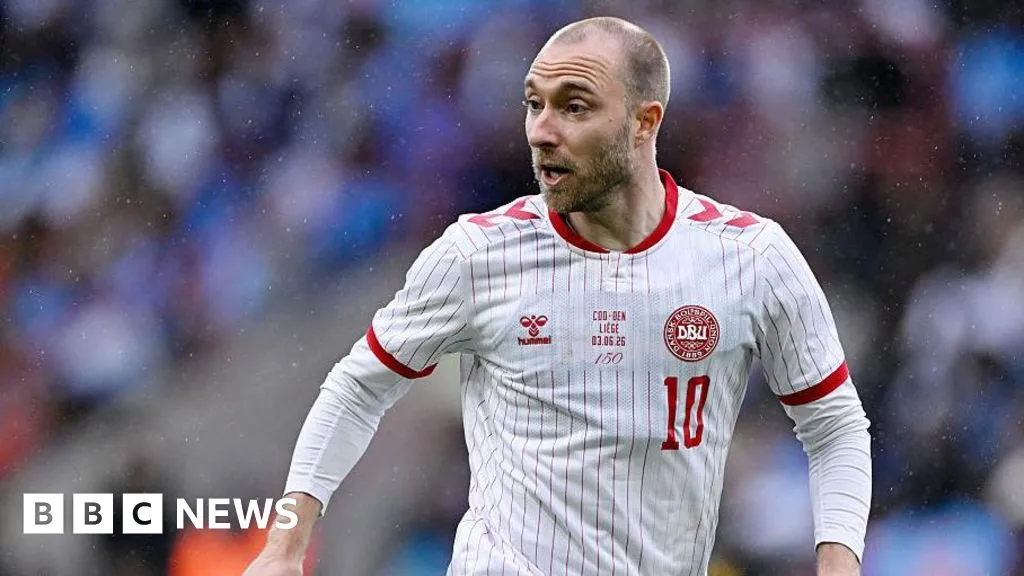
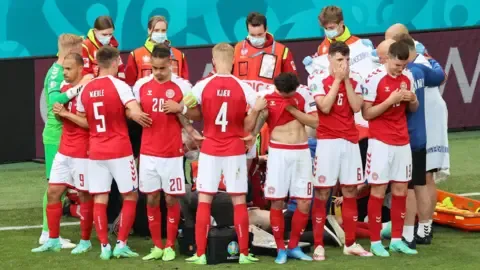
Footballer Christian Eriksen is recovering at home after collapsing during a match between Denmark and Ukraine. The 34-year-old Dane, whose heart stopped five years ago, was able to walk off the pitch thanks to a small device in his chest called an ICD.
Eriksen shared on social media that his ICD "did exactly what it was designed to do: protect me when I needed it."
How an ICD Works
An ICD, or implantable cardioverter defibrillator, is a small device that detects and corrects abnormal heart rhythms. It's a treatment, not a cure.
We're a new kind of news feed.
Regular news is designed to drain you. We're a non-profit built to restore you. Every story we publish is scored for impact, progress, and hope.
Start Your News DetoxThere are two main types of ICDs. One is placed under the skin, often near the armpit, with wires running to the chest. It acts like a mini defibrillator. The other type connects directly to the heart and can also send electrical signals if the heart beats too slowly, similar to a pacemaker.
In Eriksen's situation, the ICD likely delivered an electrical shock to restore his heart's normal rhythm after detecting a dangerously fast or irregular beat. This shock can feel like a "thump in the chest," according to Prof. Aneil Malhotra, a sports cardiologist. He compares resetting the heart to "switching a computer off and on again," noting that ICDs are "highly effective."
In 2021, Eriksen had a cardiac arrest during a European Championships match. He collapsed and lost consciousness. Teammates performed CPR, and a portable defibrillator was used to restart his heart. Experts say this immediate medical help saved his life.
This time, the defibrillator was already inside his body. It was implanted after his 2021 collapse. This internal device acted as a safety net, activating immediately when his heart had trouble, allowing for a much quicker recovery. Prof. Malhotra explained that because Eriksen had the ICD, he didn't have to wait for external help. Prof. Michael Papadakis, a cardiology expert, calls the device a "shock box" that monitors heart rhythm and delivers a shock if a life-threatening irregularity occurs.
Why Heart Problems Occur
A cardiac arrest, which differs from a heart attack, can happen for various reasons. These include issues with the electrical impulses that control heartbeats or inflammation or damage to the heart walls. In young people, the cause can be genetic or acquired, such as after an infection or an allergic reaction to medication. Sometimes, a cardiac arrest is a one-off event with no clear cause.
Heart problems in young professional athletes are rare but do happen. Eriksen's first collapse followed similar incidents involving other footballers like Fabrice Muamba and Marc-Vivien Foe. Muamba retired due to his condition, but others, like Daley Blind and Tom Lockyer, have continued to play with an ICD.
How Common Are These Conditions?
Outside of professional sports, sudden cardiac arrests kill 12 people under 35 each week in the UK, according to the charity Cardiac Risk in the Young (CRY). Dr. Steve Cox, CRY's chief executive, notes that in about 80% of cases, there are no prior symptoms.
Screening programs in the UK for healthy 14-35 year olds have found that about one in 300 could have an underlying heart condition. If left untreated, these conditions can be life-threatening. Prof. Malhotra's research suggests that one in 250 young footballers might have a heart condition needing monitoring. Black athletes tend to have a higher rate of cardiac death than white athletes, though the reason is unclear.
Dr. Cox says that while much is still unknown, significant progress has been made in preventing and managing these conditions. All players in England's 92 Premier and Football League clubs are screened when they sign their first professional contract, and again at ages 18 and 20. This screening includes an electrocardiogram (ECG) to check heart rhythm and electrical activity, and an ultrasound to examine the heart's structure.
Returning to Sport with an ICD
Having an ICD no longer means an end to playing sports. Research shows that many people with ICDs can return to their sport after medical consultation. Studies indicate that about 10% receive a shock from their device, confirming it is working as intended, says Prof. Rachel Lampert, a sports cardiologist.
Doctors now discuss the risks and benefits of having an ICD with athletes, allowing them to make informed decisions about continuing their sport. Rules vary by country; for example, Italy strictly forbids footballers with an ICD from playing professionally or as amateurs.
Eriksen's doctors will need to determine why his heart rhythm changed during the recent match and if steps can be taken to prevent future incidents. Prof. Lampert notes that "shocks can happen at any time," and having an ICD does not guarantee they won't occur even if an athlete stops playing. Eriksen himself stated in 2022 that he knew his ICD would one day save his life.
Deep Dive & References: Christian Eriksen: Denmark midfielder says he is 'doing well' after collapsing during international match - BBC Sport, 2021 Fabrice Muamba: Former Bolton midfielder retires from football - BBC Sport, 2012 Tom Lockyer: Luton Town captain collapses on pitch during Bournemouth game - BBC News, 2023