A comic book character created nearly 70 years ago is helping real families find answers about their missing relatives. When Netflix released "The Eternaut" in early 2025—an adaptation of Héctor Germán Oesterheld's 1957 Argentine comic strip—something unexpected happened. The show didn't just entertain viewers. It opened a door to one of Argentina's deepest wounds.
Oesterheld's original story follows Juan Salvo, an ordinary man navigating an incomprehensible tragedy. The parallel to Oesterheld's own life is haunting. In 1977, during Argentina's military dictatorship, the author himself disappeared along with his four daughters, two sons-in-law, and two grandchildren he never met. His daughters Diana and Marina were pregnant when they were taken. Forty-eight years later, none of them have been found.

Between 1976 and 1983, Argentina's civil-military dictatorship systematized the disappearance of thousands of people—estimates range up to 30,000, though only about 9,000 have been formally documented. Many were political activists, students, and union organizers. Some were pregnant women. Babies born in detention centers were given to military families or civilians, growing up without knowing their true origins.
We're a new kind of news feed.
Regular news is designed to drain you. We're a non-profit built to restore you. Every story we publish is scored for impact, progress, and hope.
Start Your News DetoxThe Series That Changed Everything
When "The Eternaut" aired, something shifted. Within months, inquiries to Abuelas de Plaza de Mayo (Grandmothers of the Plaza de Mayo)—the organization founded in 1977 to search for stolen children—increased sixfold. People calling with information about possible missing grandchildren tripled. The organization has recovered 140 missing children since it began, but nearly 300 remain unaccounted for, including Oesterheld's two grandchildren.
Manuel Gonçalves Granada, an Abuelas board member and himself a recovered grandson, told reporters that the surge "gives them hope and joy to see the mechanisms the Abuelas built reviving because of the series."
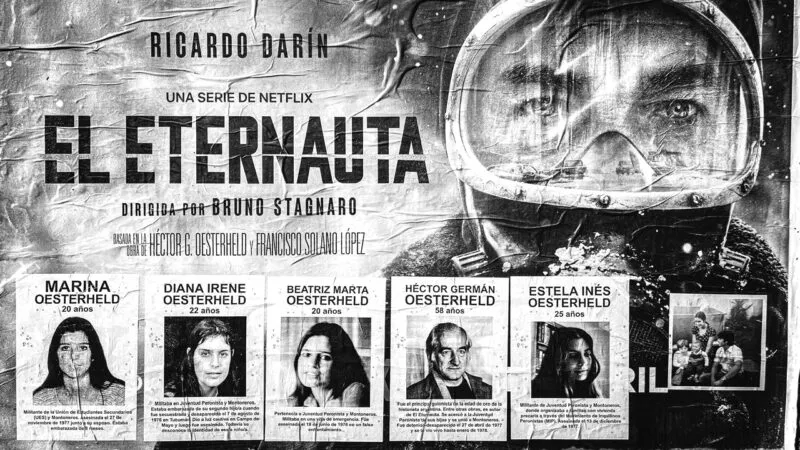
Relatives didn't wait passively. They plastered Oesterheld's photograph and those of his four daughters over publicity posters for the show. H.I.J.O.S., an organization of children born to dictatorship victims, posted a direct message on social media: if you were born between November 1976 and January 1978 and have questions about your identity, contact them. The question "Where is Oesterheld?" became a viral slogan, transforming a personal tragedy into a collective call for answers.
Oesterheld's widow, Elsa Sánchez, spent decades searching for her daughters and grandchildren before her death in 2015. She left behind a statement on the Abuelas website: "I am fighting for my grandchildren to know the truth. That is why I do not speak of restitution, but of the right to identity."
The Fight Continues
The renewed momentum matters because the work is fragile. Argentina's National Genetic Data Bank—essential for DNA testing that establishes identities—faces cuts to research funding under the current government. Abuelas and allied organizations are fighting to preserve this infrastructure, arguing that maintaining these systems is itself a form of resistance against the possibility of future state violence.
The most recent grandchild recovery was announced on July 7, 2025, the first since the series debuted. It's a reminder that these aren't historical abstractions. Somewhere in Argentina are people who don't yet know who they are, and there are grandmothers still searching.