Protecting an Ancient Faith
The people of Lubra in Nepal are working hard to keep their culture alive, especially through the Chasey Kengtse Hostel. This boarding school helps children from Lubra and other remote Bon villages.
The school started 25 years ago to stop children from leaving for education in Kathmandu. Nyima Dhundul Gurung, a Bon monk from Lubra, runs the school. He is a celibate monk, unlike Lama Tsultrim, who farms and lives with his family.
Nyima says the hostel will celebrate its 25th anniversary in September 2026. It now has 105 children. He explained that the hostel's main goal is to keep children connected to their home, language, and Bon rituals. This prevents their culture and religion from disappearing.
We're a new kind of news feed.
Regular news is designed to drain you. We're a non-profit built to restore you. Every story we publish is scored for impact, progress, and hope.
Start Your News DetoxChallenges from Changing Weather
The village monastery, Phuntshok Ling, is also very important. It was founded in the mid-19th century. Villagers perform many rituals there. Village rules say at least one male from each family must attend for religious duties. Men make tormas (dough and butter offerings), and women make chyaang (rice beer for ceremonies).
However, the monastery and other earthen buildings in Lubra are suffering from heavy rainfall. Dane Carlson, a landscape architect studying the village, noted that traditional roofs are earth packed on wood. This worked well with snow but not with heavy rain.
Carlson explained that flat roofs are leaking, causing timber to rot and rammed-earth walls to erode. Villagers are eager to fix this. Carlson and the Mustang Bon Action organization are seeking grants for restoration funds.
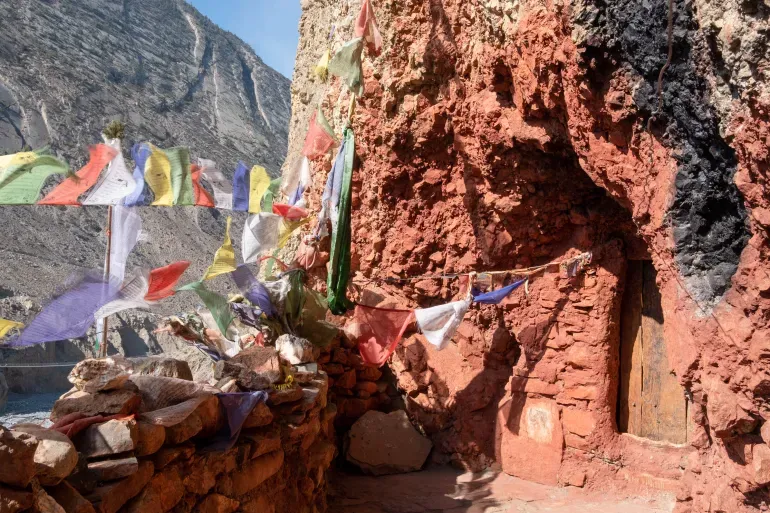 Meditation caves like this one, which are carved into the soft clay cliffs on the opposite side of the valley from Lubra, are also at risk. Image: Eileen McDougall/Al Jazeera
Connection to Nature and Spirits
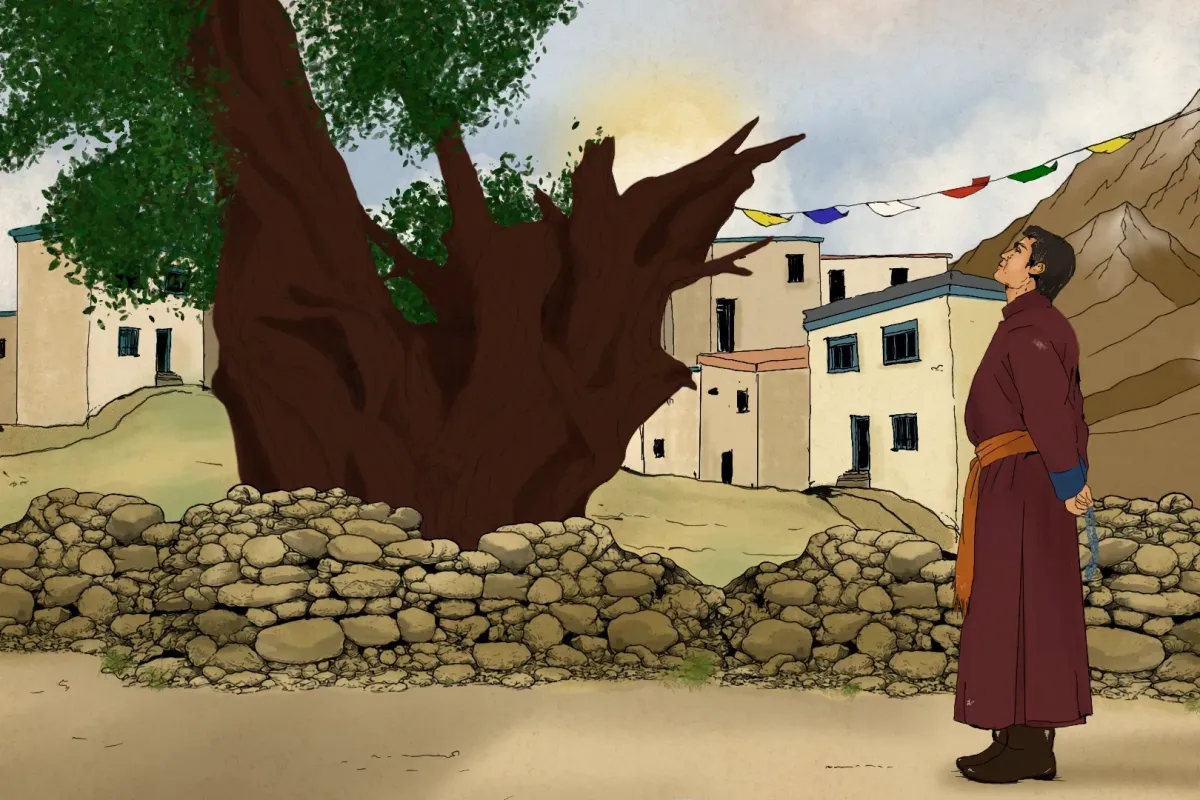
Nyima says the cultural heritage is tied to the monasteries and the landscape. Nyamlon Phu, with its meditation caves carved into soft clay cliffs, is also very important. These caves are believed to have housed the first settlers. Bon practitioners still meditate in these chambers.
Near the caves are cliffs that resemble snakes. Nyima explained that the village name, Lubra, comes from these cliffs: 'Lu' means serpent spirits, and 'brak' means cliff. The lu spirits live in water and are powerful. Villagers perform rituals for them during water shortages.
Bon practitioners also worship other deities in the landscape. Nyima noted a strong connection with nature in Bon. These gods control crop yields, livestock health, and family well-being. For example, they worship the yulsa, the village protector god, on a rocky crag.
Lama Tsultrim shared the story of the yulsa. It was once a cruel demon that terrorized the valley. A master named Trashi Gyaltsen paralyzed it with prayers and offered to feed it if it protected Lubra. Villagers still perform rituals to feed the demon today.
Lama Tsultrim also mentioned a new red chorten (a religious monument) that replaced one washed away by the river. Chortens are very important to their religion.
Despite new uncertainties, many, including Tsultrim, remain hopeful.
One thing is for sure, Bon will continue.
by Lama Tsultrim
Bon's symbol, the yungdrung, represents eternity. The people of Lubra have preserved Bon's ancient traditions for centuries. While some locals acknowledge the need to move due to climate changes, they want to stay close to their temple and ancestral home.