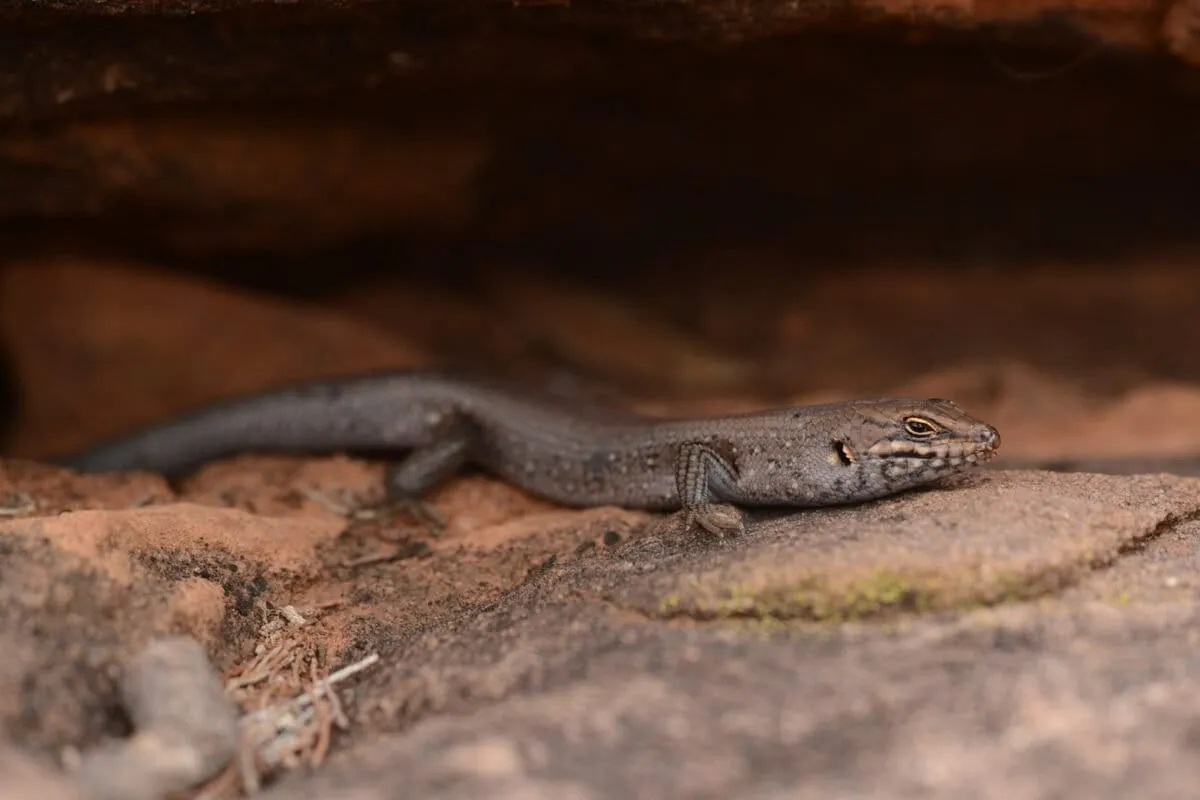
Imagine thinking you've got one species, only to discover it's actually three, and one of them is so rare it makes a unicorn look commonplace. That's pretty much what happened in Australia, where researchers, working closely with Indigenous communities, have officially identified a brand-new skink species: the Kungaka.
This isn't just any new lizard. The Kungaka skink, named Liopholis mutawintji after its home in Mutawintji National Park, New South Wales, is so critically endangered there might be fewer than 20 of them left. Twenty. That's roughly the size of a particularly quiet dinner party, all hiding out in a single rocky gorge. The local Wiimpatja Aboriginal Owners, who named it Kungaka, or "the Hidden One," clearly knew what they were talking about.
The Case of the Mistaken Identity
For years, scientists just assumed these reclusive little reptiles were an isolated population of White's skinks, a much more common species. But Thomas Parkin, lead author of the study, and his team from the Australian Museum Research Institute (AMRI) had a hunch. Why? Because Mutawintji is a casual 500 kilometers (that's about 300 miles) from the nearest known White's skink population. That's quite the commute for a skink.
We're a new kind of news feed.
Regular news is designed to drain you. We're a non-profit built to restore you. Every story we publish is scored for impact, progress, and hope.
Start Your News DetoxSo, they did what any good detective would: they pulled out the DNA. Comparing samples and physical features from various White's skink groups across Australia, the team uncovered a delightful surprise. What they thought was one species was actually three distinct ones. Cue the collective scientific gasp.
Turns out, the original White's skink was really a trio: the southern White's skink (L. whitii), the northern White's skink (L. compressicauda), and our newly recognized, incredibly rare friend, the Kungaka. It's a testament to the power of looking a little closer — and listening to the people who've known the land for millennia. Now, the race is on to keep this hidden gem from disappearing entirely.