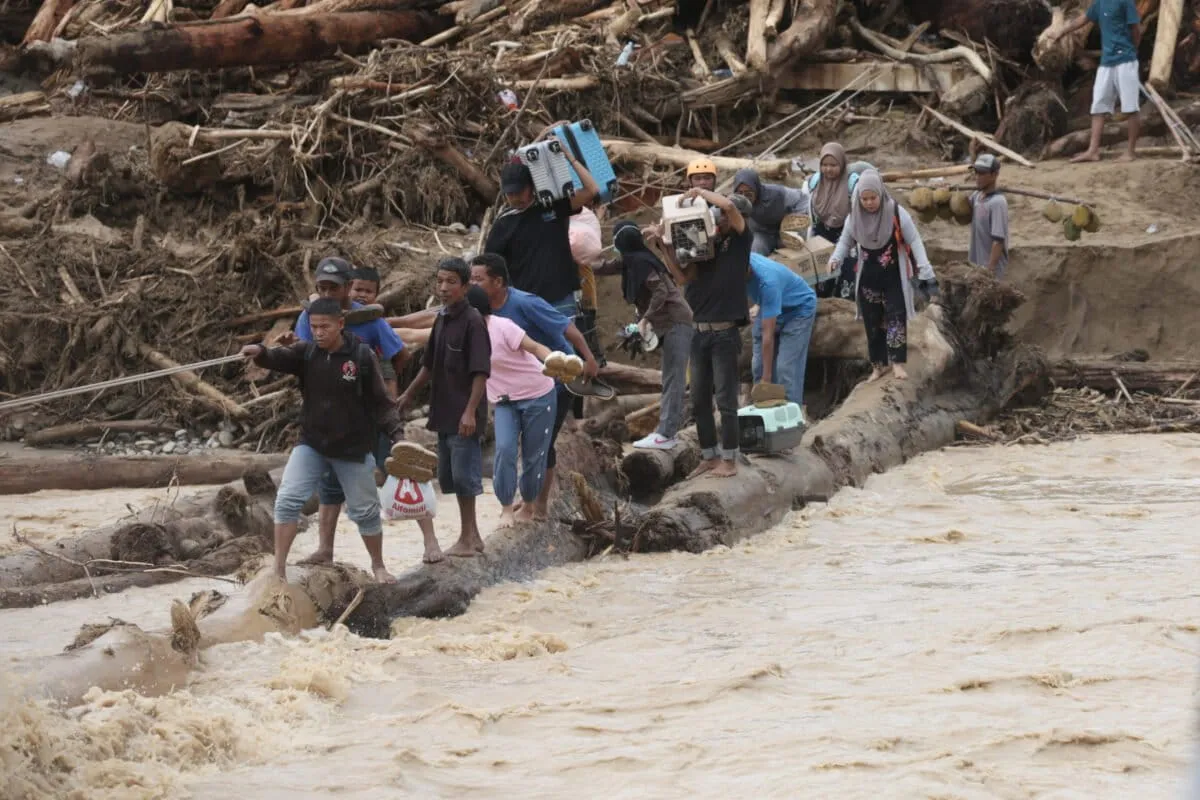
Indonesia's environment ministry is taking legal action against six companies, seeking 4.8 trillion rupiah ($284 million) in damages following the catastrophic floods and landslides triggered by Cyclone Senyar in November 2025. The disaster killed more than 1,100 people across Sumatra, and investigators believe deforestation played a role in amplifying the destruction.
The companies are accused of clearing 2,516 hectares of rainforest in North Sumatra province, specifically around the Batang Toru and Garoga watersheds. These steep, forested hillsides naturally absorb and slow water runoff — when that forest cover disappears, the same rainfall becomes a torrent. The ministry's investigation identified environmental damage in these exact areas, and experts believe the loss of forest acted as an accelerant for the flooding and landslides that followed.
What makes this case particularly significant is the scale of the government's initial investigation. The environment ministry examined 70 companies operating in the region after the disaster. Six emerged as having caused the most substantial watershed damage. Dodi Kurniawan, the director of environmental dispute resolution at the ministry, explained: "Based on expert studies, alleged environmental damage was found around the Garoga watershed and the Batang Toru watershed."
We're a new kind of news feed.
Regular news is designed to drain you. We're a non-profit built to restore you. Every story we publish is scored for impact, progress, and hope.
Start Your News DetoxThe Batang Toru watershed is home to the Tapanuli orangutan, one of Earth's rarest great apes, with only around 800 individuals remaining in the wild. Deforestation in this region threatens both the species and the ecosystem services — like water regulation — that protect the communities living downstream.
This lawsuit marks a shift toward holding corporations accountable for their role in environmental degradation at a moment when extreme weather is intensifying. As climate change drives more frequent cyclones and heavy rainfall events, the condition of forests and watersheds determines whether those storms become regional setbacks or regional catastrophes. Indonesia's legal action suggests a growing recognition that corporate accountability and climate resilience are inseparable.