Viktor Orban, Hungary's former prime minister, had a difficult relationship with the European Union for years. This often involved threats, fines, and vetoes. However, things are now expected to change.
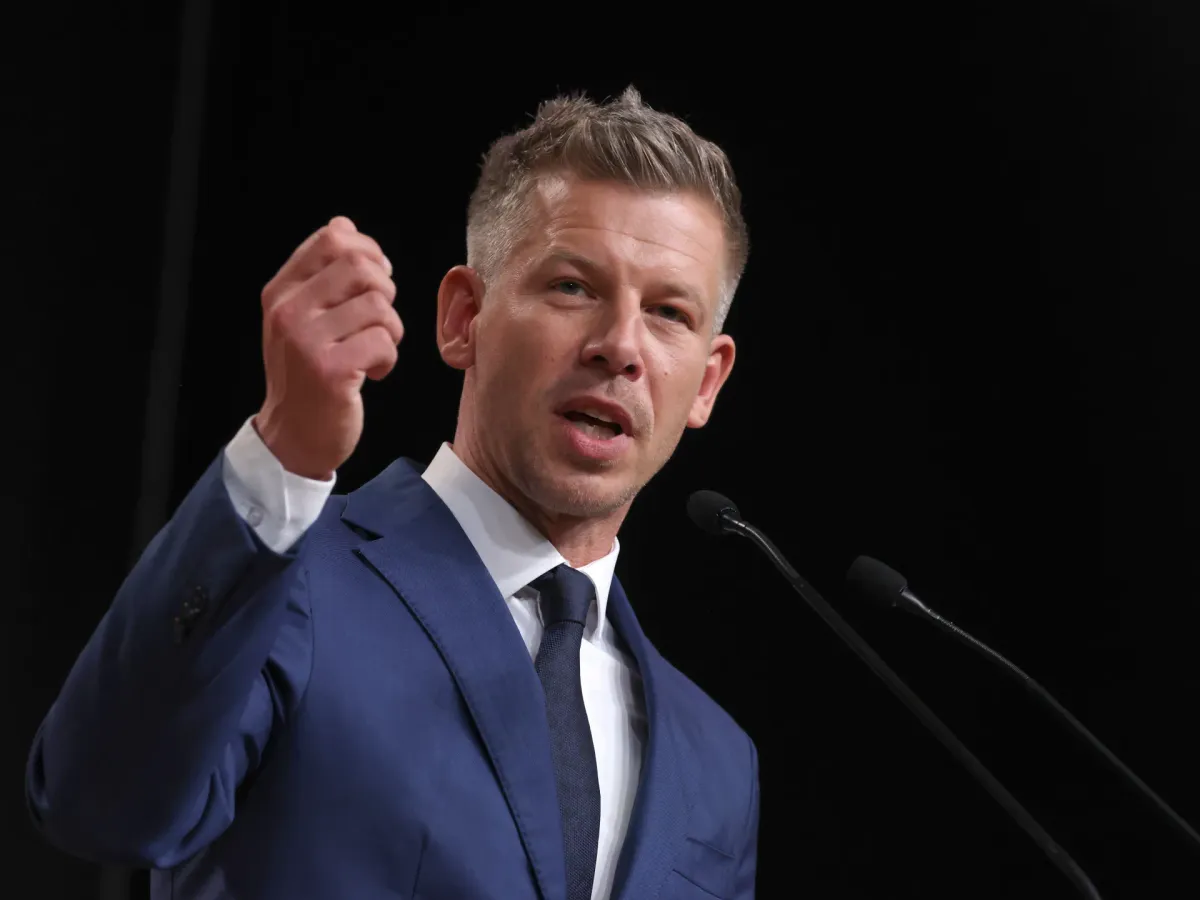
On Sunday, Peter Magyar of the Tisza party won the parliamentary elections by a large margin. This win gives him the power to access EU funds and help Hungary's economy recover.
Orban led Hungary for over 16 years. He often clashed with the EU, supporting Russia and blocking sanctions, and opposing funds for Ukraine. This approach led to sanctions, no access to European funds, and diplomatic isolation for Hungary.
We're a new kind of news feed.
Regular news is designed to drain you. We're a non-profit built to restore you. Every story we publish is scored for impact, progress, and hope.
Start Your News DetoxExperts believe European countries will now have a partner they can negotiate with.
Orsolya Raczova, an analyst at Eurasia Group, said Magyar wants Hungary to be an active member of the EU, not an isolated country. He wants Hungary to be involved in important decisions in Brussels.
Voters were mainly concerned about the economy and the cost of living. Raczova noted that Magyar focused on these issues in his campaign, promising to boost the economy. Unlocking EU funds is a top priority for him.
Hungary has seen almost no economic growth for three years. In 2023, it had the highest inflation in the EU, and it has been among the highest in recent years.
Ukraine and Russia
The EU gave Hungary over 16 billion euros ($18.7 billion) after the COVID-19 pandemic. However, Hungary has not yet met the requirements to receive this money.
To get these funds, the new prime minister must approve laws by an August deadline. These laws need to address EU concerns about judicial independence, the rule of law, and corruption.
The need for this money might push Magyar to work more closely with the EU on Ukraine. Magyar is a conservative and a former ally of Orban. He broke with Orban in 2024. He opposes Ukraine's fast entry into the EU and has said he will continue to oppose military aid for Ukraine.
However, he will likely be less confrontational than Orban on this issue. He is expected to remove a veto against a 90-billion-euro ($105 billion) loan to Ukraine. Orban had placed this veto in February, claiming Kyiv was delaying repairs on a pipeline that brings Russian fuel to Hungary and Slovakia.
Pawel Zerka, a senior policy fellow at the European Council on Foreign Relations (ECFR), said there will be a trade-off: money for Ukraine in exchange for money for Hungary.
Magyar has promised to bring Budapest closer to Western countries regarding Russia. But he also insists that Russian imports should remain an option. He explained that ending dependence does not mean stopping purchases.
Hungary relies heavily on Russian fuel and has few alternatives, especially with a global shortage of fuel and gas due to the war in Iran. Zerka said Magyar will likely continue buying Russian fuel to ensure Hungary's energy security while politically distancing himself from Moscow. This approach would align with what most of his voters want.
Still, Zerka noted that Orban's departure, as "the blocker in chief of EU policies," will not mean complete agreement within Europe on Ukraine and Russia. Other EU members who had doubts about Ukraine's entry or continued sanctions against Russia often hid behind Orban's strong opposition. Now, they will have to show their own positions.
Migrants
On migration, the Tisza party is expected to soften Orban's harsh language about refugee rights. They may be willing to compromise on some issues to remove a 200-million-euro ($234 million) fine. Hungary is paying this fine for not upholding the rights of asylum seekers, which violates EU law.
However, Tisza has indicated it will maintain a strict stance on border protection. This includes keeping a controversial border fence and opposing relocation quotas.
Gabor Scheiring, a former member of Hungary's National Assembly and an assistant professor at Georgetown University Qatar, said there will be no more high-profile anti-immigration campaigns or "civilization rhetoric" like Orban's. But Magyar is also unlikely to remove the border fence that Orban built.
Scheiring explained that Magyar was supported by many different voters and politicians. So, even though he is more right-wing, he will need to consider various needs. He will likely tone down on symbolic issues like culture and migration but is unlikely to adopt major liberal policies.
Zerka added that many people voted against Orban, not necessarily for Magyar. Therefore, this result should not be seen as a full vote of confidence in Magyar or a vote for a more liberal candidate.