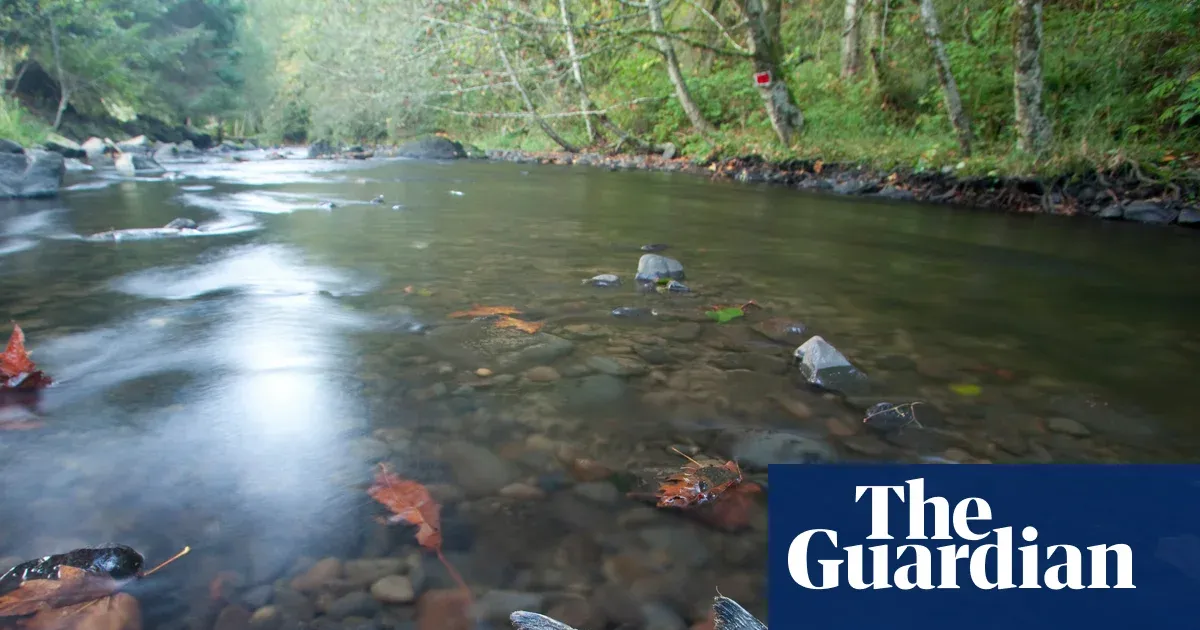
A San Francisco courtroom became the unlikely epicenter of a decades-old mystery last week. For years, coho salmon in the Pacific Northwest were dying in strange ways—swimming in circles, mouths gaping, as if drowning in air—whenever heavy rain hit. Scientists called it "urban runoff mortality syndrome" and had no idea why.
Then in 2020, researchers from Washington State University cracked it. They found a toxic chemical leaching from car tyres into rivers and streams. The culprit: 6PPD-quinone, or 6PPD-q, created when 6PPD—a standard additive that prevents tyres from cracking—oxidizes in the environment.
The discovery sparked a lawsuit. Fishing communities and conservationists, represented by environmental group Earthjustice, filed suit against US tyre manufacturers, arguing they're violating the Endangered Species Act by poisoning 24 protected fish populations across the west coast. Glen Spain, legal counsel for the Pacific Coast Federation of Fishermen's Associations, framed the stakes simply: "The use of 6PPD in tyres has been shown to harm vulnerable salmon populations. Whether or not this should continue will be up to the court."
We're a new kind of news feed.
Regular news is designed to drain you. We're a non-profit built to restore you. Every story we publish is scored for impact, progress, and hope.
Start Your News DetoxThe Evidence
Edward Kolodziej, the Washington State scientist who co-authored the original study, testified that tyres are the primary source of 6PPD-q in waterways. His numbers were stark: four tyres contain enough of the chemical to kill more than 11 million salmon once it oxidizes and reaches streams. During the trial, he showed the court video of a salmon flailing in distress, then explained how his team had identified the chemical signature in the water where the fish died.
Yet the case isn't straightforward. The tyre industry's defence witnesses argued the laboratory findings don't translate to real-world conditions. Tiffany Thomas, a scientist testifying for the defence, said 6PPD-q degrades quickly and reacts with other chemicals before reaching waterways. "The data available on 6PPD-q is inadequate to reliably predict the presence, phase, and concentration," she told the court.
Tyre manufacturers countered that 6PPD is essential for safety—preventing cracking and degradation that could cause blowouts. A spokesperson said the industry is "actively participating in regulatory processes to identify a viable alternative" but stressed that any replacement must meet established safety standards.
What happens in this courtroom matters beyond California. If the judge rules that tyre companies are harming protected species, it could reshape how the industry operates globally. The fishing communities bringing the case depend on salmon populations for their livelihoods, and they're betting that science, law, and economics can finally align to protect them.