

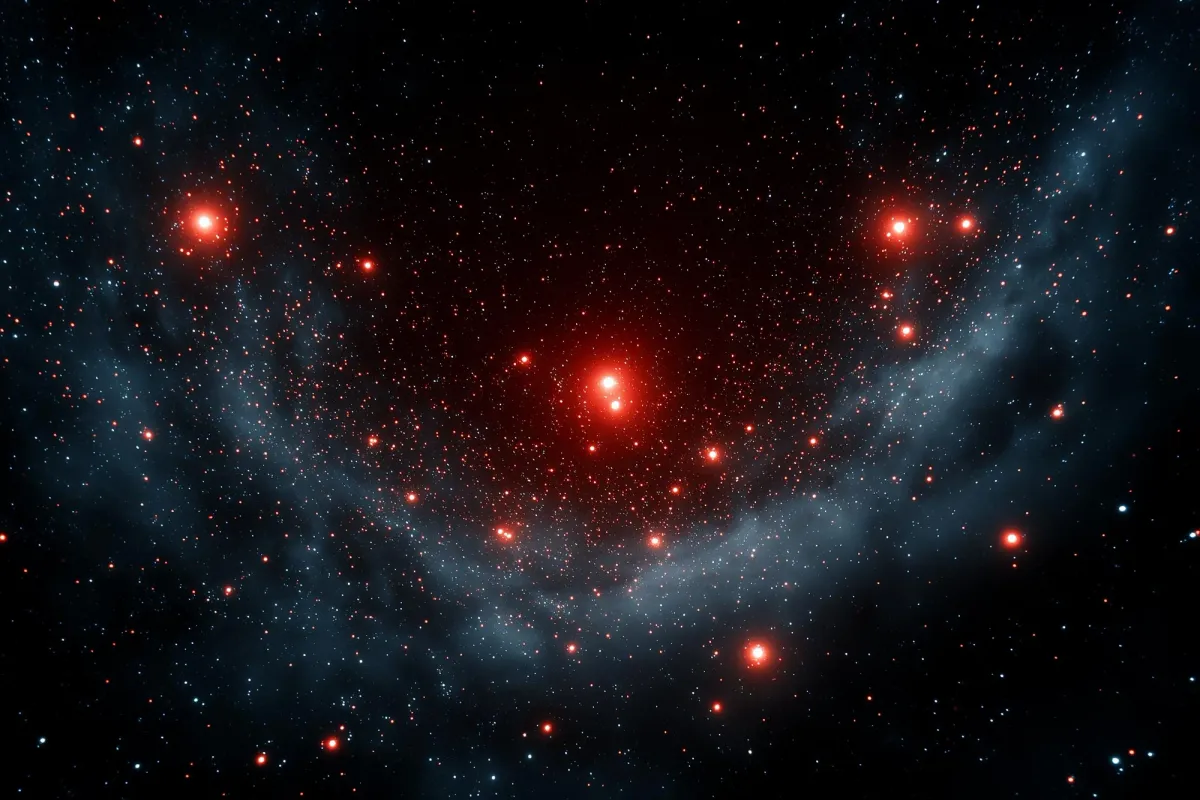
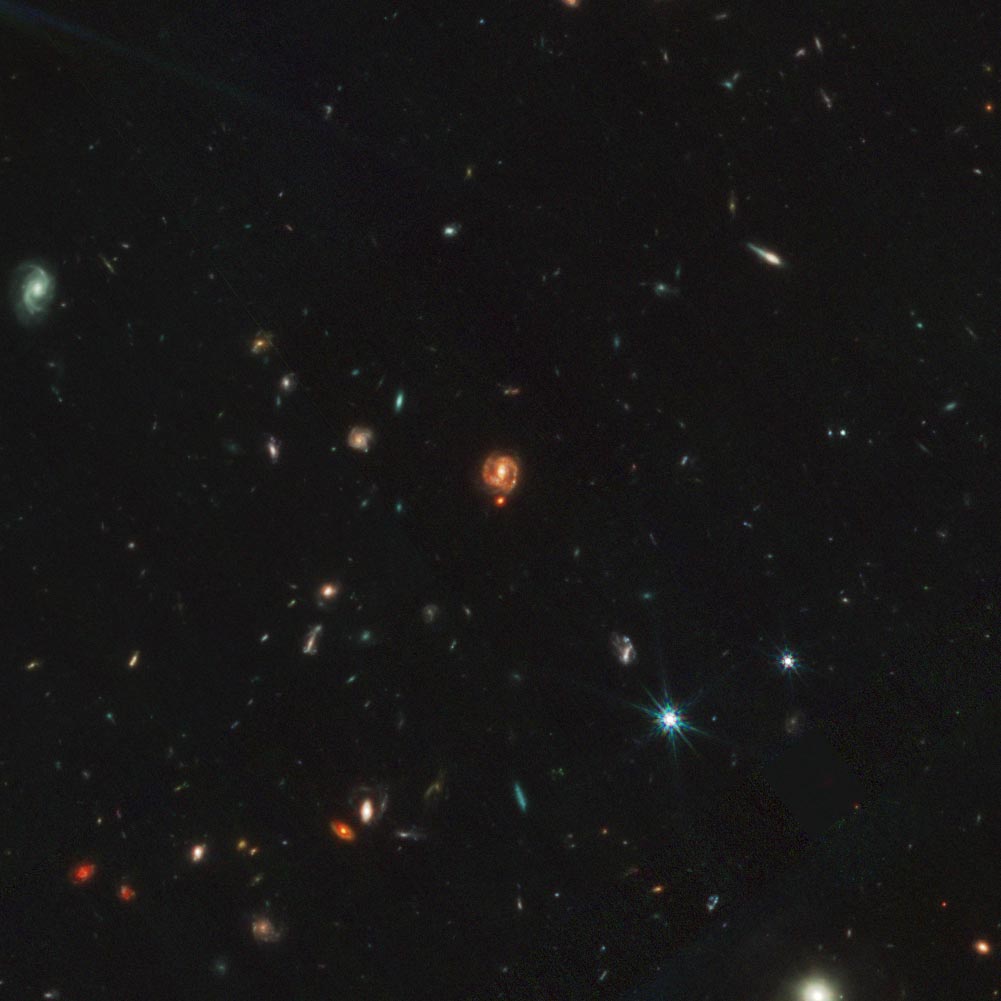
Two years ago, astronomers peering through the James Webb Space Telescope noticed something odd: tiny red points scattered across images of the ancient universe. No one knew what they were. Now researchers at Copenhagen's Niels Bohr Institute have solved it. Those red dots are young black holes, and they're rewriting what we thought we knew about how the universe's monsters form.
The discovery is significant enough that it landed on the cover of Nature this week. Here's why it matters: we've always puzzled over a cosmic paradox. The universe is only 13.8 billion years old, but we've found supermassive black holes—some weighing a billion times more than our Sun—that existed just 700 million years after the Big Bang. That's like finding a full-grown oak tree in a nursery. How did they grow so fast?
What the Red Glow Actually Is
The answer, it turns out, was hiding in plain sight. "The little red dots are young black holes, a hundred times less massive than previously believed, enshrouded in a cocoon of gas, which they are consuming in order to grow larger," explains Professor Darach Watson, one of the lead researchers. "This process generates enormous heat, which shines through the cocoon. This radiation through the cocoon is what gives little red dots their unique red color."
We're a new kind of news feed.
Regular news is designed to drain you. We're a non-profit built to restore you. Every story we publish is scored for impact, progress, and hope.
Start Your News DetoxThink of it like watching a cosmic bonfire. As material spirals toward a black hole, it accelerates to incredible speeds and gets compressed so densely that temperatures reach millions of degrees. The radiation released is more intense than almost any other phenomenon in the universe. It's violent, chaotic, and—from our vantage point—it glows red.
Why Black Holes Are Wasteful
Here's where it gets interesting: black holes are actually terrible at eating. Watson describes them as "messy eaters." When gas falls toward a black hole, most of it doesn't get swallowed. Instead, the black hole's rotation creates powerful jets that blast material back out from the poles. Only a fraction of the incoming gas actually crosses the event horizon. The rest gets ejected back into space.
But during this particular growth phase—the one Webb is now capturing for the first time—these young black holes are surrounded by a dense cocoon of gas that fuels rapid expansion. They're in a growth spurt, and we're watching it happen.
 Professor Darach Watson, University of Copenhagen. Credit: Darach Watson
"We have captured the young black holes in the middle of their growth spurt at a stage that we have not observed before," Watson says. This observation finally explains how supermassive black holes could have grown so massive so quickly in the early universe. They weren't growing steadily over billions of years. They were in intense, gas-fueled growth phases like the ones Webb is now detecting.
The implications ripple outward. Every galaxy we know of has a supermassive black hole at its center. Understanding how these black holes formed—and how fast they can grow—is fundamental to understanding galaxy formation itself. Webb hasn't just solved a mystery about red dots. It's given us a window into the first billion years of cosmic history.





