Fashion often takes cues from the art world, but for Dior's Fall Winter 2026-27 Haute Couture show, creative director Jonathan Anderson didn't just take a cue — he basically draped a sculpture over a supermodel.
This is Anderson's second haute couture collection for Dior, and it's a deep dive into the work of artist Lynda Benglis. The show, held at the Musée Rodin in Paris, felt less like a runway and more like a walking exhibition.
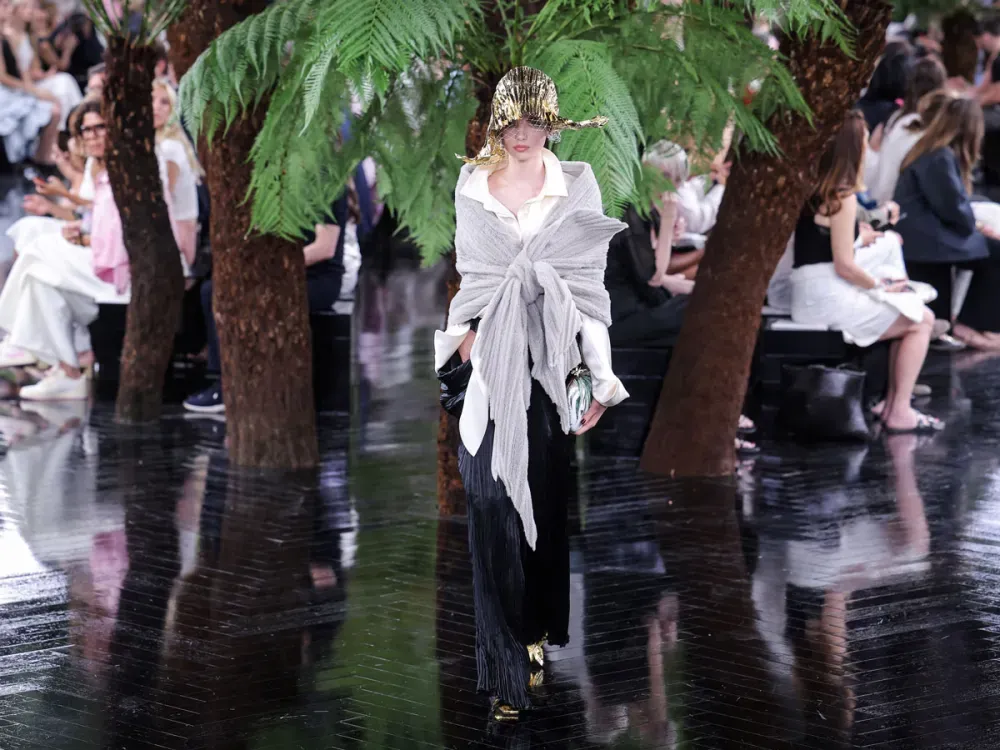
Wearable Art, Literally
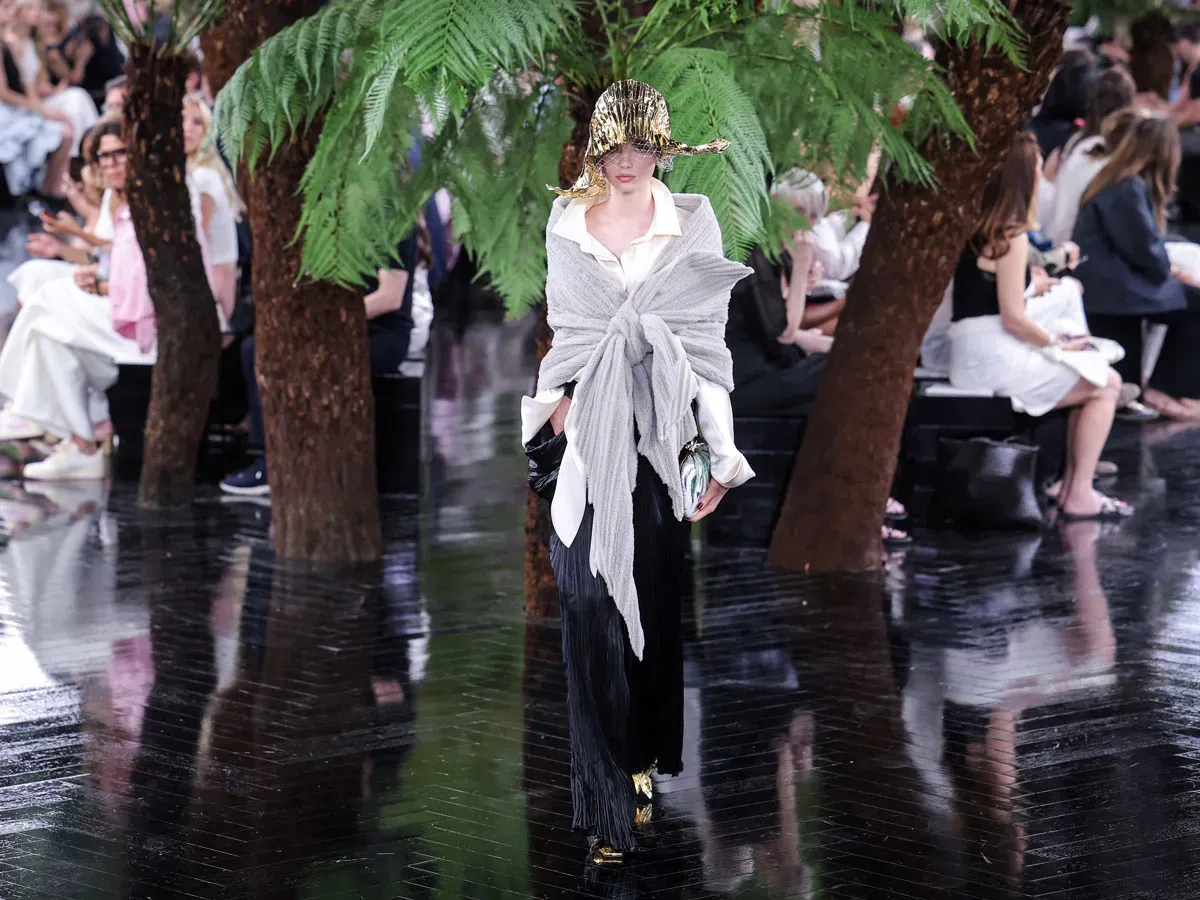
Benglis is known for taking flat materials and twisting, knotting, and molding them into three-dimensional forms. Think of fabric, but with an attitude problem. Couture, it turns out, does something remarkably similar, transforming swathes of silk and wool into architectural statements that stand on their own.
We're a new kind of news feed.
Regular news is designed to drain you. We're a non-profit built to restore you. Every story we publish is scored for impact, progress, and hope.
Start Your News DetoxThe collection features Benglis-inspired pleats everywhere. There's a gray shawl that looks like it's been expertly tied by a giant, a bronze-and-gold top that defies gravity, and a silver gown with an off-kilter bow that seems to be in a permanent state of elegant disarray. Some models even sported headpieces that could've been plucked straight from Benglis's studio, and the artist herself collaborated on some of the handbags. Because why carry a purse when you can carry a sculpture?
Benglis's long-standing connection to Ahmedabad, India, also made an appearance. Her "Peacock" series from the 1970s, influenced by the city and its feathered residents, is known for its vibrant floral and beaded decorations. Looks 24 and 30 in the collection directly reference her Zanzidae, From the Peacock Series (1979), featuring large, embellished fans that look ready to take flight.
Anderson is clearly a fan. He previously tapped Benglis for Loewe's Spring/Summer 2024 show, where she designed jewelry and her sculptures graced the runway. Benglis herself is famous for her boundary-pushing work in the late 60s and 70s, where she'd pour pigmented latex directly onto floors and walls, creating pieces that oozed with both weight and form. Later, she started making wall-hung sculptures with tight knots, which she once called "decadently excessive." Which, frankly, sounds like a perfect description for haute couture.
Anderson called Benglis a "genius," noting her unique, almost "muscular" approach to form. Apparently, she was so ahead of her time that the fashion world is only just catching up. Which, if you think about it, is both impressive and slightly terrifying.