You know how some pop songs just spill out? Freddie Mercury supposedly penned "Crazy Little Thing Called Love" in 10 minutes, soaking in a tub. David Bowie got the idea for "Life on Mars?" while shoe shopping, then finished it in an afternoon. Apparently, creative genius doesn't always require a hermetically sealed studio and a year-long sabbatical.
Turns out, classical composers also had their moments of bewildering speed. Before laptops and auto-tune, these folks were churning out masterpieces faster than you can say "fortissimo."
When Inspiration Hits Like a Freight Train
Wolfgang Amadeus Mozart, the original child prodigy, was basically a human printing press. He started composing at eight, allegedly transcribed an entire forbidden choral work from memory after one listen, and generally made other composers feel inadequate. But even for Mozart, the "Linz" Symphony was a flex.
We're a new kind of news feed.
Regular news is designed to drain you. We're a non-profit built to restore you. Every story we publish is scored for impact, progress, and hope.
Start Your News DetoxPicture this: Mozart's on his way home to Vienna in 1783, stops in Linz, Austria. A local count hears he's in town and decides, "Hey, let's throw a concert in his honor!" Mozart, ever the showman, says, "Great! I'll just whip up a brand new symphony for the occasion." Four days later, a 30-minute, four-movement symphony was written, rehearsed, and ready for its premiere. Let that sink in.
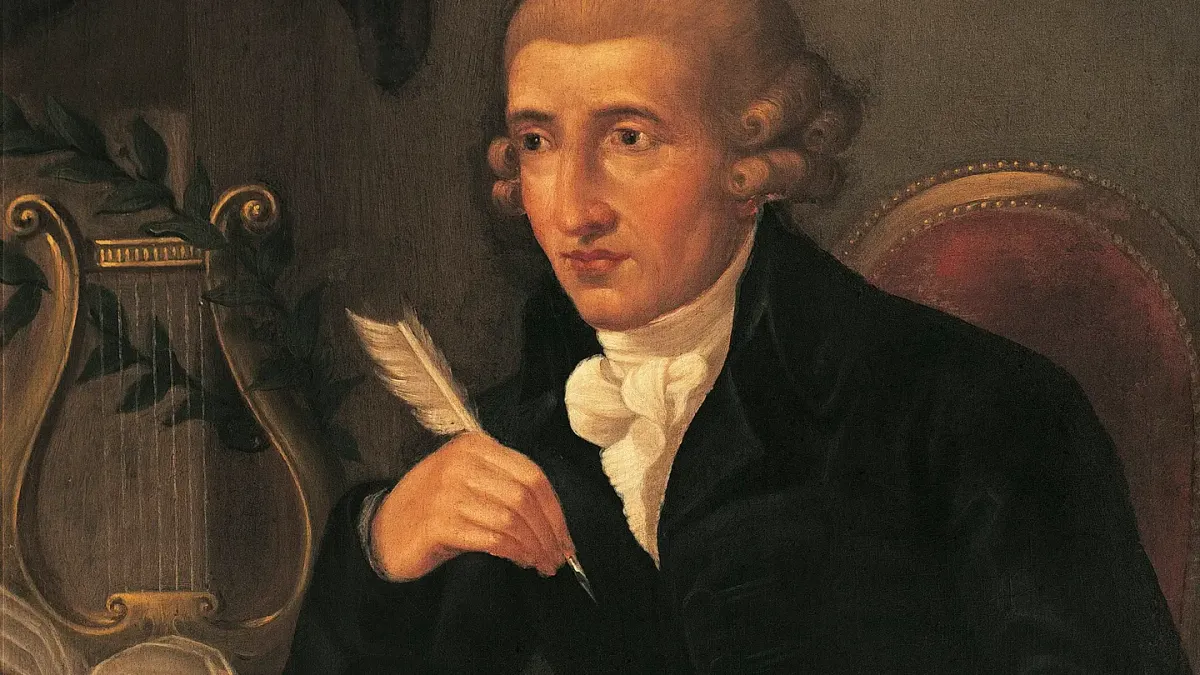
Then there's Joseph Haydn, who spent years working for the Esterházy family. Once freed, he headed to London and, during his first visit, churned out twelve symphonies. The most famous, the "Surprise" Symphony, got its name from a sudden, ear-splitting chord in the second movement. The legend (probably apocryphal, but fun) says he added it to jolt a snoring audience member awake. Whether true or not, he reportedly composed the whole thing in a matter of weeks, possibly even days, during a five-week countryside retreat. Because apparently, that's where symphonies come from.
When Deadlines Loom (or Kings Die)
Robert Schumann claimed he wrote all eight movements of his piano suite Kreisleriana in just four days during a creative deluge in April 1838. He considered it one of his best works, and today it's a cornerstone of Romantic piano music. Which, if you think about it, is both impressive and slightly terrifying for anyone who's ever struggled with a blank page.
Arnold Schoenberg, known for his rapid output, composed his complex, single-voice opera Erwartung (meaning "Expectation") in just days in 1909. This 30-minute sung monologue, accompanied by a full orchestra, was so ahead of its time it took 15 years to finally get a performance. Talk about delayed gratification.
But the prize for "fastest composition under pressure" might go to Paul Hindemith. In January 1936, he was in London for a concert that was promptly canceled because King George V died. The BBC, not wanting his trip to be a total loss, asked him to arrange something more fitting for the somber mood.
Hindemith, instead of just rearranging, decided to compose an entirely new four-movement piece: Trauermusik (Mourning Music). He started at 11 AM on January 21st and finished it six hours later. That's a full viola and string orchestra piece, from scratch, in an afternoon. Makes you wonder what he could have done with a full week and a proper snack budget.