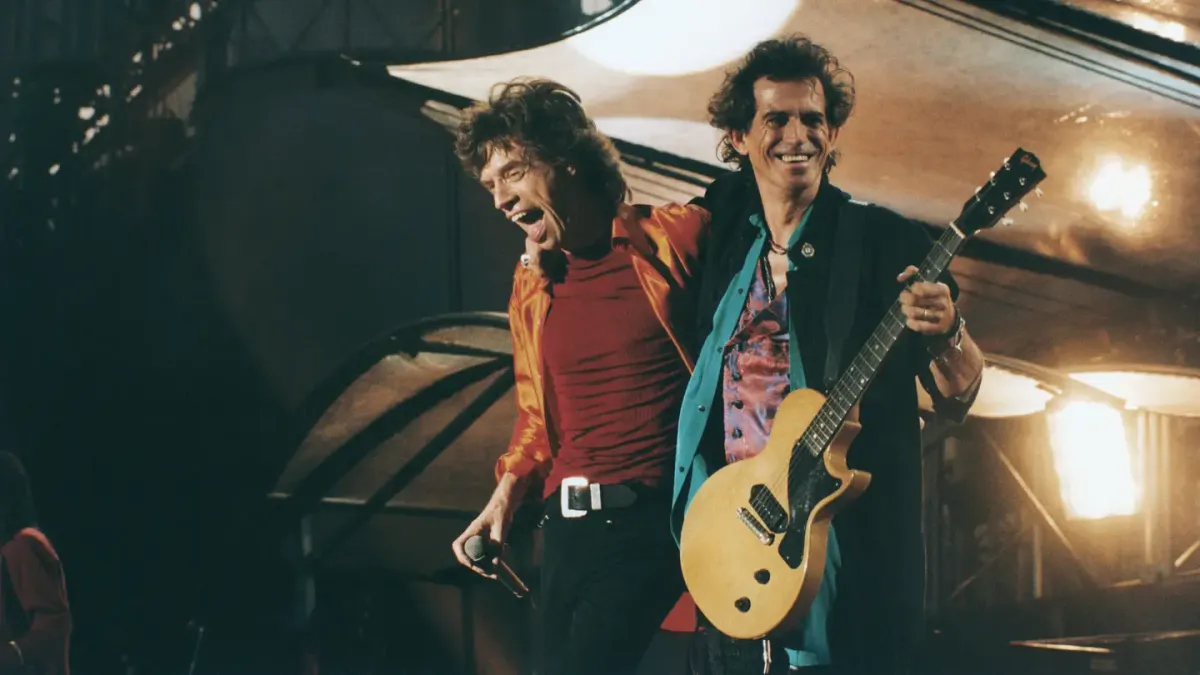
Imagine waking up, hitting play on a tape recorder, and hearing yourself belting out a certified, genre-defining rock anthem. Oh, and you have zero memory of doing it. Because you were, in fact, entirely unconscious. Welcome to the origin story of "(I Can't Get No) Satisfaction," a song that didn't just top charts; it basically became the 1960s.
This isn't some urban legend; this is prime Keith Richards lore. It was the spring of 1965. The Rolling Stones were on a particularly grueling U.S. tour. One night, in a Florida hotel, Richards drifted off. He woke up later to find his tape machine had been running. Curiosity, or perhaps a vague, sleepy memory, prompted him to hit play.
What came out was his own voice, mumbling the now-iconic phrase: "I can't get no satisfaction." And beneath it, that unmistakable guitar riff, already fully formed. Richards, being Richards, promptly fell back asleep. But the tape, bless its analog heart, preserved the magic.
We're a new kind of news feed.
Regular news is designed to drain you. We're a non-profit built to restore you. Every story we publish is scored for impact, progress, and hope.
Start Your News DetoxFrom a Snooze to a Smash
When Mick Jagger got his hands on it, he took Richards' sleepy hook and ran with it, crafting lyrics that perfectly captured the era's simmering discontent with commercialism. Jagger himself described it as "my view of the world, my frustration with everything." They finished recording on May 12, 1965, and a few weeks later, on June 4, it landed in the U.S.
Richards, ever the minimalist, initially dismissed it as a minor track. "I thought it was one of the band's less important tracks," he later admitted. The public, however, had other ideas. "Satisfaction" exploded. It shot to number one in America, then the UK, becoming the definitive sound of the summer of '65 and rocketing the Stones into superstardom.
It's been covered by everyone from Aretha Franklin to Britney Spears, popped up in Apocalypse Now and Mad Men, and still routinely lands on Rolling Stone's list of the 500 greatest songs (currently at #31). Mick Jagger famously called it "the song that really made the Rolling Stones." All because Keith Richards had a really productive nap. Let that sink in.