On a Saturday morning in July, about 300 football fans gathered in a Kolkata park. They watched the World Cup match between Argentina and Cape Verde on a big screen. Giant loudspeakers made it feel like a concert.
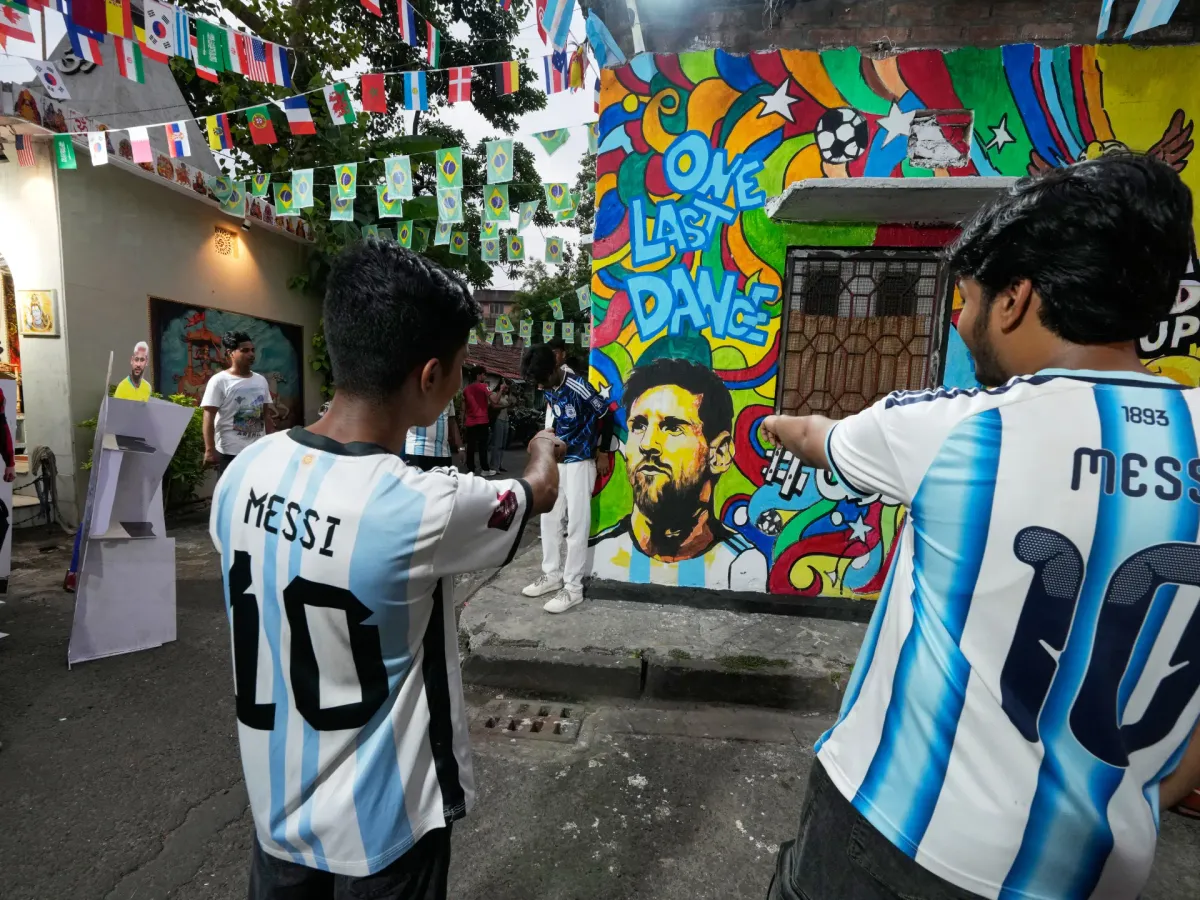
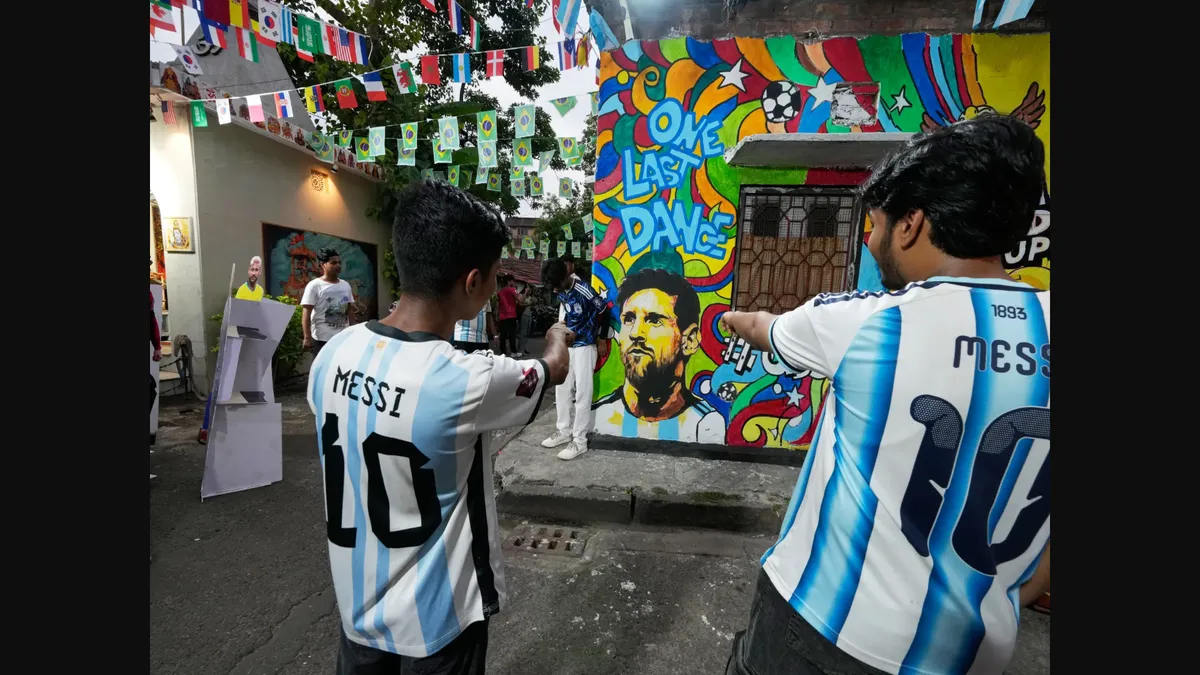
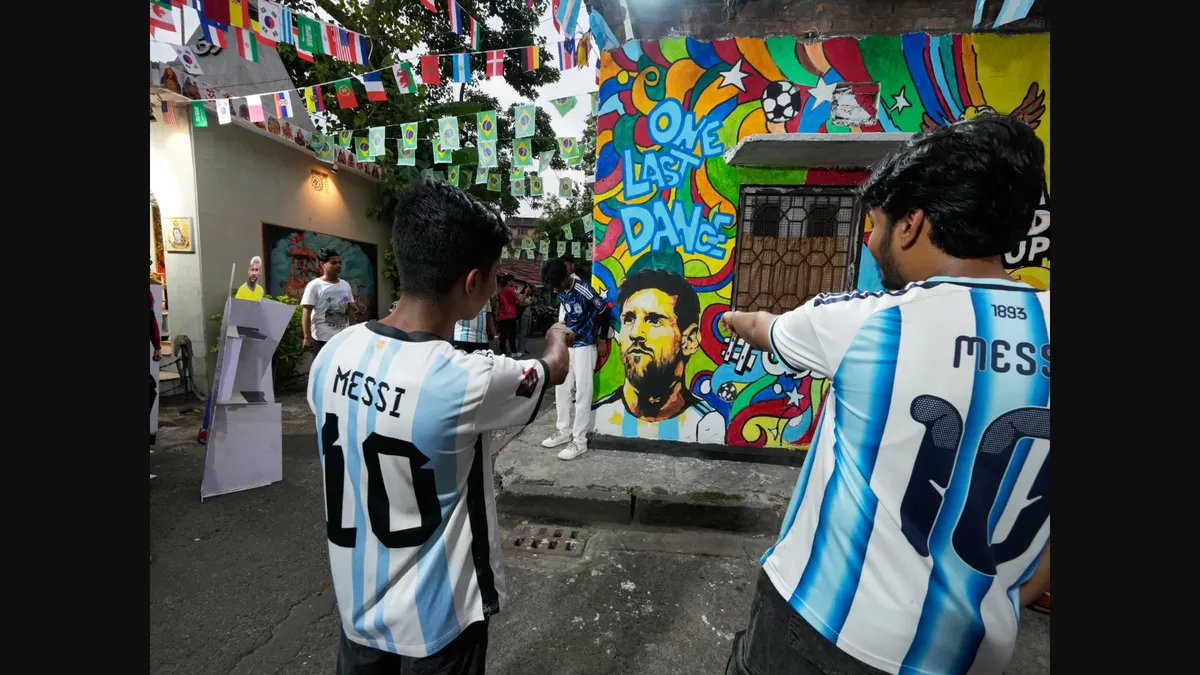
The park was decorated with blue-and-white flags, plastic footballs, and life-size cutouts of Argentina players, especially Lionel Messi. This park is the unofficial home of the Kolkata Argentina Football Fan Club. The city's passion for football, especially for Argentina, peaks every four years during the World Cup.
It had rained all night, making the ground muddy. But the fans, dressed in blue and white, had been there since 3:30 AM. The game went into extra time, which was unexpected.
We're a new kind of news feed.
Regular news is designed to drain you. We're a non-profit built to restore you. Every story we publish is scored for impact, progress, and hope.
Start Your News DetoxSuddenly, Argentina's Lisandro Martinez scored. The local fans cheered loudly, filming themselves screaming and high-fiving. This mix of filming and cheering shows how millennial football fans in Kolkata are immersed in social media.
Then, a chant began to rise: "MAY-SI! MAY-SI! MAY-SI!" Bengalis pronounced his name with an elongated first syllable.
The Footballing Saint
Messi, who recently turned 39, played in the tournament alongside other older stars like Luka Modric (40) and Manuel Neuer (40), and his rival Cristiano Ronaldo (41). Younger talents like Kylian Mbappé, Erling Haaland, and Harry Kane were also there. Emerging players included Lamine Yamal, Michael Olise, and Ayyoub Bouaddi.
However, in Kolkata, Messi is seen as unique in 2026. Despite his age, fans believe he is better than ever, a "Zen master" of football. Even though he is considered one of the greatest players, Messi often feels like an underdog against strong teams like France and Spain.
Argentina's team has many stars, but Messi scored all six goals in the group stage. When the team faced tough matches, like against Cape Verde, Egypt, Switzerland, and England, Messi always found a way to help them win.
Argentina's comeback against Egypt was celebrated wildly in Kolkata, especially Messi's equalizer in the 83rd minute. His emotional tears were also very moving to fans. Kolkata fans wanted to enjoy his play until the end of the tournament, as it is likely his last World Cup.
Debjoy Biswas, a Kolkata native and lifelong Argentina fan, recently returned from watching Argentina's group stage matches in North America. He said seeing Messi play live is like "footballing heaven." He noted that watching Messi live reveals his anticipation and awareness of space, not just his on-ball movement.
Biswas shared a favorite photo he took of Messi. It shows Messi with his back to the camera, celebrating a goal, with defeated Austrian players around him.
Sapna Patra, wife of tea-shop owner Shib Sankar Patra, said her husband used to be a great Messi fan. But after meeting Messi last year, he now sees him as a brother. Shib Sankar Patra, a former club footballer, described Messi extending his hand to him.
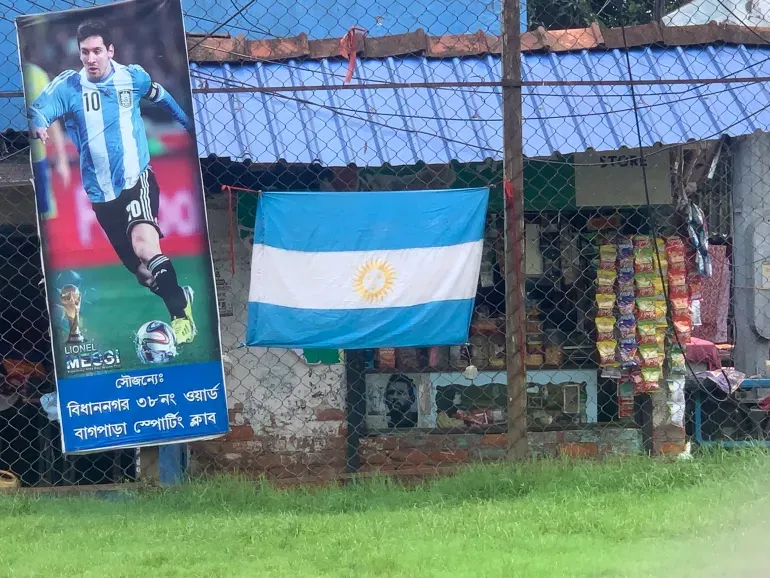
The Patra family's life revolves around Messi and Argentina. Their home in Nawabganj is painted in blue and white stripes. Their "Argentina tea stall" has a giant blue Argentina flag. They celebrated Messi's 39th birthday with an 18kg blue and white cake and gave away jerseys to children. Sapna Patra mentioned her daughter, a classical dancer, named her son Leo after Messi.
South Asia's Greatest Football City

Fans like the Biswas and Patra families show why Messi is special in Kolkata. It's not just his skill, but also the city's unique devotion and deep football culture. This gives Messi's appeal a strong force in Kolkata.
Kolkata has loved football since the 1890s. It is arguably the greatest football city never to have a national team in the World Cup. This absence makes its fandom very intense. Supporters become the most visible expression of football excellence in India. Older fans often feel a sense of regret, doubting they will see India reach a World Cup.
Football is deeply woven into Kolkata's daily life and public memory. The great Indian footballer Subimal "Chuni" Goswami once said that football, along with literature and arts, makes Kolkata special.
Football came to India and Kolkata as part of the British Empire's cultural legacy. Like cricket, it appeared in the late 19th century and was first played by British teams. The game quickly became popular, especially in Bengal, the capital of British India.
The Durand Cup, the world's third-oldest football tournament, started in India in 1888. This year, its 135th edition will be held entirely in eastern India, where football support is strongest.

Football was easy to play, needing only a ball and open space. Major Indian football clubs like Mohun Bagan (1889), Mohammedan Sporting (1891), and East Bengal (1924) were all founded in Kolkata. Indian football developed its own style, with many players playing barefoot for better ball control. This might explain Kolkata's love for la joga bonito, the beautiful game with creativity and dribbling.
Even Swami Vivekananda, a fiery Bengali intellectual, supported football. A quote by him at the Salt Lake Stadium metro station says, "You will be nearer to Heaven through football than through the study of the [Bhagavad] Gita." He believed young Indian men should develop physical vigor before spiritual elevation.
By 1947, India was a football power. After British rule ended, Kolkata's loyalties shifted to Brazil, whose free-spirited play resonated with postcolonial aspirations. In 1950, India was invited to the World Cup but declined. India has not qualified since, but for decades, it remained a major Asian football power, with Kolkata as its capital.
"Us vs Them"
Kolkata football has intense local rivalries, similar to Madrid or Manchester. The rivalry between Mohun Bagan and East Bengal draws over 50,000 fans and dominates city football discussions.
Football analyst Debanjan Banerjee noted that while other parts of India have football passion, Kolkata's long-standing club rivalry creates a deeper intellectual capacity for the sport. Football is discussed seriously all year and connects generations.
Banerjee explained that this rivalry shapes how fans think about politics, art, and history. He sees himself as a student of football fandom, studying its tribal nature and irrationality. He even made a video essay on the Mohun Bagan and East Bengal rivalry for COPA90.
Last December, Messi visited Indian cities, and his Kolkata appearance became chaotic when he left early. Fans breached barricades and rushed the field. Banerjee said this chaos shows the deep emotional pull of football icons in Kolkata. He noted that even officials and volunteers shared the fans' identity.
However, Messi isn't solely responsible for Kolkata's Argentina fever. Novelist and football journalist Indrajit Hazra, 55, remembers a time in the 1980s when supporting Argentina was unusual. Messi represents the peak of a long era in Bengal-Argentina relations, which began in 1986. That year, Diego Maradona's magic captivated Kolkata during the first World Cup widely seen on Indian television.
Before 1986, Brazil was the gold standard for Kolkata football. Pelé, who visited Kolkata in 1977, was considered the greatest. Maradona changed that with his 1986 feats, which millions saw on TV. Hazra, when asked about Messi being the greatest, laughed and said, "Yes, Messi is great, but Maradona..."
Shifting Sands of Fandom
The four-year World Cup cycle reveals how players, teams, and stories change. Gourab Goswami, an English professor and lifelong Brazil and East Bengal fan, noted that after Argentina was knocked out of the 2018 World Cup, many believed Messi's greatness was limited to FC Barcelona.
Goswami, a classic Kolkata fan who is both partisan and objective, said the fervor around Messi increased after he won the World Cup in 2022. The "Barcelona Messi" has been replaced by the "blue and white Messi of Argentina."
Meanwhile, Cristiano Ronaldo, also once adored by Kolkata fans, sought his first World Cup this year. However, his support in Kolkata had declined. At 41, Ronaldo was visibly fading, and his media appearances seemed defiant. This created a split among Ronaldo fans; not all Portugal supporters backed him. Many felt Portugal's excellent midfield was hindered by a strategy focused on their aging captain.
When Portugal was eliminated, few Kolkata fans mourned Ronaldo. They saw him as a former footballing saint who stayed too long, undermining his legacy. In contrast, Messi, though small, remains a superhuman force driving Argentina's challenge, a grizzled veteran chasing one last fairytale.
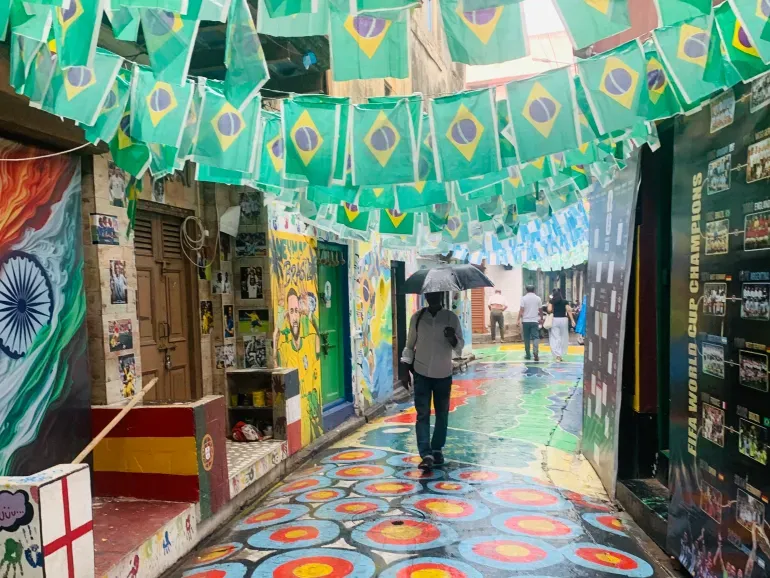
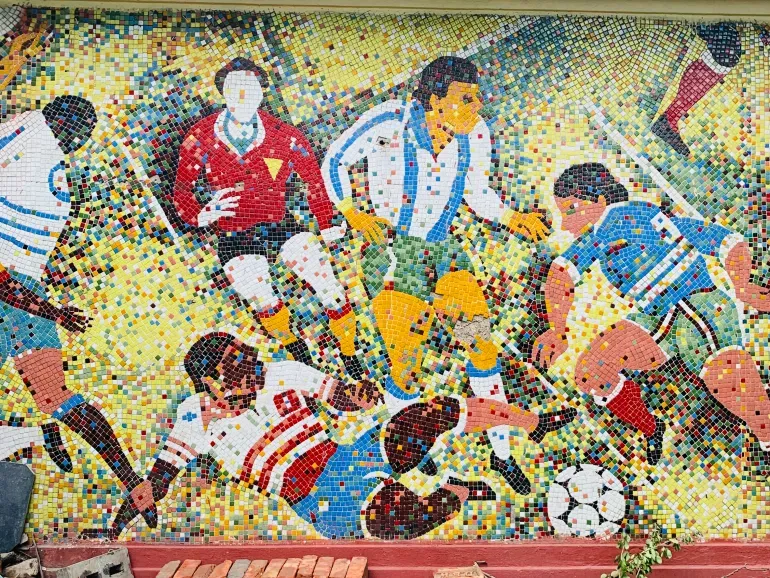
Kolkata's "FIFA galli" (Fakir Chakraborty Lane), traditionally a Brazil-supporting neighborhood, still had odes to Neymar. But it also featured murals of Messi and Ronaldo, and even some Argentina flags. In 2026 Kolkata, Messi has attracted many new fans, leaving Ronaldo behind. Brazil's long hold on Kolkata fandom is fading, with Argentina becoming dominant. Other fans now gravitate towards Portugal, Spain, or France.
The Working-Class Roots of Football
Despite the Messi wave, a small but persistent Brazilian tradition survives in Kolkata. It honors a lineage of players like Pelé, Garrincha, Tostao, and Neymar.
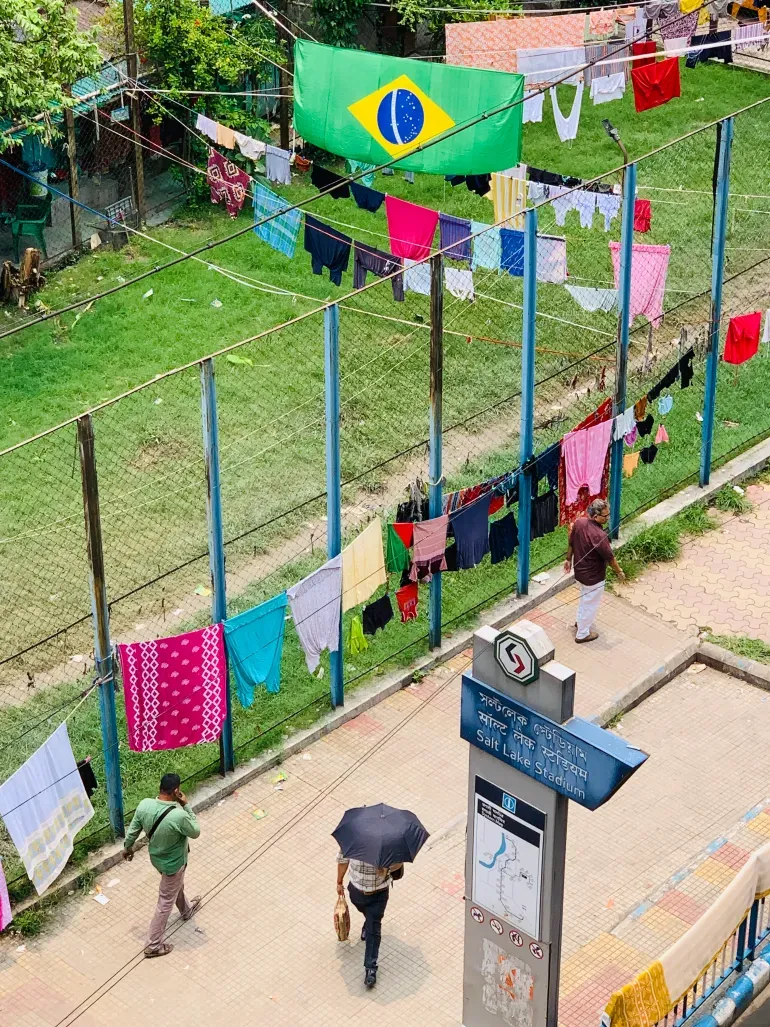
Near Salt Lake Stadium, a huge green-and-gold Brazilian flag flies above laundry lines, with some Argentina flags nearby. Life-size cutouts of Neymar are also present. This scene highlights football as an everyday, working-class game, far from the elite structures of modern top-level football.
Many working-class people in Kolkata wash clothes by hand, often near street water pumps or ponds. They look to football flags and games for a break from daily life. Sapna Patra noted her husband's only passion outside work is football.
Sudhansu Singh, a 34-year-old Subway server and passionate Brazil fan, watched a game on TV. He worried for Brazil without Neymar, and his concern was justified when Brazil was knocked out. For Singh, football is pleasure, passion, and freedom.
He loves the World Cup timings because the games are between 9 PM and 9 AM India time, perfect for his 24-hour Subway shift. However, like many in Kolkata, Singh prefers playing football to watching it, a reminder that devotion to the game still starts on the pitch.