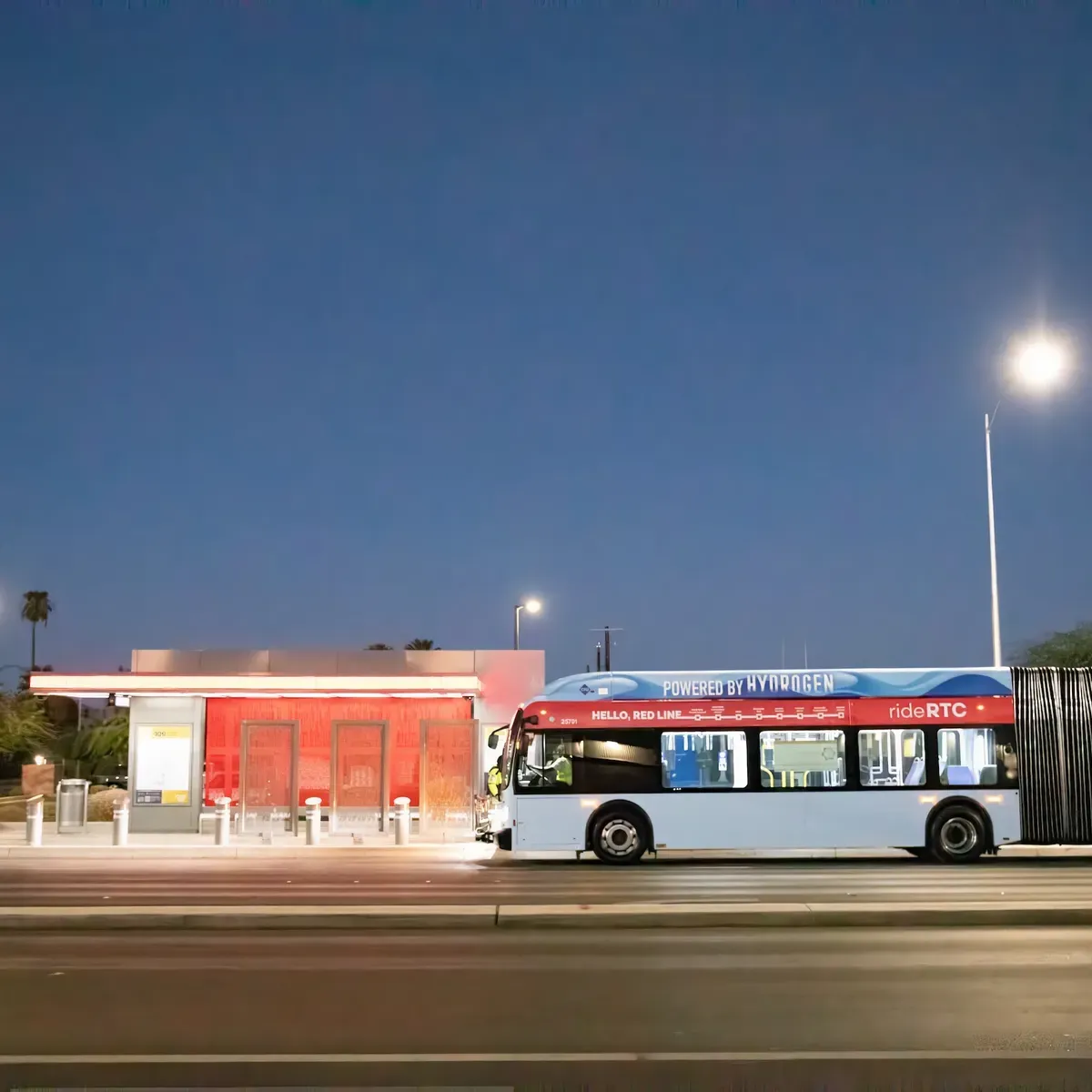
Las Vegas, a city known for its dazzling lights and sometimes questionable decisions after 2 AM, just dropped a cool $378 million on a new bus rapid transit (BRT) line. Because apparently, even Sin City traffic needs a glow-up. The project spans 7.3 miles, promising dedicated bus and bike lanes, wider sidewalks, and — in a move that feels almost revolutionary for the desert — actual shade trees.
Not Your Grandma's Bus Route
This isn't your average city bus puttering along. The Regional Transportation Commission of Southern Nevada (RTC) rolled out 60-foot, zero-emission hydrogen fuel-cell buses. They'll connect downtown Las Vegas, the medical district (because even doctors need to commute), the University of Nevada, Las Vegas, and Harry Reid International Airport. So, basically, all the places you actually need to go.
RTC Deputy CEO Andrew Kjellman noted the project aims to boost ridership and encourage development around the transit stops. The dedicated lanes and fancy signal priority are set to cut travel time by about 20%. And the buses? They'll swing by every 12 minutes during the day. Which, if you've ever waited for a bus, sounds like pure luxury.
We're a new kind of news feed.
Regular news is designed to drain you. We're a non-profit built to restore you. Every story we publish is scored for impact, progress, and hope.
Start Your News DetoxWhile ridership dipped to around 9,000 daily during construction (a minor inconvenience for a major upgrade), the RTC is betting on 13,000 daily riders by 2040. Let that satisfying number sink in.
A Cooler, Greener Corridor
Beyond just moving people, this federal-grant-fueled project is sprucing up the entire corridor. Sidewalks have doubled in width in most areas, from a cozy five feet to a sprawling ten. And those trees? They're not just for aesthetics. Planting them on both sides of the roadway and in the median helps combat the extreme heat that Southern Nevada is famous for. Because who doesn't love a little shade with their public transit?
The corridor itself is a bustling hub, home to 63,000 residents and 109,000 jobs. Nearly 35,000 vehicles traverse it daily, but even drivers get a perk: re-timed traffic signals to keep things flowing. The RTC even worked with local agencies to encourage new development along the route, aiming to make the area more inviting and, dare we say, livable. All while maintaining fares that match other RTC routes, for now. Though a fare increase next year is on the table, because nothing good lasts forever.
As Southern Nevada expands, RTC CEO M.J. Maynard-Carey says the focus is on a better transit experience, despite the usual funding headaches. And Las Vegas isn't alone. It's one of over a dozen new transit projects opening this year, with many cities opting for BRT over light rail. Why? Because, as Urban Institute researcher Yonah Freemark points out, it's cheaper and more flexible. Sometimes, the best solution is just a really, really good bus.