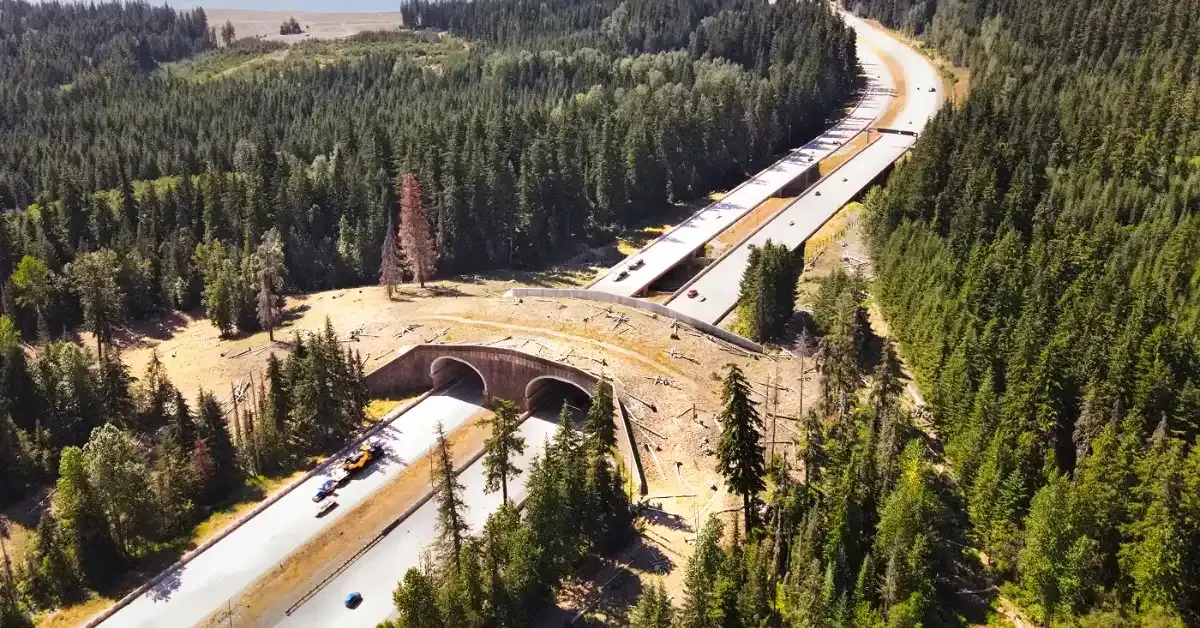
Wildlife crossings, like overpasses and tunnels, are known to prevent animals from colliding with vehicles. These crossings can reduce large mammal collisions by up to 97%. Each avoided collision can save up to $110,000.
States that use wildlife overpasses see a good return on their investment. These crossings can cut crashes by 90%.
Snoqualmie Pass Overpass Reaches 10,000 Crossings
The Washington State Department of Transportation (WSDOT) announced a major success. The I-90 Snoqualmie Pass overpass has recorded 10,000 animal crossings since it opened.
We're a new kind of news feed.
Regular news is designed to drain you. We're a non-profit built to restore you. Every story we publish is scored for impact, progress, and hope.
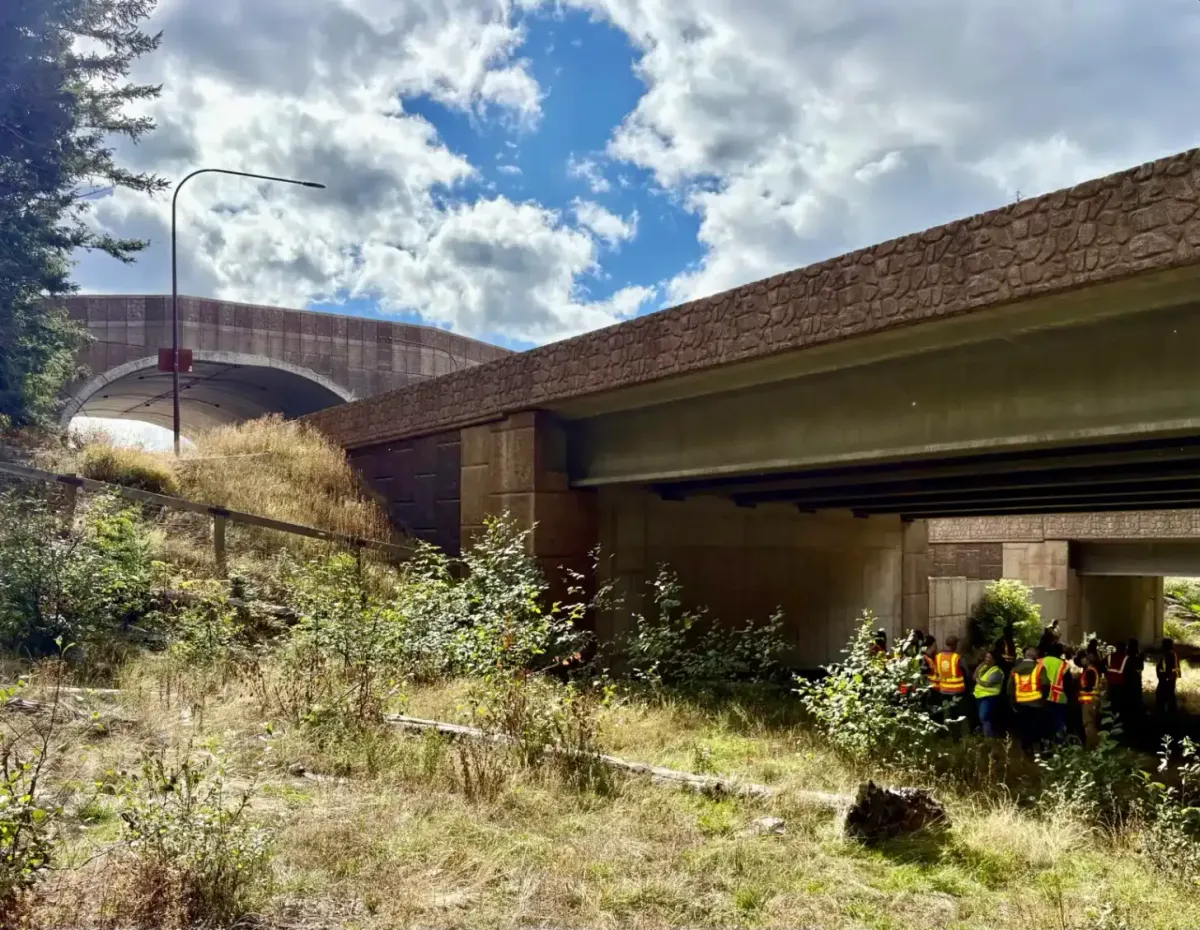
Start Your News DetoxWSDOT shared that the overcrossing and 11 undercrossings on Snoqualmie Pass have seen nearly 40,000 crossings since 2014. Trail cameras confirm these instances of animals safely using the corridors.
Between 2019 and 2023, WSDOT removed 39,258 animal carcasses from state highways. In the area of I-90 Snoqualmie Pass with these crossings, that number has dropped to almost zero.
Why Wildlife Crossings Matter
Conservation Northwest played a key role in pushing for and building the Snoqualmie Pass crossing. The group continues to work on improving habitats along I-90.
The structure helps connect the North and South Cascades. It reduces collisions, links habitats, and allows animals to move safely. Conservation Northwest noted that these crossings are a national example of how transportation and conservation goals can work together.
The group is now working to expand wildlife corridors across the interstate. Their goal is to connect habitats between the Cascade Mountains and the Olympic Peninsula.
State officials agree these advancements are effective. WSDOT explained that the structures allow wildlife to access their full habitat range. This prevents isolated animal populations, which can lead to weaker genetics.
Wildlife crossings also offer economic benefits. A deer collision costs about $15,000, while an elk collision costs around $54,000. Fewer collisions save the state hundreds of thousands of dollars each year.
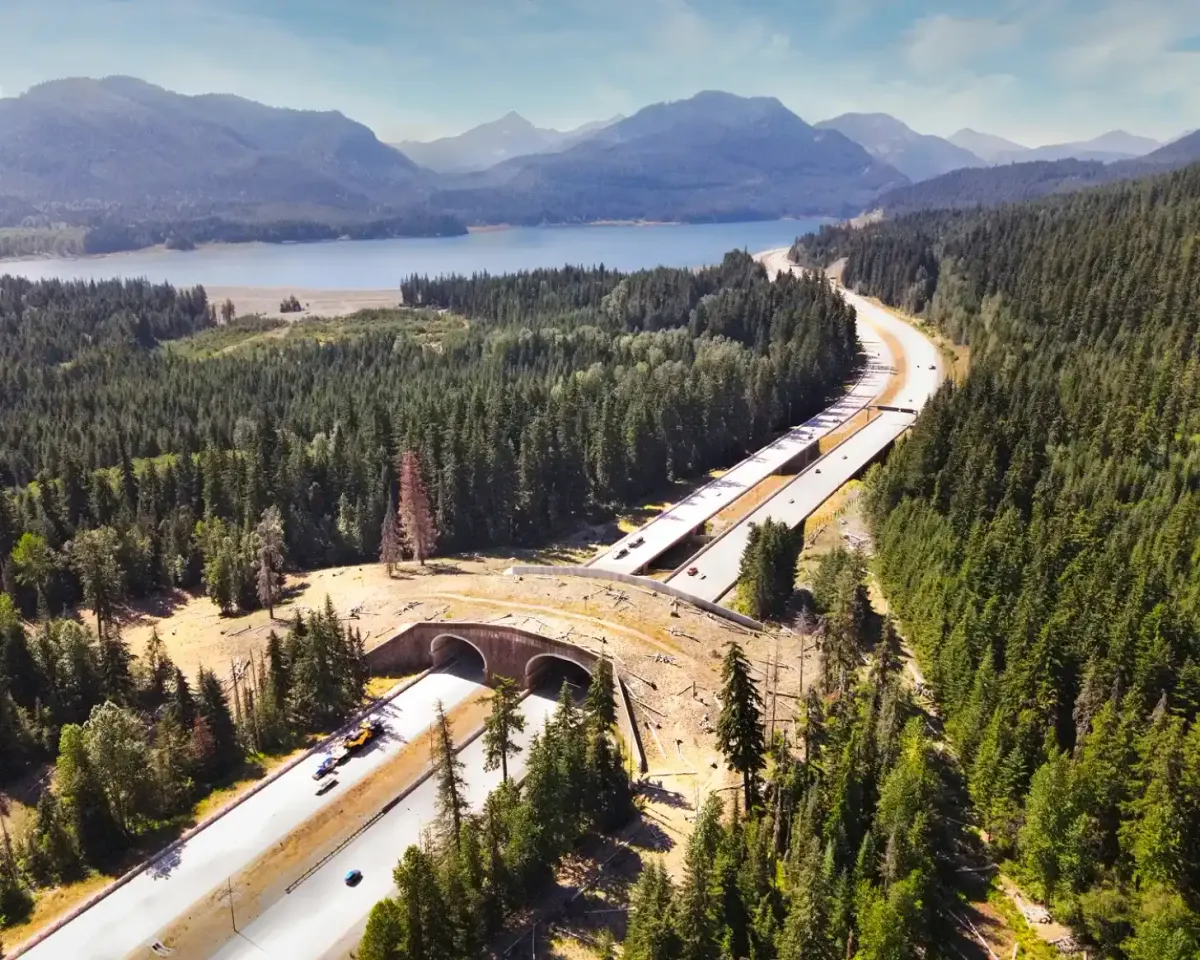
The success of the Snoqualmie Pass structure has led to more plans. WSDOT plans to build 15 more undercrossings and one more overcrossing along Snoqualmie Pass East by 2031. Their mission is to keep all travelers connected, whether by wheel, foot, paw, or hoof.