Imagine searching for nearly two weeks, trekking through dense river systems, talking to countless locals, all for a fish that basically ghosted scientists for four decades. That was Jerrica Agebido's mission along Papua New Guinea's Sepik River. He and his team were on the hunt for the elusive spinach pipefish, a creature last officially seen in 1985.
Agebido, a researcher from the Papua New Guinea University of Technology, described their journey through the Lower Sepik. They navigated by boat and canoe, interviewing communities, casting nets, and basically doing everything short of hiring a fish detective. The river, however, was playing coy.

A Tiny Fish, a Big Mystery
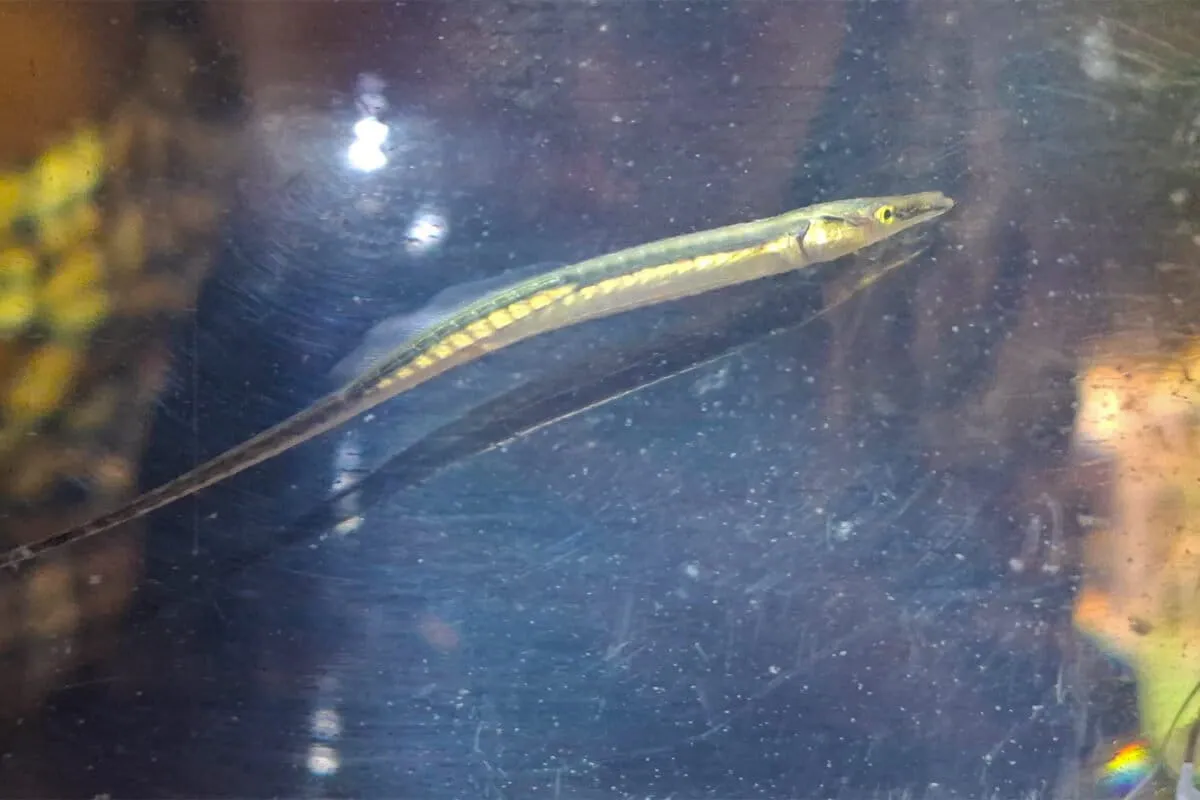
Now, the spinach pipefish (Microphis spinachioides) isn't exactly Jaws. It's a small, slender thing, maxing out at about six inches. Picture a greenish-brown stick with a long snout, perfectly camouflaged among the water lilies and other riverbank foliage. It's a cousin to seahorses and seadragons, which means, yes, the males are the ones doing the heavy lifting, carrying their young in a pouch until they hatch. Because apparently that's where we are now.
We're a new kind of news feed.
Regular news is designed to drain you. We're a non-profit built to restore you. Every story we publish is scored for impact, progress, and hope.
Start Your News DetoxScientists last logged a sighting of this particular pipefish in 1985. That's so long ago, some of us were still using landlines. This lack of data led the IUCN to classify it as "data deficient" in 2016. Which is basically science-speak for, "We know it exists, but we know nothing else, so good luck, future generations."
But here's the kicker: after all that scientific searching, it was the deep, ingrained knowledge of the local communities that finally cracked the case. They knew this fish. They'd seen it. They just hadn't bothered to tell the scientists, because why would they? It was just, well, a fish.

So, after nearly giving up, Agebido's team finally connected with the right villagers, who pointed them to the exact spots. And there it was: the spinach pipefish, alive and well, proving once again that sometimes, the best scientific instruments are a good pair of ears and a willingness to listen to the people who actually live there.