Summer heat is getting… more summery. And while you might be tempted to flee to the nearest air-conditioned bunker, new research from the University of Surrey suggests a far more pleasant solution: more trees. And rivers. And basically anything that isn't concrete.
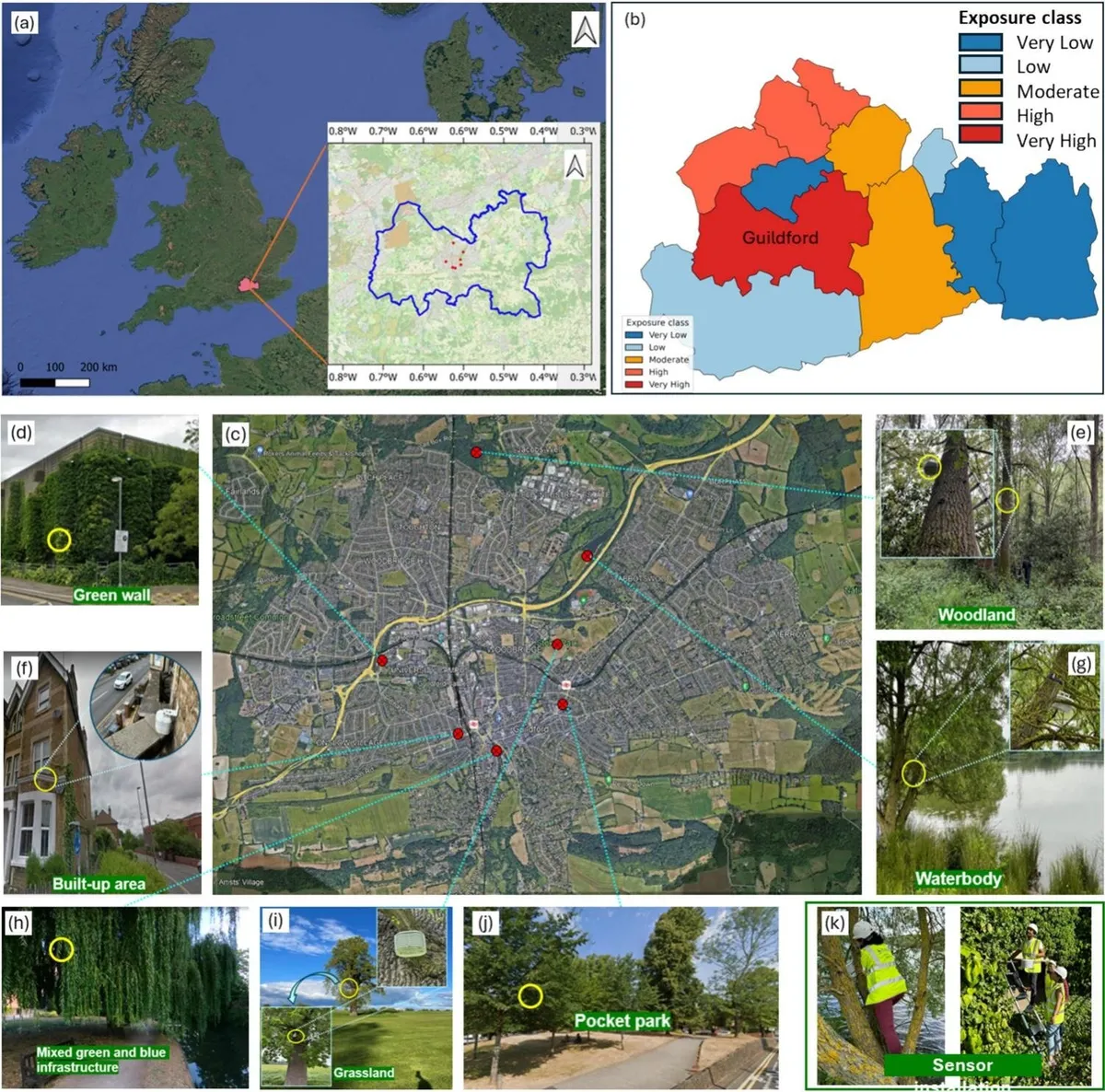
Researchers spent three years meticulously poking around Guildford, UK, with sensors, trying to figure out which urban environments handle the heat best. They compared a standard built-up area to six different natural spots: a woodland, a lakeside, a grassland, a small park, a riverside, and even a green wall. Because apparently that's where we are now — evaluating the thermal performance of a plant-covered wall.
Nature's AC Unit: The Woodland
During those sweltering summer afternoons, all six natural sites were significantly cooler than their concrete counterpart. But the undisputed champion of chill? The woodland, which clocked in at a refreshing 2.5°C cooler on average. Grasslands were close behind at 2.3°C, and lakeside areas offered a cool 2.1°C difference. Think of it as nature's very own, highly effective, and entirely free air conditioning system.
We're a new kind of news feed.
Regular news is designed to drain you. We're a non-profit built to restore you. Every story we publish is scored for impact, progress, and hope.
Start Your News DetoxNow, for the real test: extreme heat events. The study tracked ten of these over three summers. During these particularly brutal stretches, the woodland wasn't just cooler; it was a whopping 4.5°C cooler than the built-up site during the day. Sometimes, when things got truly apocalyptic, that difference soared to 5–6°C. Grassland and lakeside areas still pulled their weight, staying about 4°C cooler.
Even more striking: while the built-up area endured 54 heat wave days (where temperatures hit 28°C for three consecutive days), the woodland had precisely zero. Let that satisfying number sink in. Zero. The green wall, bless its heart, still saw some heat, but nothing like the urban jungle.
Professor Prashant Kumar, who directs the Global Centre for Clean Air Research (GCARE), admitted he was genuinely surprised by the woodland's perfect score. He noted that while there's no single magic bullet, these three years of data make a compelling case for integrating more green and blue spaces into city planning. Because apparently, the best defense against a warmer future might just be a really nice walk in the woods.
Soheila Khalili, the lead author, highlighted the remarkable consistency of the findings over such a long period. It's the kind of long-term evidence that makes urban planners sit up and take notice, hopefully leading to more thoughtful, cooler cities. And who wouldn't want that?