
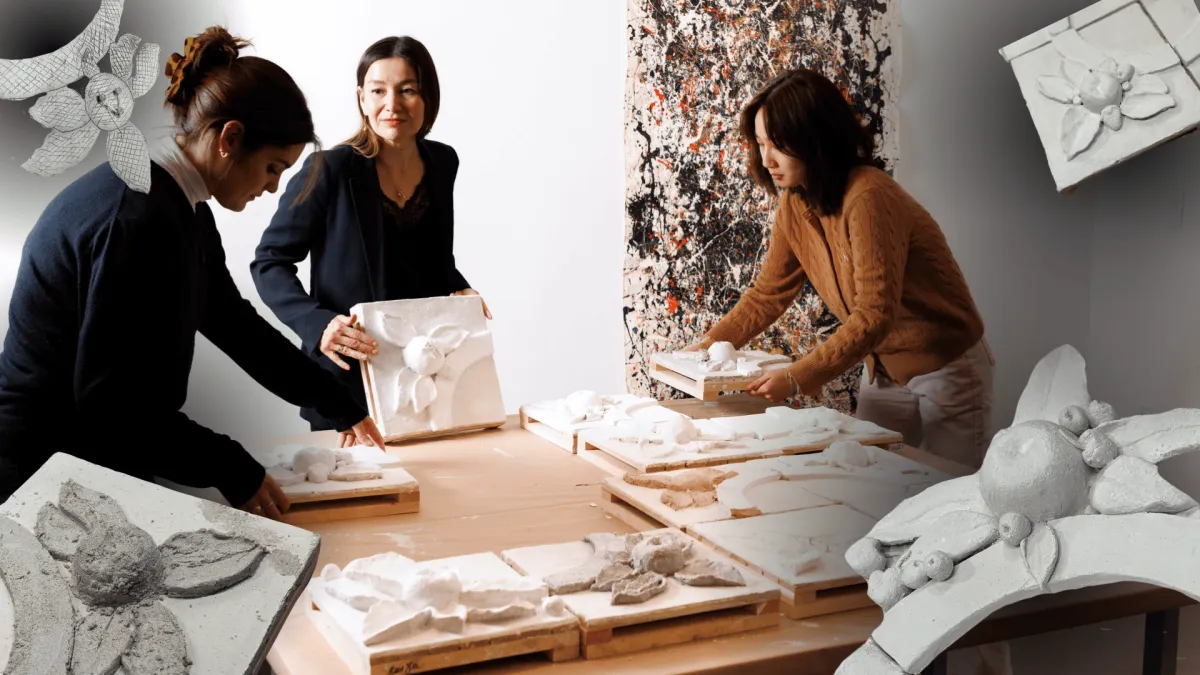
Eleven graduate students gathered in Harvard's Materials Lab on a Friday afternoon with jazz playing softly in the background, their hands pressed into stucco—a lime, sand, and marble dust compound that Renaissance artists used to create some of Europe's most intricate chapel decorations. By the end of the workshop, they understood something no lecture could teach: why artists made the choices they did.
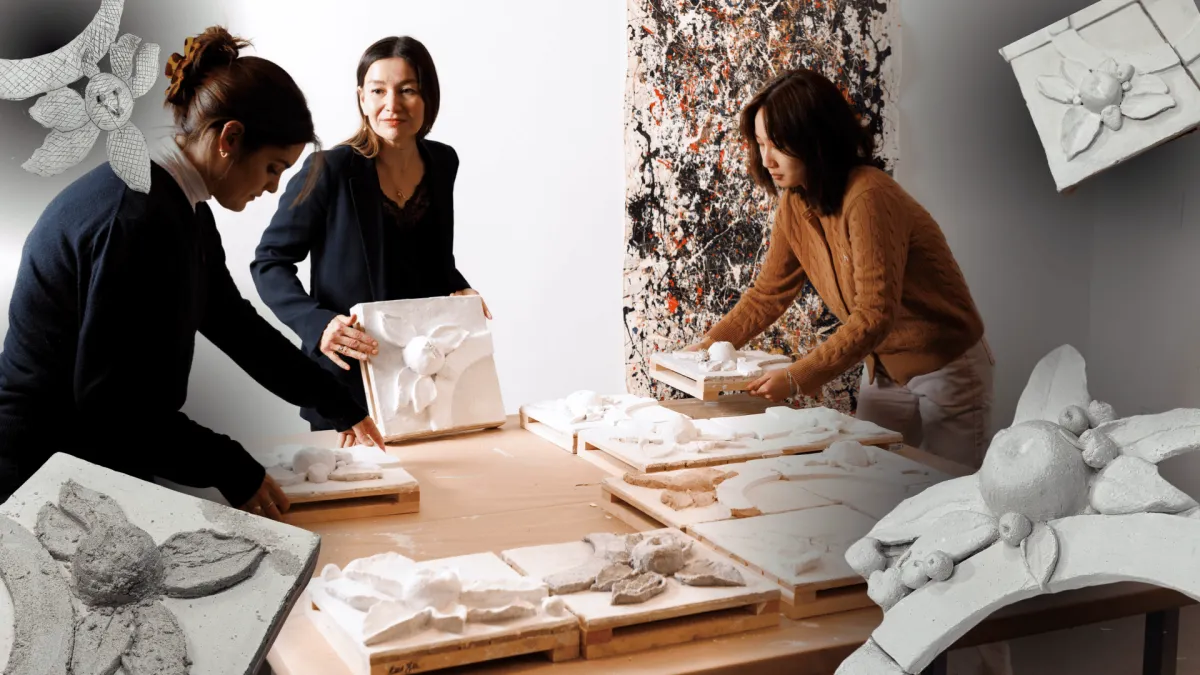
The gap between reading about art and making it is vast. Shawon Kinew, an art historian at Harvard, noticed this distance in her own discipline. "As an art historians, sometimes our discipline can become a little removed or abstracted from the actual materiality or the physical object itself," she said. So she designed a workshop where students could experience what Donatello, Michelangelo, and Giacomo Serpotta experienced—the weight of materials, the speed required, the collaboration needed.
Stucco, it turns out, has been overlooked for centuries. Despite being one of the most common sculptural materials across Renaissance and Baroque Europe from the 1500s to 1700s, it rarely receives the scholarly attention given to marble or fresco. This gap in art history is partly because stucco was cheaper and lighter than marble, making it accessible to more artists and patrons—which paradoxically made it seem less prestigious. But that lightness was also its superpower. "It could render the most fantastic visions of flight—flying figures that seem suspended in air, rays of light, sunburst figures," Kinew explained. "All of which could only be achieved in stucco." Marble sculpture, by contrast, is bound by gravity and weight. Stucco let artists dream in stone.
We're a new kind of news feed.
Regular news is designed to drain you. We're a non-profit built to restore you. Every story we publish is scored for impact, progress, and hope.
Start Your News Detox
Conservators Alberto Felici and Elisabeth Manship guided students through the centuries-old process: building the armature (the internal framework), layering the stucco, finishing with marmorino (a mixture of lime and marble dust). The material doesn't wait for hesitation. It hardens quickly, demanding fast hands and decisive choices. Charlie Benjamin, a history of art concentrator, was sculpting a lemon when he realized something. "I have a lot more appreciation for the artists themselves," he said. "The workshop demystified the art-making process, which you think of as a spontaneous act of creation, and you realize just how much sweat and forethought has to go into something like creating art."
Another revelation emerged from the group work itself. Students learned that the grand chapels they studied in textbooks—attributed to single masters—were actually built by dozens of assistants and craftsmen working in coordinated workshops. "We forget that there were huge groups of people working together even if we only know the name of one artist," Manship said. This reframing matters. It shifts how we understand artistic achievement: not as the solitary genius at work, but as organized collaboration.
Kinew is reviving a Harvard tradition that had nearly disappeared. In 1932, Edward Waldo Forbes taught "Methods and Processes of Italian Painting"—nicknamed the "Egg and Plaster" course—where students learned to paint in egg tempera and fresco to understand how Giotto and Michelangelo worked. That integration of making and studying was revolutionary. Kinew's stucco workshop brings that philosophy back.
The real impact may come later, when these students visit Roman or Palermitan chapels. "My hope is that now when we visit these spaces, we will see them in all their complexity and parts, as stucco confections," Kinew said. "It will be like seeing these spaces in technicolor for the first time." Understanding the labor, the material constraints, the collaborative effort—it transforms how we look at beauty. The ornate chapel ceiling stops being a distant masterpiece and becomes a conversation between artist and material, between one person's vision and the hands of many.