
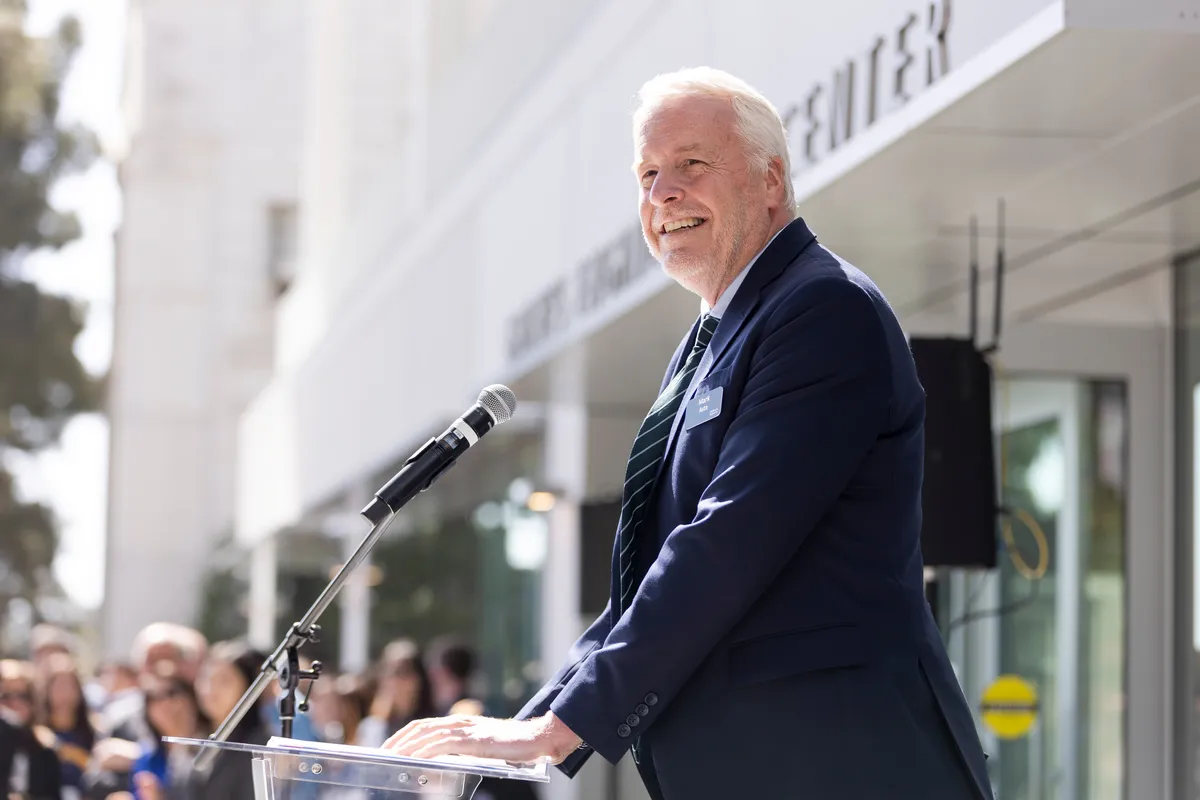
Mark Asta has spent the last 15 years at UC Berkeley studying how materials behave under extreme conditions — in nuclear reactors, fusion engines, aerospace systems. Now he's taking on a different kind of challenge: leading one of the world's most influential engineering schools.
Asta was named the 14th dean of UC Berkeley's College of Engineering after a competitive national search. He'll officially start the role on July 1, 2026, stepping up from his current position as interim dean. The appointment signals the university's confidence in his vision for engineering education during a moment of rapid technological change.
A Berkeley career built on materials and mentorship
Asta's path to the deanship is rooted in the institution itself. He earned his B.S. in engineering physics, master's in physics, and Ph.D. in materials physics from Berkeley before leaving to work at Sandia National Laboratories, Northwestern University, and UC Davis. He returned in 2010 to join the Department of Materials Science and Engineering and Lawrence Berkeley National Laboratory, where he's held the Arthur C. and Phyllis G. Oppenheimer Distinguished Professor title.
We're a new kind of news feed.
Regular news is designed to drain you. We're a non-profit built to restore you. Every story we publish is scored for impact, progress, and hope.
Start Your News DetoxHis research sits at the intersection of computation and discovery — using AI and simulation to design materials that can withstand the brutal conditions of nuclear fusion reactors and spacecraft. It's the kind of work that requires both technical depth and an ability to see how individual discoveries connect to larger problems. He's been elected as a fellow of The Minerals, Metals & Materials Society and the American Physical Society, and received the William Hume-Rothery Award and the David Turnbull Lectureship Award.
But Asta's reputation at Berkeley extends beyond the lab. He's served as department chair and director of Berkeley Lab's Materials Sciences Division — roles that taught him how to build teams and set institutional direction.
Engineering for an era of acceleration
In his new role, Asta is focused on a specific challenge: how engineering education prepares students to lead when the pace of change itself is accelerating. Artificial intelligence, he notes, is reshaping every sector. The question for Berkeley Engineering isn't just how to teach students the tools they'll need, but how to ensure those tools are deployed responsibly.
His priorities reflect this balance. He wants to deepen multidisciplinary collaboration across emerging technology areas — not just AI in isolation, but AI applied to human health, resilient communities, and sustainable systems. He's also emphasizing something less flashy but equally important: making sure engineering education at Berkeley remains inclusive and that its innovations don't accidentally harm the communities most vulnerable to technological disruption.
One concrete example is the Student Organization Applied Research (SOAR) labs at Berkeley's Richmond Field Station, which give students hands-on experience working on real problems in real communities. It's the kind of bridge between campus and world that Asta sees as essential.
"We are living through a period of unparalleled technological acceleration," Asta said in his appointment announcement. "This dynamic landscape presents extraordinary opportunities for Berkeley Engineering to confront our most pressing societal challenges, while also fulfilling a responsibility to ensure inclusive access, champion sustainable practices and safeguard against unintended consequences for already marginalized communities."
The next few years will test whether Berkeley Engineering can actually move at the pace Asta envisions — balancing innovation with responsibility, speed with equity. But the appointment of a researcher who's spent his career understanding how materials hold up under pressure suggests the institution is taking that balance seriously.