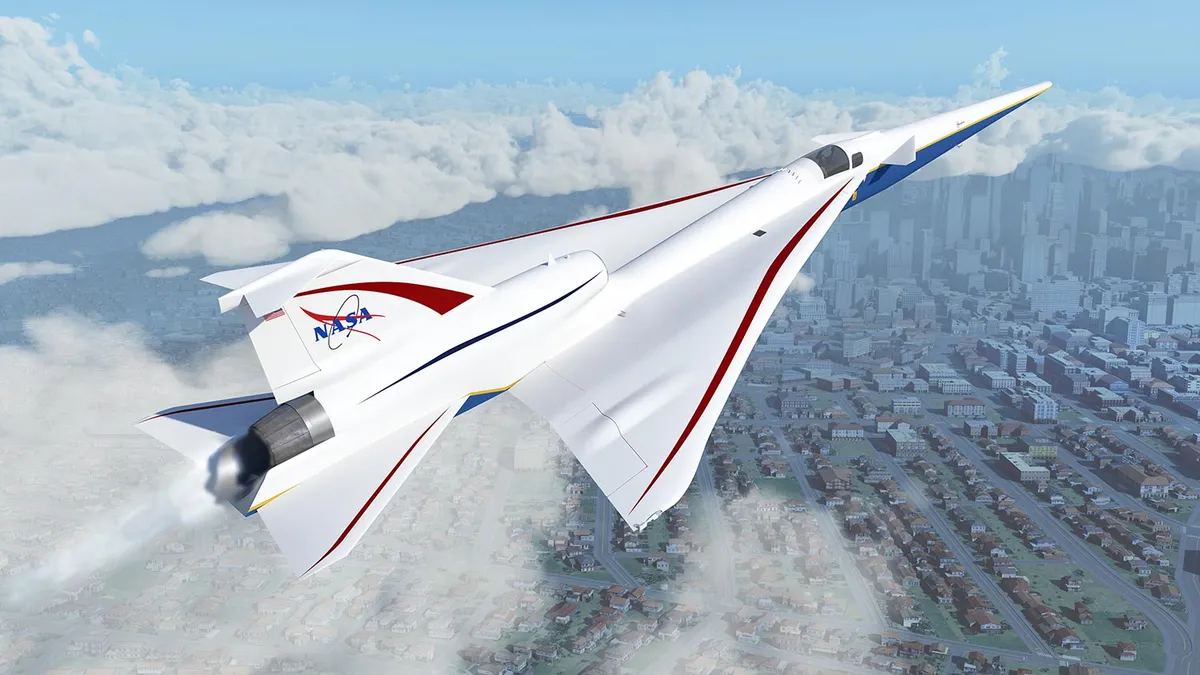
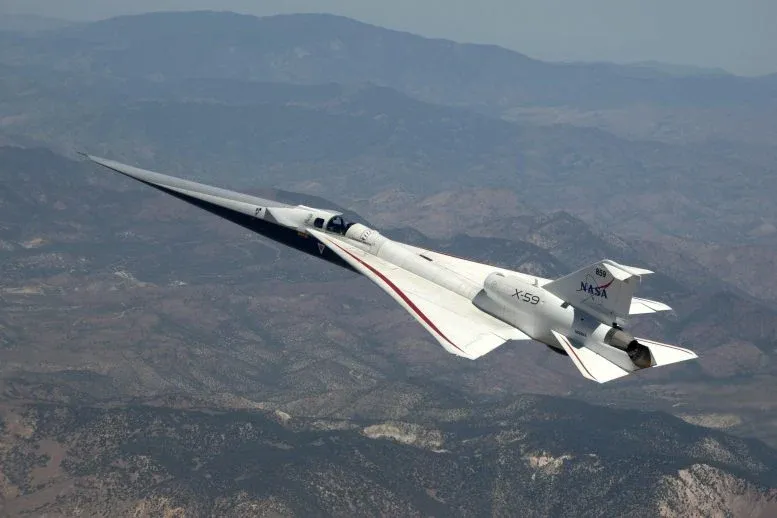
NASA's X-59 experimental jet is preparing for its most important flight tests yet. The aircraft is designed to fly faster than the speed of sound without creating a loud sonic boom. This could change high-speed air travel.
Cathy Bahm, project manager for NASA’s Low Boom Flight Demonstrator, noted that the X-59 is about to fly supersonic for the first time. This moves the project closer to its main goal.
After several months of testing, the X-59 team reviewed its progress in late May. Now, they are ready for tests at higher speeds and altitudes. These flights will show how the aircraft performs for NASA’s Quesst mission. This mission aims to collect data on quiet supersonic flight.
We're a new kind of news feed.
Regular news is designed to drain you. We're a non-profit built to restore you. Every story we publish is scored for impact, progress, and hope.
Start Your News DetoxFirst Supersonic Flights
NASA expects the X-59 to break the sound barrier in early June. It will fly faster than 630 mph at about 43,000 feet. This is a big step for the program.
The aircraft will then try a "mission conditions" flight. It will reach Mach 1.4 (925 mph) at about 55,000 feet. These speeds and altitudes are important because they match what NASA plans for future flights over U.S. communities. During those flights, researchers want to know what people think about the X-59's quieter sonic "thump."
The X-59 was built to reduce the noise of a sonic boom. However, these upcoming tests won't show that quiet capability yet. The X-59 will fly with a regular supersonic chase plane. The chase plane's loud sonic booms will cover any quiet sound from the X-59.
Later this summer, the chase plane will carry a special probe to measure the X-59’s shock waves.
Early Test Flight Achievements
The first phase of testing was successful. It gave engineers important data.
The X-59 first flew in October 2025. After maintenance, it flew again in March 2026. Since then, it has completed 14 more flights and reached several goals:
- It retracted its landing gear for the first time, showing its sleek shape.
- It flew as high as 43,000 feet and reached nearly supersonic speeds of Mach 0.95 (about 627 mph).
- It completed its first day with two flights, which became common.
- It moved between high-speed, high-altitude flights and slower, lower-altitude flights to study its behavior.
Engineers used this flight data to check important systems. These included fuel, hydraulics, environmental controls, and the eXternal Vision System. The X-59 uses cameras instead of a front windshield to show the pilot what's ahead.
Teams also watched the aircraft during takeoffs, landings, and flights. Strain gauges on the plane measured how it handled structural forces.
Expanding Flight Capabilities
In the next tests, pilots will continue to follow test plans. Engineers will watch how the aircraft performs at supersonic speeds.
Bahm said that flying supersonic is a big step for the X-59 team. Each step brings them closer to showing the quiet supersonic ability that is key to the Quesst mission. Completing the first mission-conditions flight is especially meaningful. It means they are testing the aircraft in the environment it was built for.
The X-59 is expected to reach its top targets of Mach 1.6 (1,218 mph) and an altitude of 60,000 feet.
However, not every future flight will be supersonic. The testing will still include slower and lower-altitude flights. This helps engineers evaluate the aircraft in many different conditions.
Bahm added that these flights build confidence in the X-59's performance. They also move the mission forward, which will help shape the future of supersonic travel.
Preparing for Quesst Phase 2
All flights so far, and those planned next, are part of Phase 1 of NASA’s Quesst mission. This phase aims to confirm the aircraft's performance and safety.
Some flights will also test equipment for future research. This includes a probe on a NASA F-15 research aircraft. It will measure the X-59's unique shock-wave signature.
This early data will help prepare for Quesst Phase 2, which starts later this year. In Phase 2, engineers will directly measure the aircraft’s supersonic flight signature. This will confirm that it creates the quiet supersonic thump it was designed for.
Bahm quoted aviation pioneer Otto Lilienthal: "To design a flying machine is nothing. To build one is something. But to fly is everything." She said the 15 X-59 flights since March have been everything to the team. Each flight has pushed boundaries and built confidence in the aircraft.
Bahm noted that the team is focused on what's next. They are ready to expand the flight envelope even more. This moves them toward the mission test point the aircraft was built to achieve. Flying supersonic and reaching these goals is more than progress. It's the result of years of hard work, new ideas, and teamwork. Each step brings them closer to Phase 2 and the future of commercial supersonic flight.
Deep Dive & References
NASA’s X-59 Sonic Boom Killer Is Ready for Its Biggest Test Yet - SciTechDaily, 2024