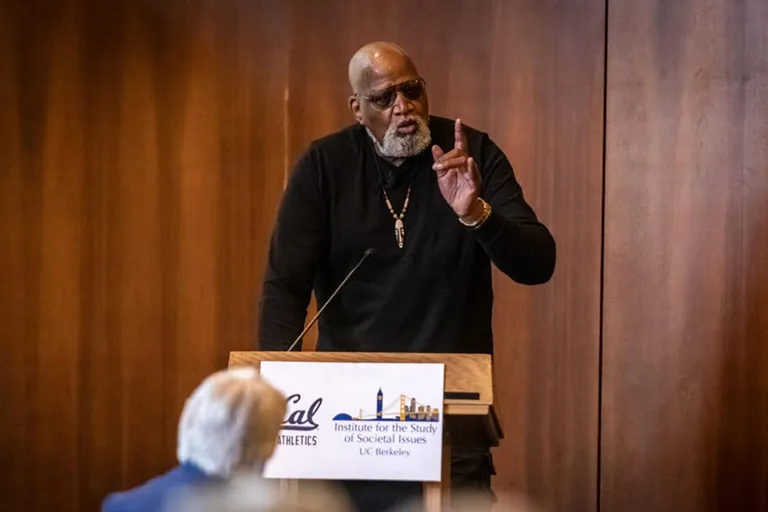
Harry Edwards spent decades documenting something most people overlook: sports aren't separate from society. They're a mirror of it. Now UC Berkeley is building a course around his life's work, and it's designed to reach far beyond the sociology department.
"The Last Lectures" pulls from Edwards' research spanning the Civil War to today—segregation, boycotts, violence, religion, business, how media shapes the narrative. But the course isn't framed as history. Faculty member Harding describes it as "a way of thinking about the way society, power, and social change work." It's a framework. The kind of thinking that helps you see connections between what happened in 1968 and what's happening now, and what you might actually do about it.
The logistics matter here. The Department of Sociology partnered with the Athletic Study Center to make the course fit around student-athletes' schedules and graduation requirements. That's deliberate—Edwards' work speaks directly to athletes navigating the intersection of their sport, their identity, and their education. The NFL Foundation funded the course partly to ensure access extends beyond Berkeley's campus to historically Black colleges and universities, which makes sense given Edwards' scholarship centers on race and American institutions.
We're a new kind of news feed.
Regular news is designed to drain you. We're a non-profit built to restore you. Every story we publish is scored for impact, progress, and hope.
Start Your News DetoxEdwards himself is contributing personal items to the course, a gesture that signals this isn't just academic archive. It's living intellectual work.
If the undergraduate course gains traction and fundraising goals are met, the department plans to adapt it into a summer program for high school students. That's the trajectory here—taking a scholar's decades of thinking and making it accessible to people at different life stages, different points in their own thinking about power and change.
In 2024, UC Berkeley's Division of Social Sciences gave Edwards the inaugural Social Science for the Public Good Award, which now bears his name. The division is working to establish a doctoral fellowship and an endowment in his name, cementing the work as something the institution intends to sustain.
The real measure of this course won't be grades or enrollment numbers. It'll be whether students leave with a different way of seeing the world—understanding that sports, race, power, and personal agency aren't separate threads. They're woven together.