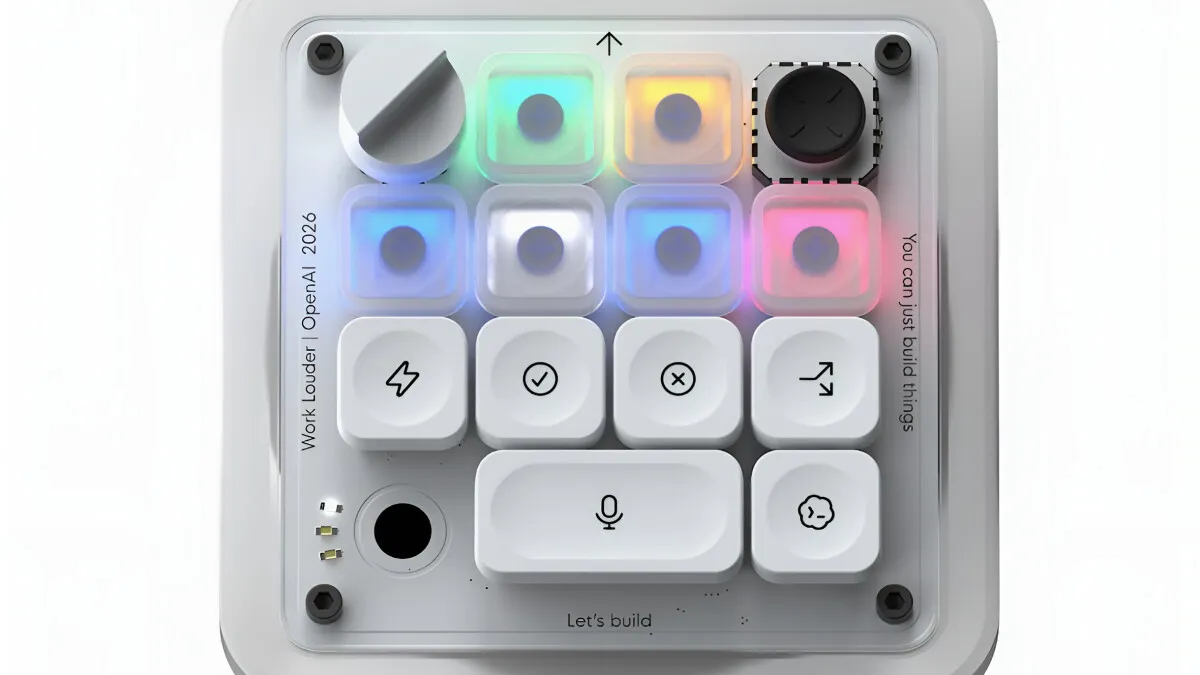
OpenAI, known for ChatGPT, has launched its first hardware product. It's a $230 mini-keyboard called the Codex Micro. This device helps users of Codex, OpenAI's AI coding agent.
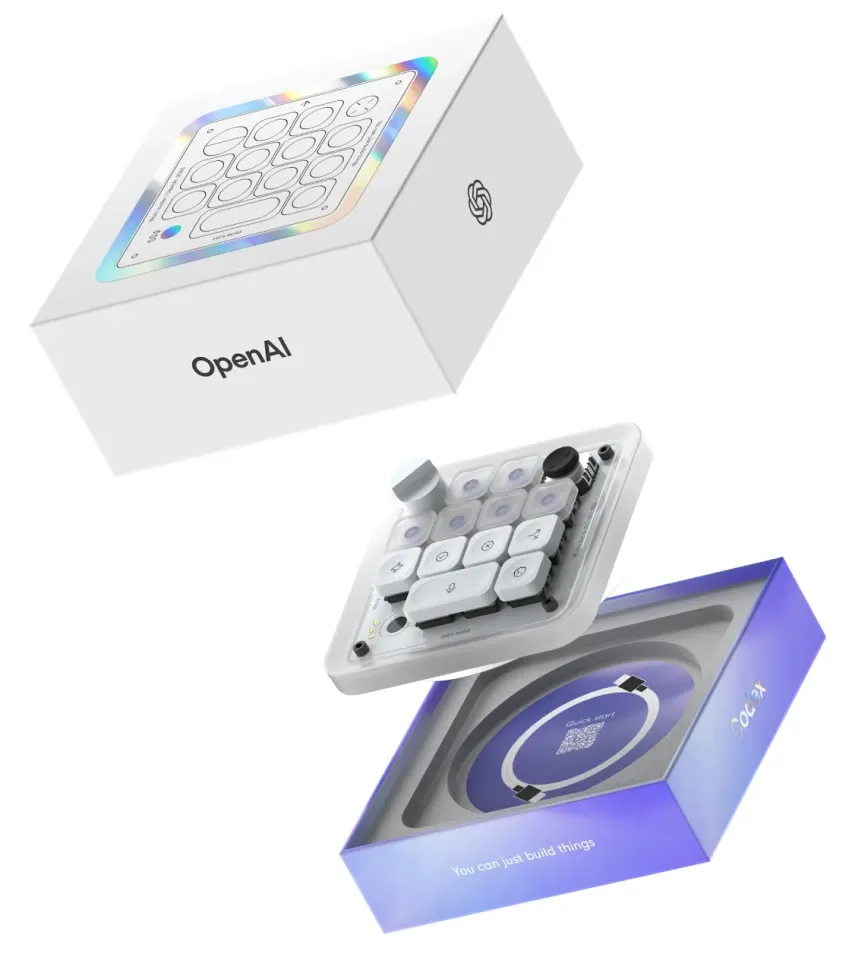
The Codex Micro was made with keyboard specialist Work Louder. It's sold through OpenAI’s Supply Co. store. OpenAI calls it a "command center for agentic work." It's more of a programmable macro pad than a full keyboard, with 13 mechanical switches. It sits next to a regular keyboard.
OpenAI designed the device for Codex users. These users often manage several AI agents and coding tasks at once.
We're a new kind of news feed.
Regular news is designed to drain you. We're a non-profit built to restore you. Every story we publish is scored for impact, progress, and hope.
Start Your News DetoxHow the Codex Micro Works
The pad has 13 mechanical keys. Six are translucent "Agent Keys." Each can link to a different Codex conversation. Pressing an Agent Key opens that chat immediately. These keys use RGB lighting to show the agent's status. Users can see if an agent is idle, working, waiting, finished, or has an error. This helps users check multiple tasks quickly.
The other six "Command Keys" are preconfigured for common actions. These include starting a new chat, approving or rejecting requests, activating push-to-talk, and sending prompts. Users can change these keys to other Codex functions. They can also swap keycaps with included icons. The push-to-talk button uses the computer's microphone, as the Codex Micro doesn't have one.
The device also has a small joystick, likely the 13th key. This joystick can trigger reusable Codex Skills and common workflows. Examples include debugging errors, reviewing pull requests, or refactoring code. A rotary dial is another interesting feature. It lets users adjust the agent’s reasoning level based on task difficulty.
These controls turn multiple clicks and chat switches into single physical actions. This makes it easier to manage several agents without stopping the main coding work.
The hardware connects via Bluetooth or USB-C. It works with Mac and Windows. The body is made of CNC-machined polycarbonate and aluminum. The keycaps are PBT and polycarbonate. Buyers can choose clicky or silent mechanical switches. The Codex Micro is actually Work Louder’s existing Creator Micro 2, remapped for OpenAI. It has the same 13 mechanical switches, rotary encoder, planar joystick, and touch sensor.
OpenAI had previously hinted at a screen-free device with former Apple design chief Jony Ive. Many expected this to be their first hardware. However, that plan seems to have stalled. Days before the Codex Micro launched, Apple sued OpenAI. Apple accused OpenAI of stealing trade secrets for its hardware and poaching ex-Apple staff for confidential details.
Despite this, the Codex Micro is a fitting first hardware product. Codex is a major focus for OpenAI. In June, OpenAI announced Codex had over 5 million weekly active users, a six-fold increase since February. The hardware sold out in less than 24 hours after its launch.
Deep Dive & References: OpenAI Supply Co. Lab