Mariah Reading used to buy fresh canvases for her landscape paintings. Then she realized the irony: she was harming the environments she was trying to celebrate.
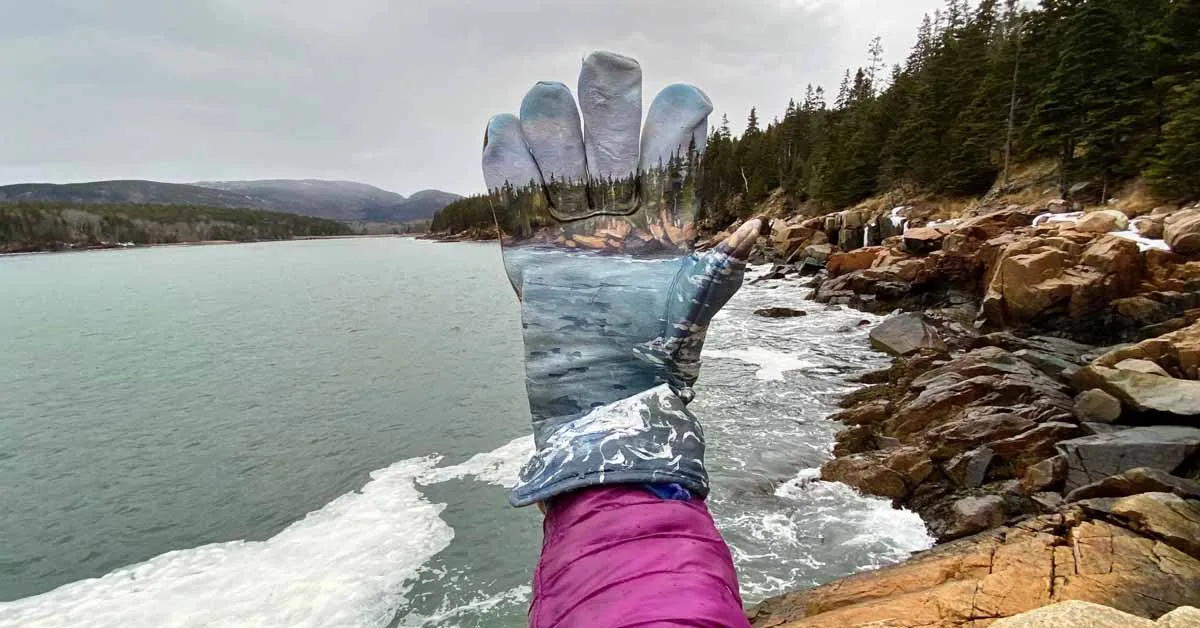
So she stopped. Instead, she collects trash from the national parks she visits—discarded flip-flops, leather gloves, plastic boxes, a folding chair—and paints them. A portrait of Zion appears on a sandal. Acadia emerges on a work glove she titled "Lend A Hand." Each piece is photographed against the actual landscape it depicts, creating a conversation between the found object and the place it came from.
A portrait of Zion National Park painted on a discarded flip flop. Photo courtesy of Mariah Reading
We're a new kind of news feed.
Regular news is designed to drain you. We're a non-profit built to restore you. Every story we publish is scored for impact, progress, and hope.
Start Your News DetoxReading, a classically trained painter, has been Artist in Residence at Denali, Zion, Guadalupe Mountains, and Acadia. She's logged thousands of miles across the country's historic parks, and the material supply for her work is, she's noted with dark humor, essentially limitless. "There's a lifetime of work to be done," she told People Magazine.
But this isn't just about aesthetics. Reading volunteers as an Arts in the Parks coordinator, leading conservation workshops and creative curriculum for students of all ages. Her work has become a form of environmental advocacy—a way to make people care about landscapes by showing them what gets left behind when we don't.
"Lend A Hand." Photo courtesy of Mariah Reading
"It is now more critical than ever to leave no trace," Reading wrote in an artist statement. "When our public lands are not vigilantly protected, the detrimental effects cannot be ignored." Her practice, she explains, is about finding ways to lessen her footprint and leave the Earth better than she found it—a principle that feels increasingly urgent as public lands face pressure from multiple directions.
Reading's work suggests something worth holding onto: that individual creative acts, done with intention, can model a different way of being in the world. Not through grand gestures, but through thousands of miles traveled, thousands of pieces of trash transformed, and thousands of conversations started about what it means to actually protect the places we love.