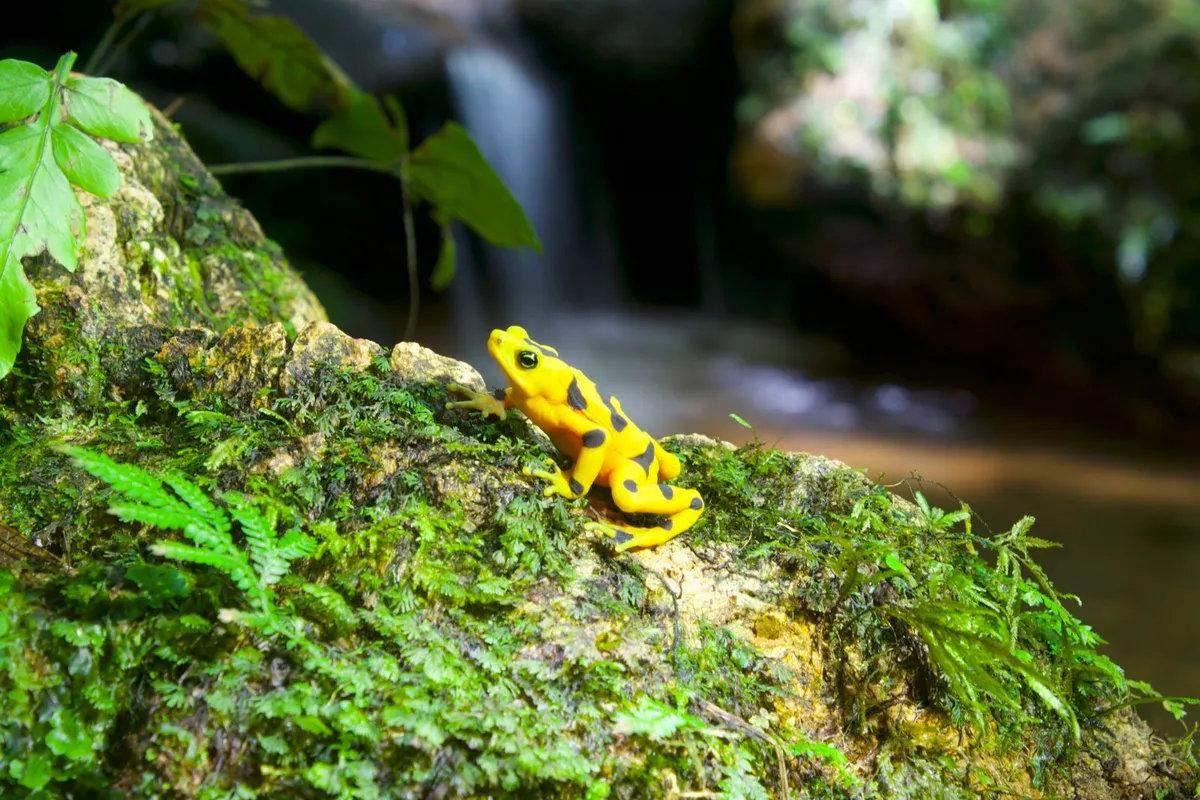
The last wild Panamanian golden frog was seen in 2009. A fungus called chytridiomycosis had swept through Panama's rainforests, wiping out an entire species that hadn't been glimpsed in nature for over a decade and a half. Now, scientists are bringing them back.
In August 2025, researchers released 100 captive-bred golden frogs into outdoor pens in Panama as part of the most direct test yet of whether these toads can survive their fungal nemesis in the wild. It's a moment that represents two decades of quiet, unglamorous work: breeding frogs in zoos, studying disease dynamics, waiting for the right moment to try again.
The fungus and the frog
Chytridiomycosis doesn't sound like much until you understand what it does. The culprit is a water-borne fungus called Batrachochytrium dendrobatidis—Bd for short—that arrived in Central America in the late 1980s. It colonizes amphibian skin, causing it to slough off. Since frogs breathe through their skin, the infection is essentially suffocation in slow motion. By 2019, researchers had documented Bd wiping out 90 amphibian species entirely and driving 491 others into decline. It's considered the most devastating wildlife disease on record.
We're a new kind of news feed.
Regular news is designed to drain you. We're a non-profit built to restore you. Every story we publish is scored for impact, progress, and hope.
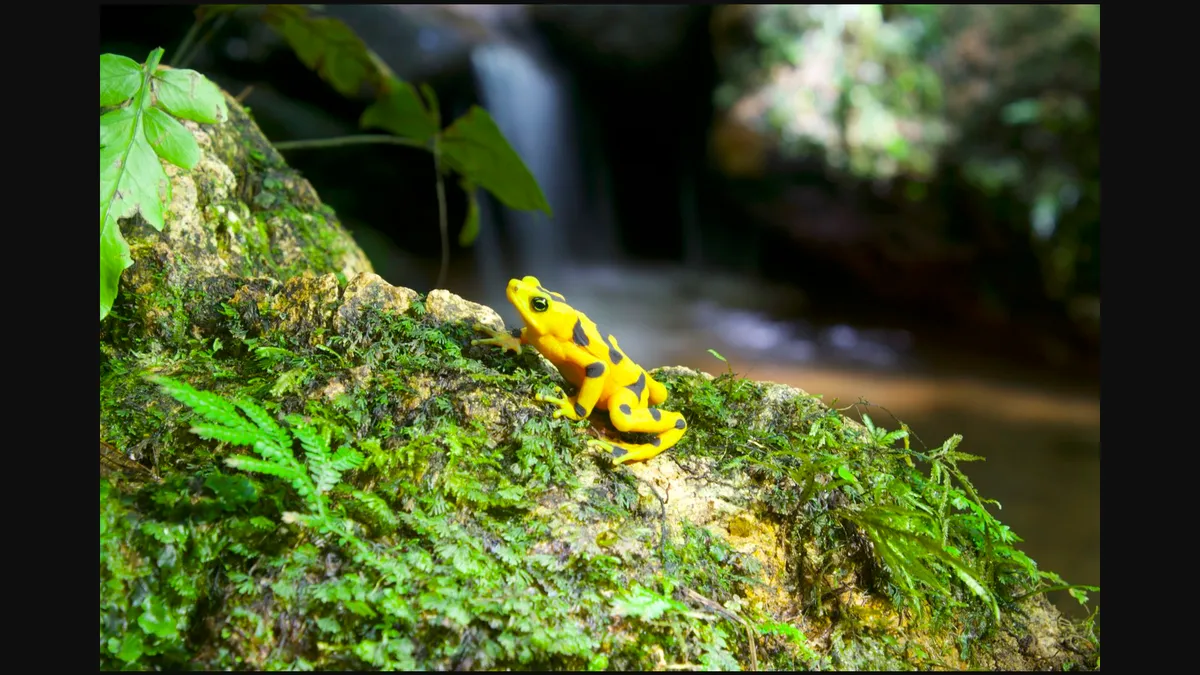
Start Your News DetoxThe Panamanian golden frog was among the hardest hit. These aren't actually frogs but toads, bright yellow with black spots, toxic enough to kill over 1,000 mice with the poison in their skin. That toxicity didn't protect them from Bd.

Two decades ago, conservation biologists at the Smithsonian's National Zoo and Conservation Biology Institute saw the fungus spreading and predicted what would happen. They partnered with other zoos to launch the Panama Amphibian Rescue and Conservation Project (PARC), beginning a captive-breeding program before the species vanished entirely from the wild.
PARC Director Roberto Ibañez and other researchers released the captive-bred creatures into special pens in August 2025. Photo: Ana Endara
The hard numbers
The August 2025 trial was sobering. The researchers placed frogs in outdoor enclosures called mesocosms—essentially reinforced patios with leaf litter and insects for foraging—and monitored them for 12 weeks. About 70 percent died from chytridiomycosis. The survivors were then released fully into the wild.
This sounds like failure until you understand what actually happened: scientists finally got to watch the disease unfold in real conditions and measure exactly how it progresses. "This experiment is probably the first experiment where we've actually been able to really get a full understanding of the disease dynamics of these animals," says Brian Gratwicke, the conservation biologist leading PARC.
That data matters enormously. It tells researchers not just that the fungus is deadly, but how deadly under specific conditions, and whether any frogs develop resistance over time. One California frog species has already shown signs of adaptation after living with the pathogen for several decades. In Australia, researchers found that frogs spending time in warm, sunny spots had better survival rates than those in cooler areas—suggesting temperature management could be a tool for rewilding.
What comes next
The path forward isn't a single solution but a series of small advantages stacked together. Scientists are studying frog species that seem naturally resistant to Bd, hoping to understand what makes them immune. They're exploring whether golden frogs can be placed in warmer microclimates where they thrive but the fungus struggles. They're monitoring the wild population to see if any frogs develop tolerance.
This isn't a race. It's the slow work of restoration—measuring, learning, trying again with slightly better odds each time. The goal is simple: healthy, thriving populations of golden frogs back in Panama's rainforests. The path there is measured in 12-week trials and survival rates and the patience to wait another 20 years if that's what it takes.