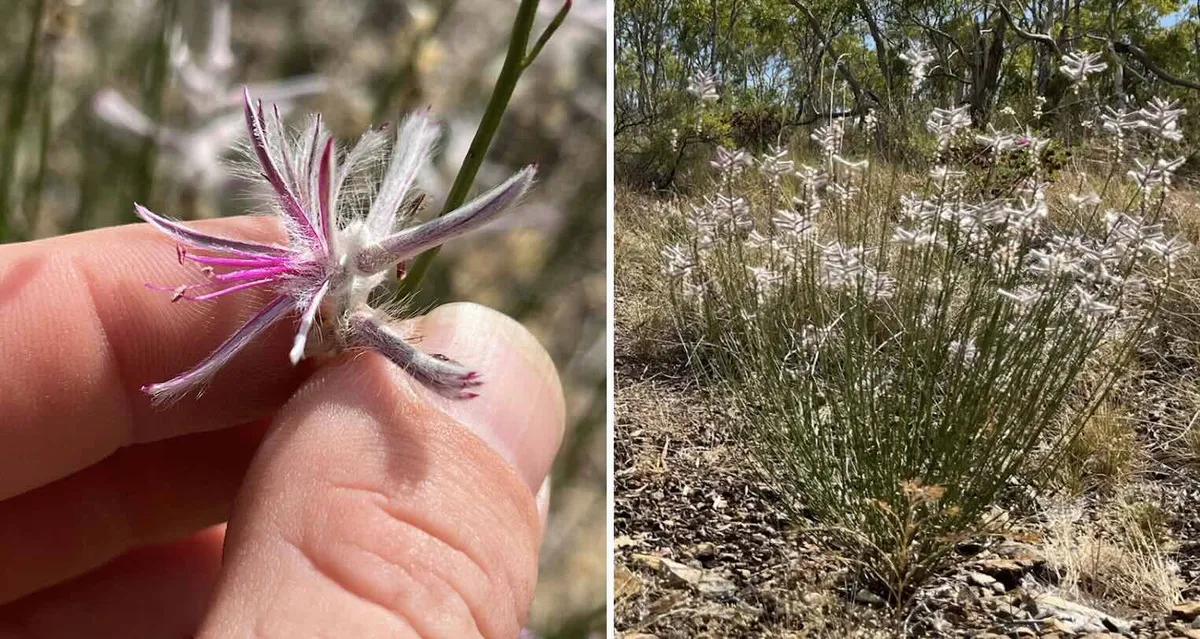
A shrub with purple-pink flowers, last recorded in 1967, is still growing in remote northern Queensland. Aaron Bean spotted it while banding birds on an outback station, snapped a photo, and uploaded it to iNaturalist — a citizen science platform where amateur naturalists share wildlife observations. Within days, botanist Anthony Bean from the Queensland Herbarium recognized it as Ptilotus senarius, a species presumed lost to extinction.
The rediscovery matters because it challenges the finality we often assign to extinction. Ptilotus senarius is one of roughly 900 plant species that have vanished from the wild since 1750. Finding it alive — after six decades of absence from scientific records — suggests others may still be clinging to existence in places we haven't looked carefully enough.
How citizen science rewrote the search
If Aaron Bean had simply noticed the shrub and moved on, it would have remained invisible to the scientific community. Instead, iNaturalist connected his observation to the expertise of trained botanists. The platform now holds over 300 million observations of more than 500,000 species, making it something like a distributed nervous system for conservation biology.
We're a new kind of news feed.
Regular news is designed to drain you. We're a non-profit built to restore you. Every story we publish is scored for impact, progress, and hope.
Start Your News DetoxThomas Mesaglio from UNSW points out the scale problem that citizen science solves. Australia is vast. Professional botanists can't be everywhere. But landowners, hikers, and bird banders are already moving through the landscape. When they document what they see — even casually — they become what Mesaglio calls the "eyes and ears" for scientists working against time and distance.
The value compounds with detail. A photo alone is useful. A photo with location data, habitat notes, and date becomes research material. As more people engage with platforms like iNaturalist, the coverage deepens, especially across Australia's two-thirds of privately owned land — territory that's traditionally hard for researchers to access.
Mesaglio sees this as more than just data collection. When landowners become invested in documenting the biodiversity on their own properties, they shift from passive land managers to active conservationists. They start noticing what they have. They start caring.
Ptilotus senarius is unlikely to be the last rediscovery. Every day, thousands of new observations arrive on iNaturalist. Some will be common species, logged for population tracking. Others might be the forgotten survivors — species that never quite vanished, just waited quietly until someone was looking in the right direction.