Microplastics have turned up in human brains, breast milk, and testicles. They've settled at the bottom of the Mariana Trench and near Mount Everest's peak. They're choking phytoplankton—the tiny organisms that feed marine ecosystems and generate half the oxygen we breathe. For years, this crisis unfolded quietly in the background of our daily lives. Now the response is shifting from awareness to action.
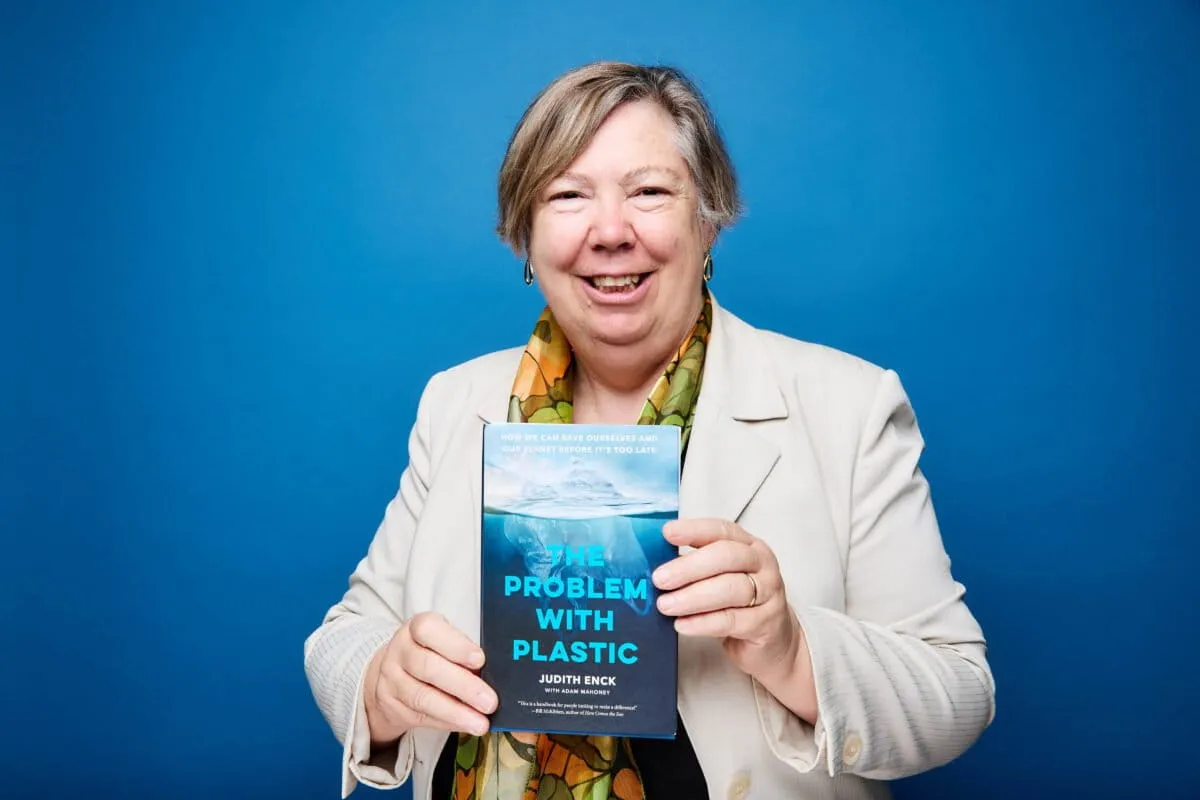
Judith Enck, who spent her career at the EPA before founding Beyond Plastics, has spent the last decade documenting what happens when we treat the ocean like a watery landfill. In her new book written with co-author Adam Mahoney, "The Problem with Plastic: How We Can Save Ourselves and Our Planet Before It's Too Late," she lays out what governments can actually do to stop it. The evidence isn't theoretical anymore—it's in our bodies, our food chains, our bloodstreams.
"We have no choice but to act," Enck says. "Who's going to stand by and read health study after health study about microplastics in our brains and breast milk and testicles." The rhetorical question isn't really a question. It's a statement of fact: inaction has become politically and ethically untenable.
We're a new kind of news feed.
Regular news is designed to drain you. We're a non-profit built to restore you. Every story we publish is scored for impact, progress, and hope.
Start Your News DetoxThe shift is already visible. Over the past two years, more than 100 countries have begun negotiating binding international agreements on plastic production and waste. The European Union has banned single-use plastics in major categories. India has committed to eliminating single-use plastic by 2022 (though implementation remains uneven). These aren't perfect solutions—they're the beginning of a systemic reckoning.
What makes this moment different from previous environmental campaigns is the speed of evidence. Microplastics weren't even on the public radar a decade ago. Now they're routinely found in drinking water, table salt, and the air we breathe. The health implications are still being studied, but the pattern is clear: plastic doesn't disappear. It fragments into smaller and smaller pieces that our bodies can't distinguish from nutrients.
Enck's work focuses on what governments can control: production limits, extended producer responsibility (making companies responsible for their products' entire lifecycle), and investment in alternatives. It's not about individual recycling habits—it's about stopping the problem at the source.
The next phase involves turning policy momentum into enforcement. Agreements signed in conference rooms only matter if they're backed by funding, monitoring, and accountability. That's where the real work begins.