Most of the plastic we use is basically immortal. It just hangs around, for centuries, slowly turning into microplastic confetti that gets everywhere. But what if we could just… give it a nudge? What if we could tell it, "Hey, maybe it's time to break down a little faster?"
Well, scientists just found a way to do exactly that. They've figured out how to take those stubborn plastics, the kind in your food packaging and 3D prints, and chemically tweak them into materials that actually degrade at a more reasonable pace. Because apparently, that's where we are now: teaching plastic some manners.
The Sulfur Switcheroo
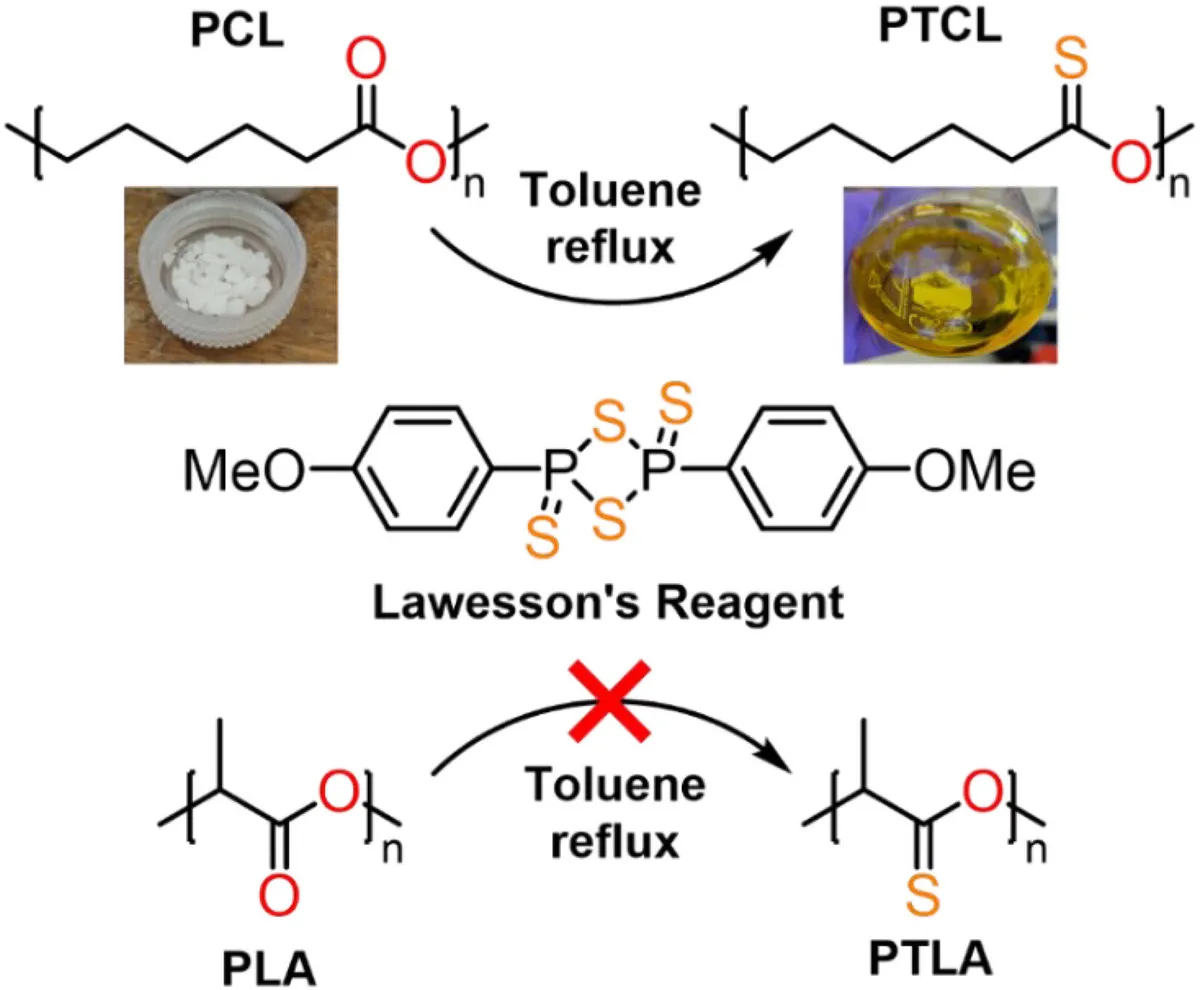
The brilliant minds at the University of Edinburgh and RPTU University Kaiserslautern-Landau in Germany are behind this. Instead of inventing a whole new plastic, they're playing chemist with the old stuff. Their secret? They're turning some of the oxygen atoms in the plastic's chemical structure into sulfur atoms. Think of it as a tiny, molecular-level swap meet.
We're a new kind of news feed.
Regular news is designed to drain you. We're a non-profit built to restore you. Every story we publish is scored for impact, progress, and hope.
Start Your News DetoxThis isn't some multi-step, industrial-complex nightmare. It's a single, elegant step using a special "thionating agent." The result is a new type of plastic called a polythionoester. Why does this matter? Because those new carbon-sulfur bonds? They're much weaker than the original carbon-oxygen bonds. Which means the entire material becomes far more willing to just… break down.
They tested this on polycaprolactone, a common biodegradable plastic found in everything from food packaging to medical implants. The process is simple enough that it could be scaled up to handle large quantities of plastic, and even adapted for other types. It's like giving plastic a built-in self-destruct button, but for good.
Of course, more research is needed to fully understand the environmental encore of these new materials. But the initial findings, published in Chem Circularity, are pretty compelling. Dr. Jennifer Garden, who co-led the study, pointed out that this kind of chemical transformation is usually incredibly difficult with polyesters. This discovery doesn't just make existing plastic less immortal; it opens up a whole new world of sulfur-infused materials. Which, if you think about it, is both impressive and slightly terrifying.