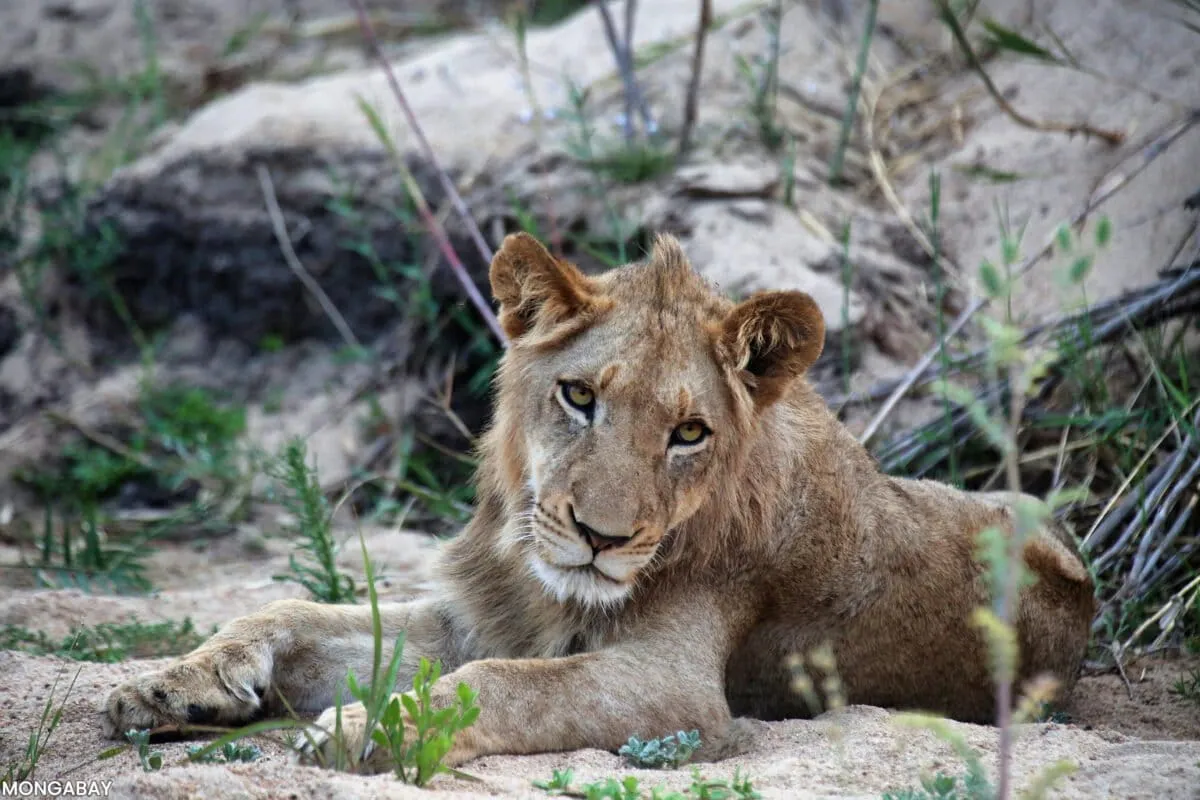
African lions are vanishing faster than most people realize. From hundreds of thousands roaming the continent a few decades ago, the population has collapsed to around 25,000 today—confined to just 6% of their historic range. But a new study reveals the crisis is intensifying in an unexpected way: organized poaching specifically for bones, skin, teeth, and claws destined for black markets.
The shift matters because it changes what conservationists are up against. Trophy hunting, livestock conflicts, and prey depletion have long threatened lions. Those are difficult problems, but they're at least visible. Trade-driven poaching operates differently—it's deliberate, organized, and driven by demand thousands of miles away.
Mozambique offers a stark example. In 2023 alone, officials in Maputo seized over 300 kilograms of lion parts in a single operation. Meanwhile, South Africa's Kruger National Park—one of Africa's largest protected areas—saw its lion population drop nearly 60% between 2005 and 2023. The pattern is unmistakable across the continent.
We're a new kind of news feed.
Regular news is designed to drain you. We're a non-profit built to restore you. Every story we publish is scored for impact, progress, and hope.
Start Your News DetoxThe demand is real and growing. Lion bones have become sought-after in traditional Chinese medicine and cultural practices across 37 African countries. Luke Hunter, who leads the Wildlife Conservation Society's big cats program, calls this trade-driven poaching "a defining threat to the future of Africa's lions." It's not hyperbole—without intervention, researchers warn this could become existential for the species.
What makes this moment different is recognition. The study doesn't just document the problem; it names it as distinct from other threats. That clarity matters for conservation strategy. You can't solve a problem you're not looking at directly.
The next phase depends on whether African governments and international partners can tighten enforcement, reduce demand, and make poaching economically unviable faster than the trade can adapt. The clock is running on a species that's already run out of room.