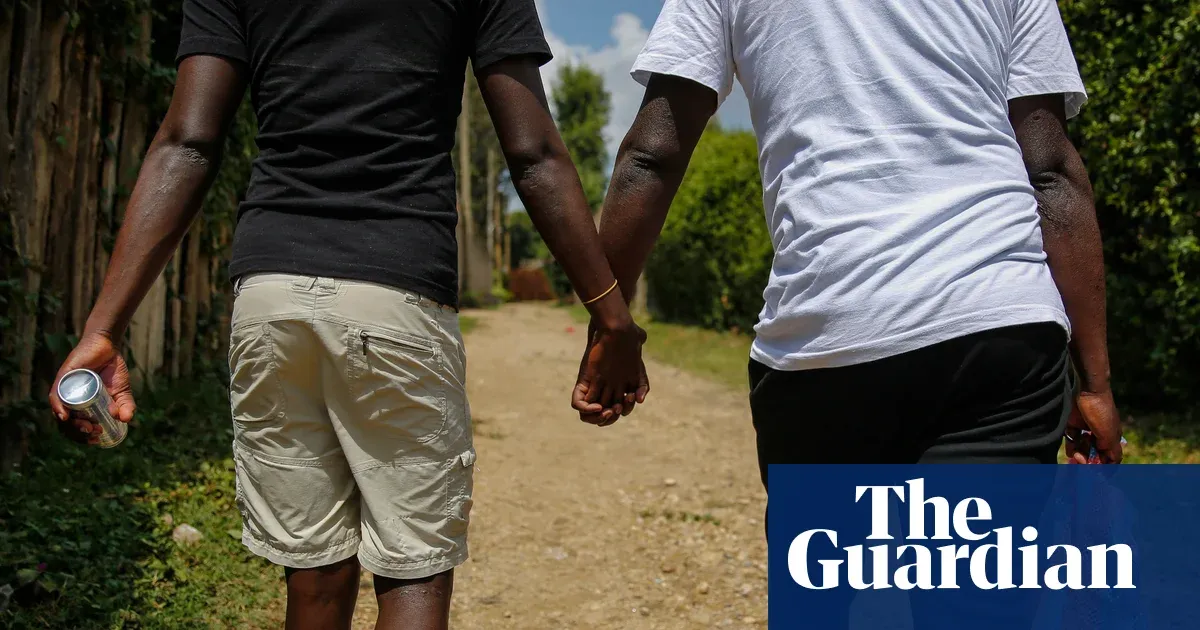
Two people in Kenya who attacked and robbed two gay men have been sentenced to 15 years in prison. LGBTQ+ rights advocates are calling this a major step forward for the queer community in the country.
Abel Meli and another person received their sentences for robbery with violence on March 3 at Milimani law courts in Nairobi.
A Rare Victory for Justice
This ruling is a rare instance of justice for the queer community in Kenya. Njeri Gateru, executive director of the National Gay and Lesbian Human Rights Commission, said this case offers encouragement. She noted that despite criminal laws and homophobic attitudes, some still believe justice can be found.
We're a new kind of news feed.
Regular news is designed to drain you. We're a non-profit built to restore you. Every story we publish is scored for impact, progress, and hope.
Start Your News DetoxKenya is one of 31 African countries where homosexuality is illegal. Gay sex can lead to up to 14 years in prison. Many queer individuals hide their sexual orientation due to societal rejection. Hostility towards queer people has grown recently. This is partly due to tougher laws, less funding for gay rights groups, and a global anti-rights movement.
Human rights groups in Kenya report a rise in blackmail and extortion, often with violence. Ishtar, an organization supporting men who have sex with men, recorded 226 such cases in 2025. In the first two months of 2026, there were 61 cases.
The Family Protection Bill 2023, introduced by MP Peter Kaluma, aims to increase penalties for same-sex relations. It also seeks to restrict LGBTQ+ education and limit free expression. Kelly Kigera, programs manager at Ishtar, said there is fear around the bill. She added that churches have been teaching congregations how to profile queer people, leading to more violence.
Lucas Wafula, a paralegal from Ishtar, said that queer individuals often face harassment and discrimination at police stations. He noted that police might dismiss their cases, telling them they are "not a normal citizen."
The Attack and Its Aftermath
In April 2023, Eric Anyango and his friend Joe Ochieng met a man Ochieng had connected with on Facebook. Soon after arriving at the man's house, three other men burst in.
For four hours, Anyango and Ochieng, both in their mid-20s, were beaten. Their phones, wallets, and clothes were stolen. They were forced to call friends and family to transfer money to their attackers' online accounts. The attackers threatened to out them to their families, who did not know they were gay, and kill them if they refused.
Anyango tried to fight back. One of the attackers held a knife to him, threatening to stab him and throw him out the window if he didn't cooperate.
After calling relatives and friends, the pair transferred 100,000 Kenyan shillings (about £576) to the blackmailers. Then they were released.
Anyango told a friend what happened, who then referred him to Ishtar. Wafula went with them to the police, and two attackers were arrested.
Gateru believes the two perpetrators were part of a larger criminal gang, possibly involving police members, that targets queer men. She said several such gangs operate across Kenya. Gateru noted that these two men had been arrested before for other cases but were released. She hopes this sentencing will deter other gang members.
Michael Nyaga, a spokesperson for the Kenyan national police service, said he had not heard accusations of police involvement. He stated that the police would investigate any complaints with proper leads.
Many cases of blackmail and extortion go unreported, Gateru said. Victims fear self-incrimination, especially if they admit to seeking intimate relationships with other men. Blackmailers exploit this fear and the widespread homophobia in public institutions and society. This allows them to act with little consequence.
Anyango and Ochieng are glad justice was served, but they are still affected by the ordeal. Ochieng said he was "emotionally and physically damaged" and lost everything he was building for his future. Both now find it hard to trust people.
They encourage others who face similar situations to report them. Anyango said, "If you have been blackmailed, don’t be afraid. There is justice, go to the police station. No one has the right to abuse you or do anything."
Names have been changed to protect identities.