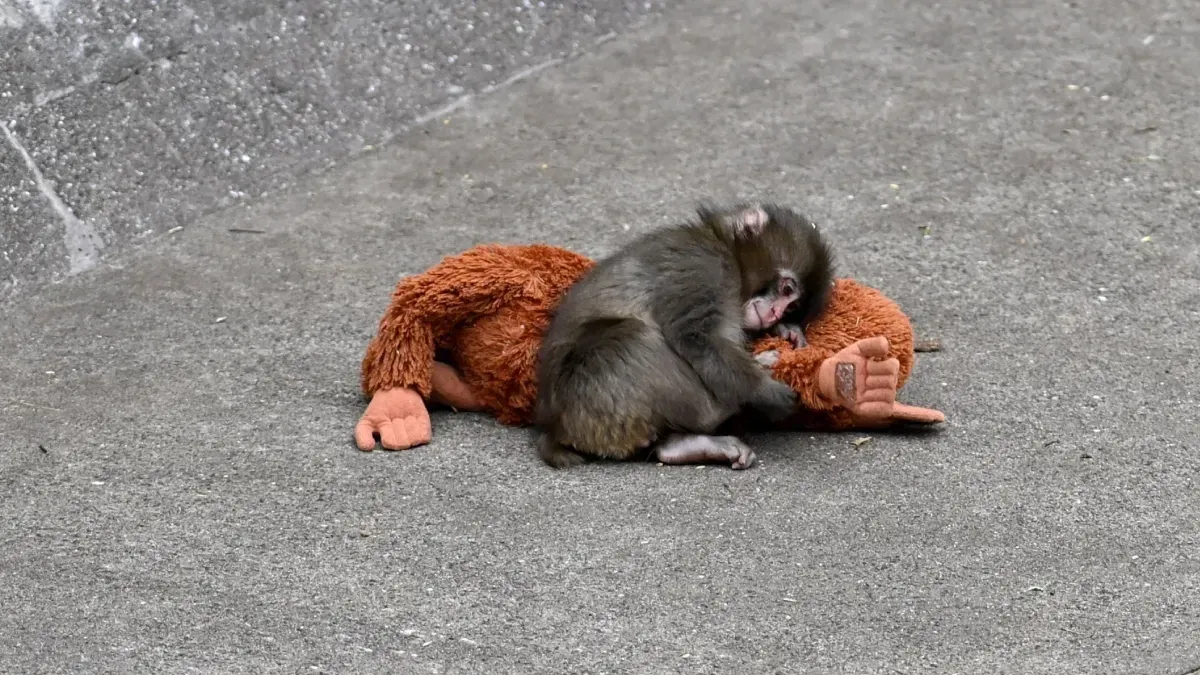
A baby macaque named Punch-kun arrived at the Ichikawa City Zoo in Japan with a wound that wasn't visible: his mother abandoned him at birth, leaving him anxious and isolated among other animals. Zookeepers gave him a stuffed orangutan to hold onto. For months, that toy was his only anchor.
Then something shifted. Punch began accepting hugs from an older monkey—a moment that sounds small until you understand what it means. An animal who once clung only to fabric was learning to trust flesh and blood.
The breakthrough matters because it reveals something about how trauma and recovery work, even in animals. Punch's early abandonment created a social gap; he didn't have a mother to teach him how to read other monkeys, how to play, how to belong. The stuffed animal wasn't a substitute for that education—it was a bridge. It gave him something safe to hold while his nervous system learned that the world wasn't entirely hostile.
We're a new kind of news feed.
Regular news is designed to drain you. We're a non-profit built to restore you. Every story we publish is scored for impact, progress, and hope.
Start Your News DetoxWhat the zookeepers did was patient and deliberate. They didn't rush him into a monkey group. They didn't remove the comfort object the moment he showed improvement. Instead, they let him set the pace, introducing social contact gradually while he still had his stuffed companion nearby. That combination—the familiar object plus the slow exposure to real connection—created the conditions for change.
Punch's story has resonated far beyond Japan's zoos, partly because it maps onto something recognizable in human experience. We all know what it feels like to need comfort before we can be brave. We understand that healing isn't about forcing yourself past fear; it's about having something to hold onto while you learn that other people are safe.
The larger context here is worth noting: most zoos historically treated animals like exhibits, not beings with emotional lives that could be damaged or healed. The fact that Ichikawa City Zoo invested this kind of attention in one small macaque's emotional recovery reflects a shift in how we think about animal welfare. It's not just about food and shelter anymore. It's about recognizing that loneliness and anxiety are real problems, even for animals, and that they deserve solutions.
Zoo visitors and online followers have watched Punch's progress with genuine investment—not the superficial kind that burns out in a week, but the sustained attention of people who genuinely wanted to see him make it. That collective care, channeled through social media and into real resources at the zoo, created a feedback loop that likely contributed to his caregivers' commitment.
Punch is still learning. He's still discovering what it means to be a macaque in community with other macaques. But the trajectory has changed. He's no longer the anxious animal clinging to a toy. He's becoming the animal he might have been all along.