Imagine a tree so tall, so distinct, that it should be impossible to miss. Now imagine that tree disappearing for nearly 100 years. Poof. Gone from human records, lurking in the shadows of one of the most biodiverse places on Earth.
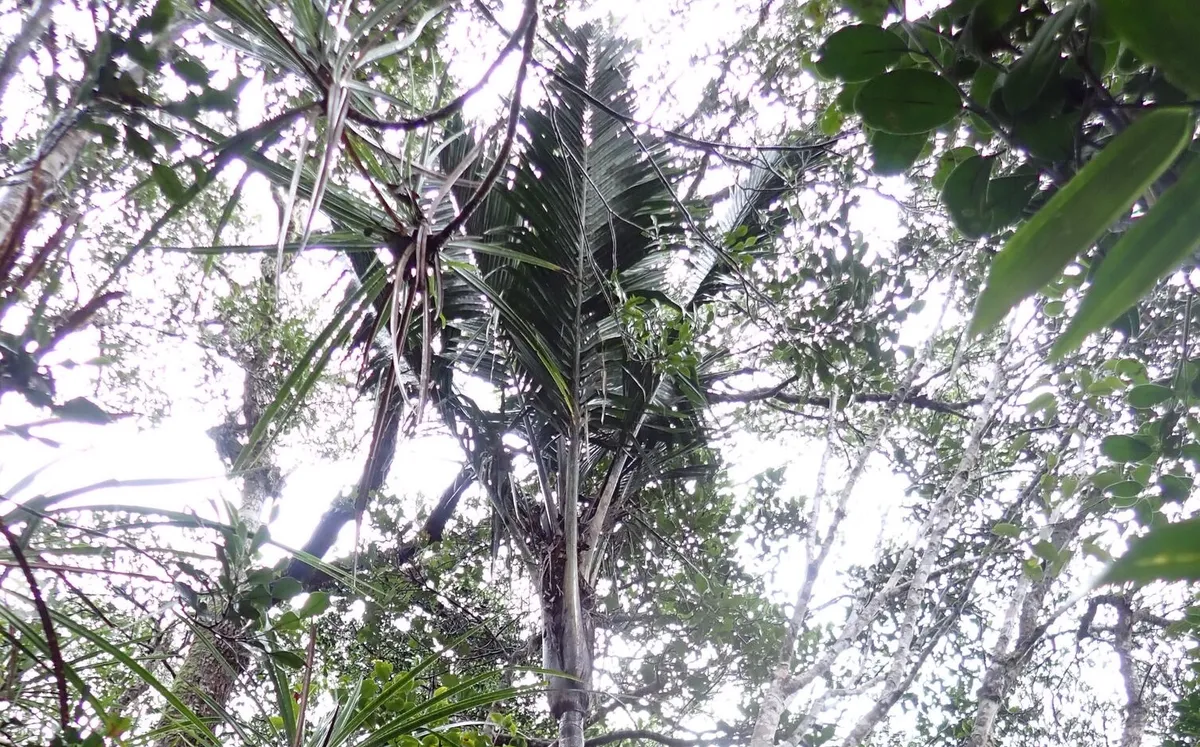
That's the story of Ravenea latisecta, a rare palm species from Madagascar that just staged a magnificent comeback. Researchers recently stumbled upon 28 of these botanical recluses, mostly hidden within four protected areas of Madagascar's Andasibe-Mantadia region.

Louis Aureglia, the lead author of the study from Aix-Marseille University, put it best: Andasibe-Mantadia is a well-studied area. Which makes a several-meter-high palm tree's century-long absence from the official books both baffling and, frankly, a little embarrassing for the botanical community.
We're a new kind of news feed.
Regular news is designed to drain you. We're a non-profit built to restore you. Every story we publish is scored for impact, progress, and hope.
Start Your News DetoxThe Great Palm Hunt
There are roughly 20 known species in the Ravenea palm genus, all exclusive to Madagascar and the Comoros islands. Almost every single one is teetering on the brink of extinction. So, in 2024, Aureglia and his team embarked on a mission: find Ravenea palms in the wild. They also dug through old plant samples in herbariums, which sounds less like an Indiana Jones adventure and more like a very dusty library trip.
Now, you'd think finding a palm tree would be easy. They're not exactly subtle. But some Ravenea species are tricky to identify without their party clothes on — specifically, their flowers. The breakthrough came when the team found "fertile" plants, meaning male and female trees proudly displaying their inflorescences, those branched structures holding clusters of flowers.

Ravenea latisecta is dioecious, a fancy way of saying its male and female flowers grow on separate plants. Once both genders were caught in bloom, matching the original, nearly century-old description, the case was closed. The missing palm was officially, unequivocally, back. And a small piece of Madagascar's botanical mystery was finally, satisfyingly, solved.