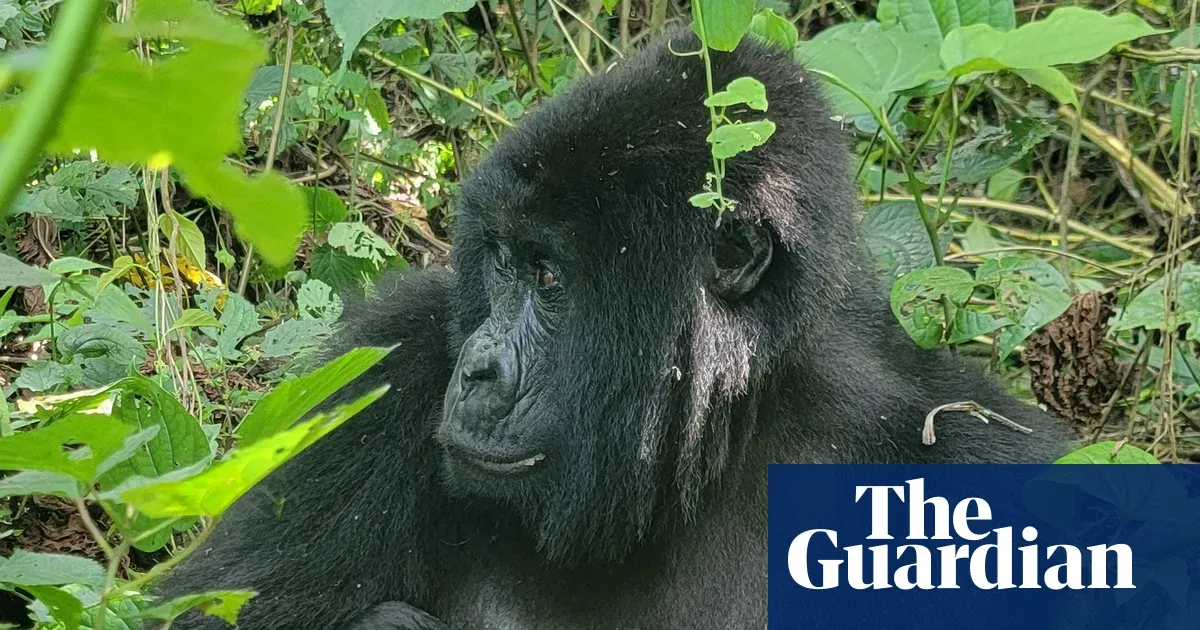
Jacques Katutu spotted them at noon on January 3rd — two tiny males clinging to their mother Mafuko in a forest clearing deep in Virunga national park, eastern Democratic Republic of the Congo. After 15 years monitoring gorillas, Katutu still felt the weight of the moment. "Watching Mafuko holding two babies was both moving and filled me with responsibility, given the twins' extreme vulnerability," he says.
Twin births in mountain gorillas are extraordinarily rare, and the odds are brutal. About a quarter of infant mountain gorillas don't survive their first years — disease, trauma, sometimes infanticide. Mafuko herself gave birth to twins in 2016, but neither lived more than a few days. This time, specialist vets are on daily watch. The newborns are healthy so far, but no one is naming them yet. Not until survival looks more certain.
Yet their arrival matters far beyond these two fragile lives. It marks another small victory in what might be the most improbable conservation comeback of the last century.
We're a new kind of news feed.
Regular news is designed to drain you. We're a non-profit built to restore you. Every story we publish is scored for impact, progress, and hope.
Start Your News DetoxFrom the edge of extinction
In the 1970s, fewer than 250 mountain gorillas existed on Earth, scattered across two isolated territories in the Virunga mountains. The subspecies was critically endangered — essentially, we were watching them disappear. Decades of relentless work by rangers, vets, and conservation organizations changed that trajectory. By 2018, the population had surpassed 1,000. Today, mountain gorillas are still endangered, but they've been downgraded from critically endangered. The difference between those two categories is the difference between "probably doomed" and "we might actually save this."
Mafuko herself embodies that resilience. Her own mother was killed by an attacker when Mafuko was four years old. She survived, learned to mother, and has now produced multiple offspring — including these twins. "Mafuko is an experienced mother," Katutu notes. "She is carrying both babies and is attentive to their needs. This is encouraging, although the situation remains delicate."
Veterinary care has been central to this recovery. Organizations like the Gorilla Doctors have prevented dozens of deaths by treating animals caught in poachers' traps or injured by human activity. One study found that half of the entire population increase — from 250 to 1,000 — can be attributed directly to veterinary intervention. That's not metaphorical. That's measurable, life-by-life impact.
But the context matters too. Virunga remains one of the most dangerous places on Earth for wildlife rangers. Over the past 20 years, more than 220 rangers have been killed there — murdered by rebel groups and bandits who operate with minimal consequence. These aren't abstract conservation victories. They're won by people risking their lives in a region where law and order are fragile at best.
For now, Mafuko's twins are calm, maintaining good contact with their mother, showing the behavior of healthy newborns. The next weeks and months will tell whether they join the growing population or become another loss in a species that has already endured too many. But the fact that we're even having this conversation — that twins can be born to a mountain gorilla and the world pauses to hope — shows how far a species can come from the edge.