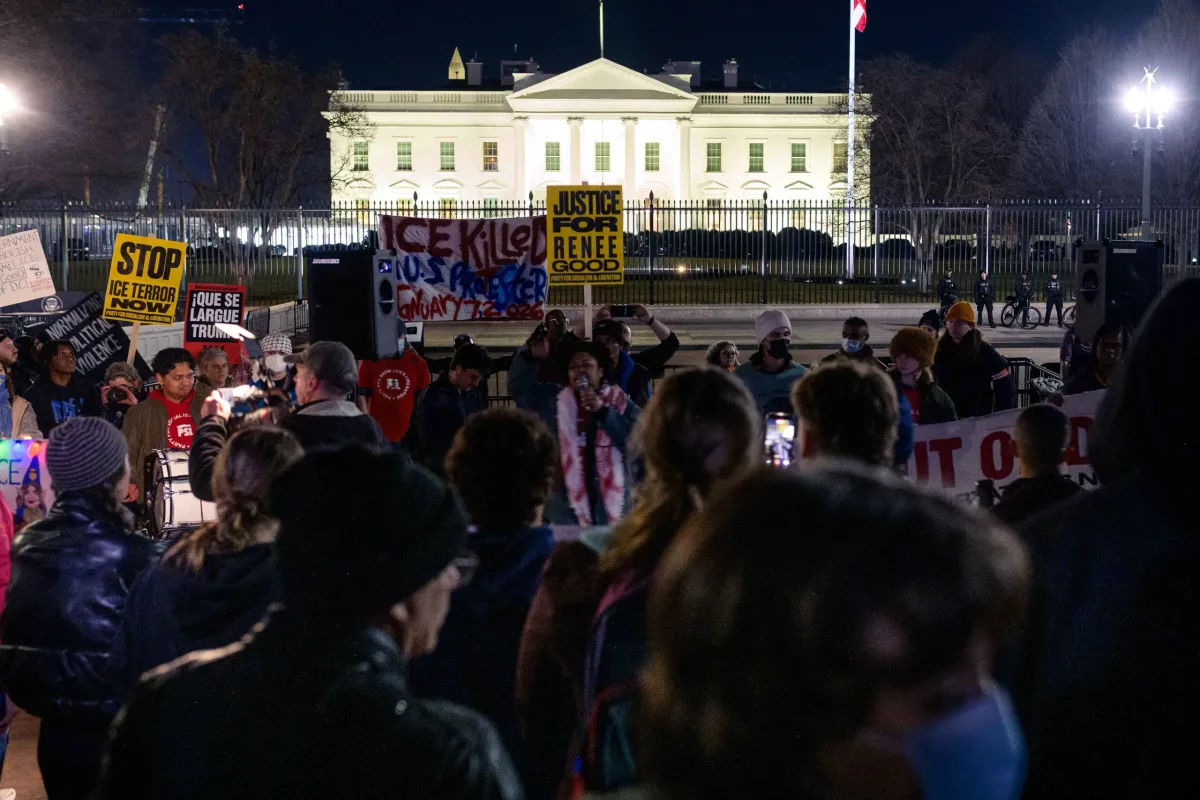
Thousands gathered in Minneapolis last weekend to protest the killing of Renee Nicole Good by an ICE agent. Her death is one of many — immigration enforcement continues to harm and kill with little accountability. But the response matters. When people take to the streets, they're drawing on something deeper than anger in the moment. They're tapping into a tradition that actually works.
Historians of Black liberation movements have documented this clearly: large-scale acts of revolt advanced freedom struggles. The pattern runs through American history. Jamon Jordan, reflecting on the George Floyd uprising, put it plainly: "There were hundreds of rebellions during the period of slavery — some small, some major. Rebellions worked. Today's protests are no different. They're modern-day uprisings, or rebellions, and part of every era of U.S. history."
Protest as resistance to oppression isn't new. The founding of the United States itself was rooted in it. What's changed isn't whether movements work — it's how organizers are learning to sustain them.
We're a new kind of news feed.
Regular news is designed to drain you. We're a non-profit built to restore you. Every story we publish is scored for impact, progress, and hope.
Start Your News DetoxBuilding Movements That Last
The activists reshaping resistance today have learned something the previous generation sometimes missed: anger alone doesn't build lasting change. It takes relationships. It takes care.
A generation of organizers has moved away from purely antagonistic tactics toward bridge-building. They're connecting struggles that might seem separate — linking climate destruction to imperialism, for instance. When Palestinian solidarity activists in Oregon launched campaigns against Chevron's role in Gaza, they didn't isolate the issue. Climate organizations, local chapters of Sunrise and 350, joined the boycott and divestment efforts. The connections multiplied the movement's reach.
This approach — weaving together struggles for justice across different communities — creates broader coalitions. It's not softer organizing. It's smarter. Movements sustained by genuine relationships and shared vision last longer and win more.
Right now, grassroots resistance to ICE is growing nationwide. Organizers are channeling that energy into sustained campaigns, not just one-off protests. They're building the kind of infrastructure that can weather setbacks and keep pushing for change. That's the work that actually shifts policy, that actually protects people.
The tradition is long. The methods are evolving. And the movements keep coming.