Imagine trying to capture the last whispers of a place before it gets a massive, very loud makeover. That's precisely what a team of bioacoustics researchers, led by Wendy Erb from Cornell, is doing in the forests of East Kalimantan, Indonesia.
For 18 months, they've planted audio recorders in 20 different spots — on mountains, tucked into caves, even nestled among mangroves. Their mission? To create an auditory snapshot of a vibrant rainforest, full of gibbon calls, frog croaks, and the distinct sounds of hornbills and insects, all before Nusantara, Indonesia's ambitious new capital city, completely changes the soundscape.
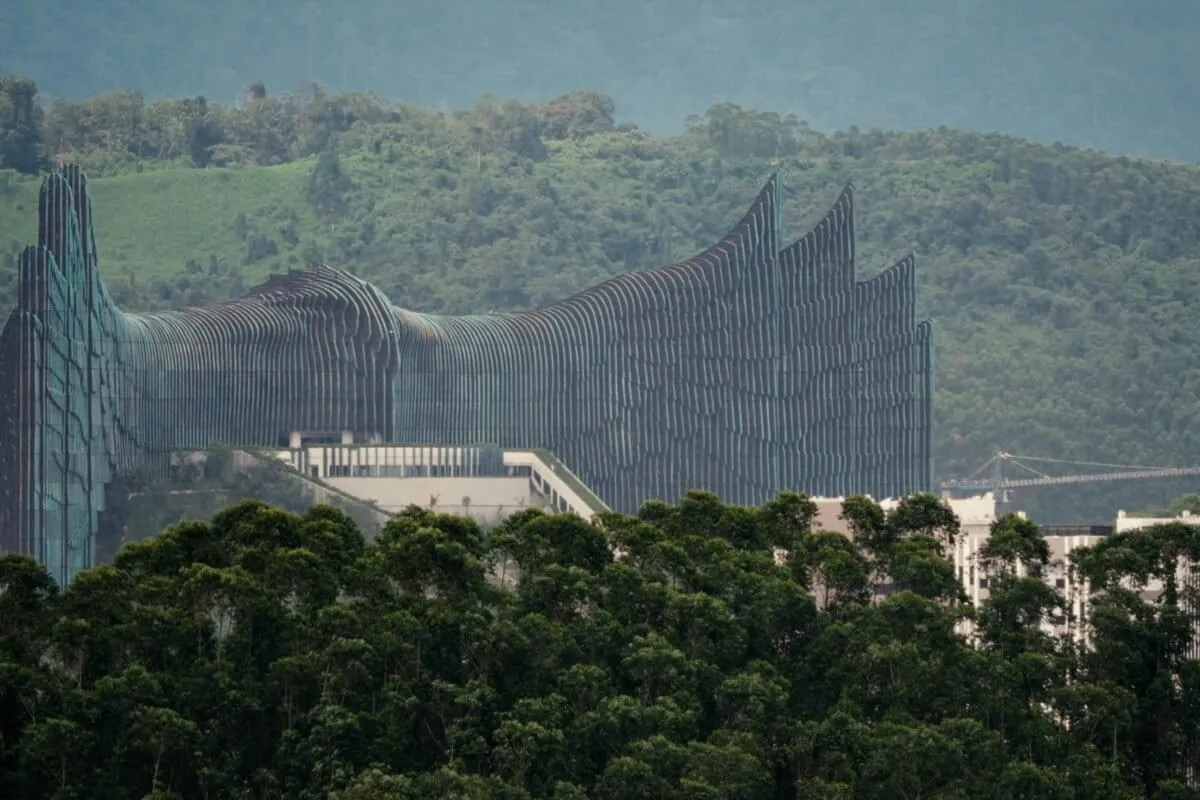
Nusantara is designed to be a gleaming "smart forest city," a solution to Jakarta's infamous traffic and rapidly sinking land. The idea is for nature and development to coexist, which sounds lovely on paper. In reality, the sounds of chainsaws, construction crews, and heavy machinery are already becoming part of the forest's natural symphony. Roads, buildings, a hotel, and even a presidential palace are all in various stages of becoming.
We're a new kind of news feed.
Regular news is designed to drain you. We're a non-profit built to restore you. Every story we publish is scored for impact, progress, and hope.
Start Your News DetoxThese recordings aren't just for posterity (though that's a nice bonus). They're crucial scientific data. By capturing the current soundscape, researchers can later compare it to future recordings, tracking where species thrive, where they vanish, and if the urban sprawl nudges them into new, perhaps less ideal, neighborhoods. It's an early warning system, highlighting exactly where conservation efforts will be most desperately needed.
Adding another layer of invaluable insight, the project also incorporates the knowledge of the Indigenous Balik people. For generations, they've relied on animal calls as a living clock and an early warning system. Gibbon calls, for instance, don't just signal dawn; unusual patterns were once believed to foretell a death in the village. It's a reminder that sometimes, the oldest wisdom is also the most scientific.