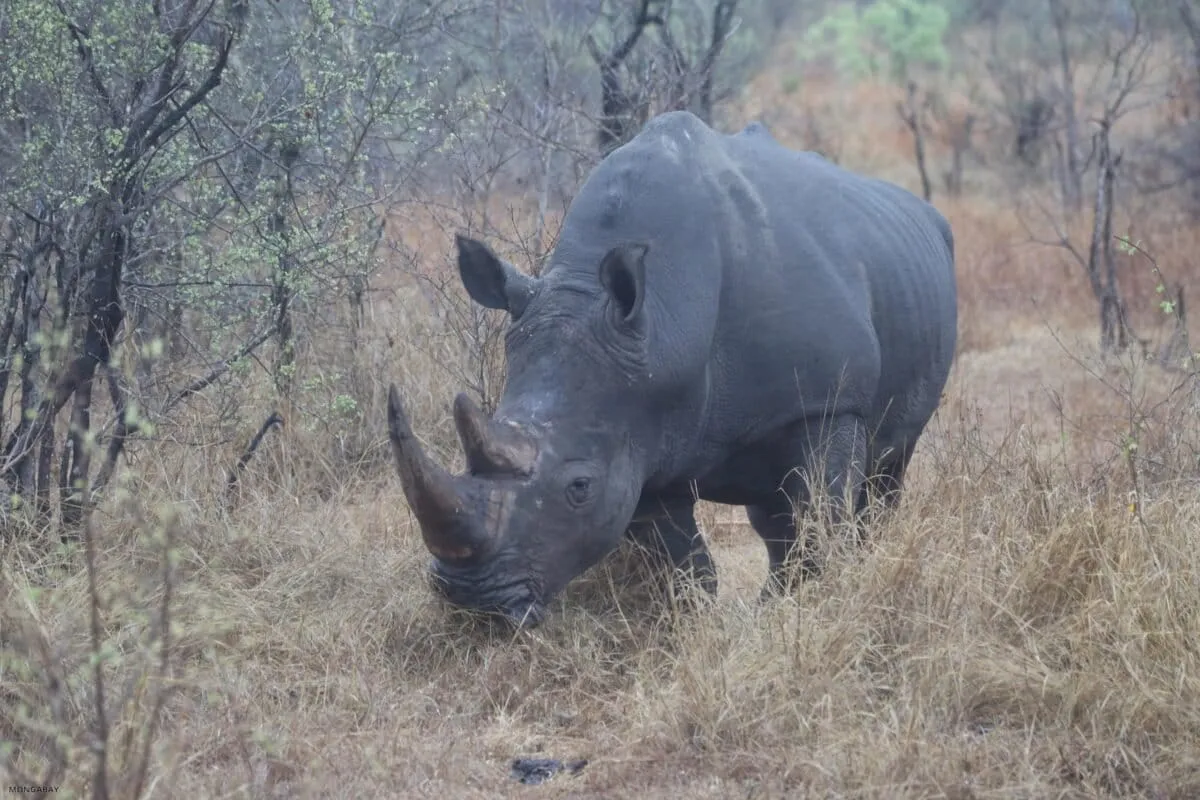
A male rhino named Thuza was bleeding from his eyes, rubbing them raw, going blind. He was also the future of a conservation experiment that had never been tried before in Zimbabwe.
Outside Hwange National Park, the Community Rhino Conservation Initiative had just begun reintroducing southern white rhinos to communal lands—the first time this had happened in the country's history. Losing Thuza to infection would have been more than a tragedy for one animal. It would have undermined the entire pilot program.
The Ridiculous Plan
The solution seemed impossible: get a wild rhinoceros into a chute and treat his eyes with drops. "We didn't think of it; it was a completely ridiculous idea to us," said Daniel Terblanche, a security manager with Imvelo Safari Lodges, which supported the initiative.
We're a new kind of news feed.
Regular news is designed to drain you. We're a non-profit built to restore you. Every story we publish is scored for impact, progress, and hope.
Start Your News DetoxBut Mark Butcher, managing director of Imvelo, knew they had to try. "This rhino had bleeding eyes. He was rubbing his eyes," Butcher said. "And I was looking at a potential where this guy was gonna lose his eyesight. And this is in a pilot project that's got fantastic vision for a future for conservation throughout Africa."
The team reached across an ocean for help. Thad and Angi Lacinak, founders of Precision Behavior and animal behaviorists from the Palm Beach Zoo & Conservation Society in Florida, traveled to Africa to make the impossible work.
They succeeded. The team managed to administer the necessary eye treatments to Thuza, saving his sight and, with it, the credibility of the reintroduction program itself. "Without trying all of the things that we could to rectify that situation, we would have been in trouble," Terblanche reflected.
What makes this moment worth noting isn't just that one rhino kept his eyes. It's that the solution required exactly what conservation increasingly demands: experts from different continents, different disciplines, willing to try something that sounds absurd until it works. Thuza's recovery means the pilot program continues. And that means Zimbabwe's communal lands get a second chance at hosting a species that had vanished from them.