Engineers have a long history of stealing nature's best ideas – from armadillos inspiring armor to elephants lending their trunks to robot arms. Because, let's be honest, nature's had a few billion years to perfect its designs. Now, researchers at NYU Tandon School of Engineering have looked to the ultimate underwater experts: fish.
Their mission? To build a robot that doesn't just look like a fish but moves like one, too. And crucially, one that can scale up or down to fit any body of water, from a babbling brook to the vast expanse of Lake Geneva.
No Propellers, Just Pure Fish Logic
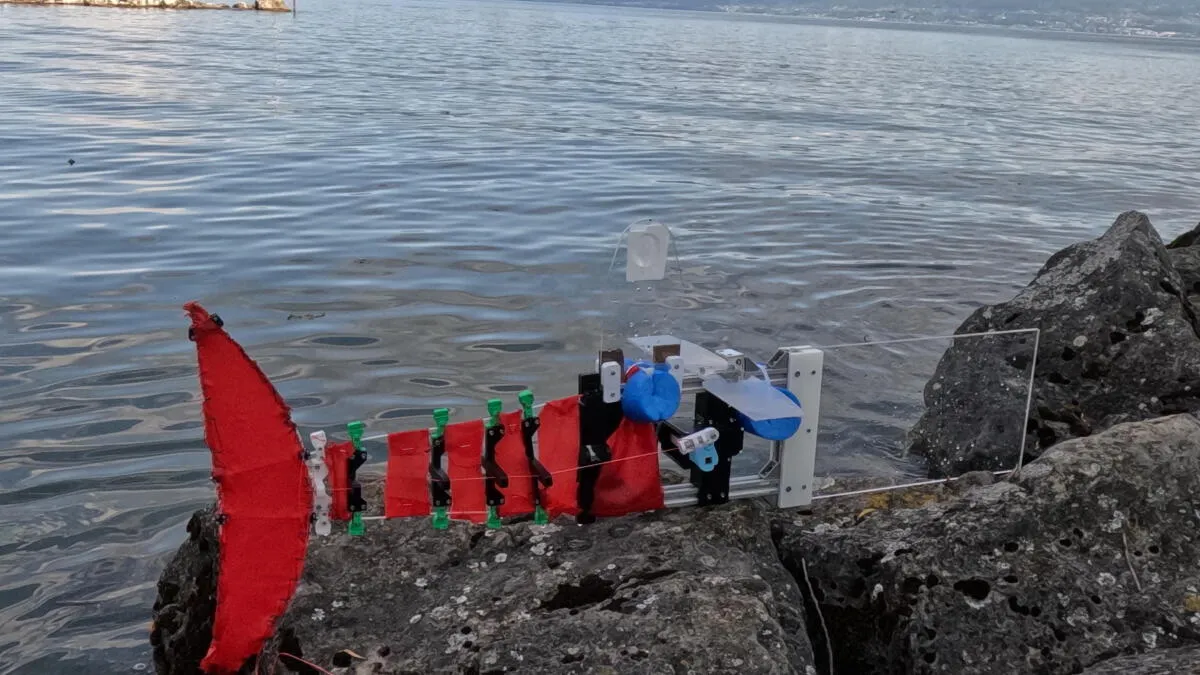
Meet ScaFi. Unlike most underwater robots that churn through water with noisy, plant-snagging propellers, ScaFi glides. Its secret is pure biomimicry: it bends its body in an S-shape, just like a real fish. The motor and electronics live in its head, pulling on two tendons that cross near the tail. This simple mechanism makes the fiberglass-and-fabric tail undulate, silently pushing the robot forward. No tangled weeds, no spooked fish, just smooth, quiet progress.
We're a new kind of news feed.
Regular news is designed to drain you. We're a non-profit built to restore you. Every story we publish is scored for impact, progress, and hope.
Start Your News DetoxBut the real party trick isn't just how it swims; it's how big it can get. Or how small. Normally, redesigning a robot for different sizes means starting from scratch. ScaFi laughs in the face of such inefficiency. Its core motor and tendon system remains the same, no matter the size. Engineers simply swap out the tail rods for thicker or thinner ones, adjusting the length, and boom – a whole new fish.
The team built three versions: 0.6, 1.1, and 2.9 meters long. They then unleashed them. The smallest explored creeks, the mid-sized took on a Swiss stream, and the largest bravely swam in Lake Geneva. All three kept swimming even when their GPS signals gave up the ghost – which, if you think about it, is a pretty good trait for an exploration bot.
While smaller versions were more agile (and more fish-like in their movements), the largest ScaFi was a bit less nimble and more energy-hungry. But it made up for it with impressive stability in currents, proving that even big, slightly lumbering fish have their place. The next challenge: making them all equally energy-efficient. Because who wants a giant robot fish with a tiny battery life? Not us.