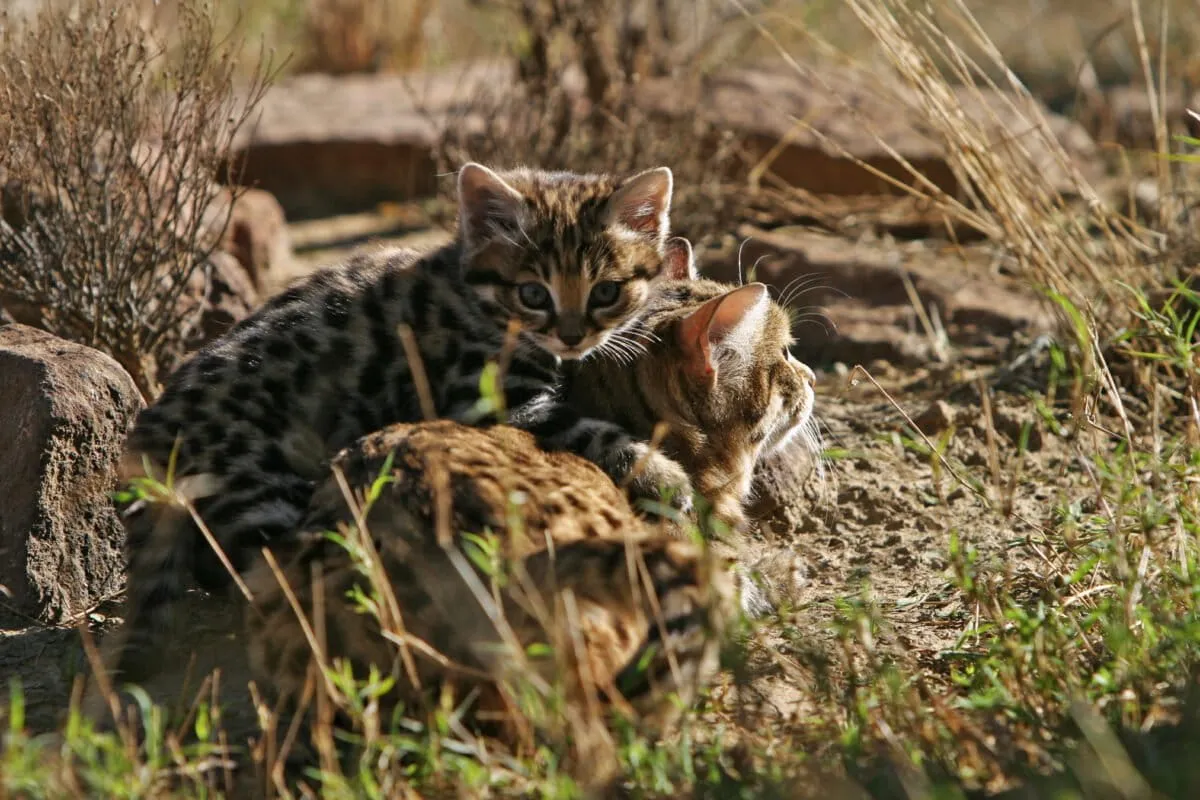
Under cover of night, a black-footed cat moves almost invisibly through the grasses of southern Namibia, hunting small rodents, birds and insects. Barely a third the size of a domestic cat, its tawny coat speckled with dark spots helps it vanish into the darkened landscape. By day, it does something most felines won't: it folds its small body into abandoned burrows and tunnels dug by other animals.
Felis nigripes — Africa's smallest wildcat — covers enormous territory for its size. Female territories span anywhere from 10 to more than 80 square kilometers depending on prey availability, while males roam between 15 and 90 km². That's a lot of ground for an animal you could hold in your hands. "It's really small, but very active and unique in its nocturnal behavior," says Alexander Sliwa, project leader for the Black-footed Cat Working Group, an international network monitoring wild populations.
Survival Through Hidden Partnerships
Newly published research reveals the quiet genius of black-footed cat survival: they depend entirely on burrows dug by springhares, large rodents native to southern Africa. Female black-footed cats rotate among multiple dens, and once kittens start moving, mothers switch shelters almost daily. This constant shuffling isn't random — it's a survival strategy that reduces predation risk and prevents predators from tracking their scent back to vulnerable young.
We're a new kind of news feed.
Regular news is designed to drain you. We're a non-profit built to restore you. Every story we publish is scored for impact, progress, and hope.
Start Your News DetoxIt's a reminder that survival in harsh, semi-arid landscapes isn't about solitary strength. It's about invisible interdependencies. The black-footed cat thrives across Namibia, Botswana, and South Africa not because it's the toughest hunter, but because it understands how to use what the landscape offers — including the architectural work of animals it will never hunt.
As habitat pressures mount across southern Africa, understanding these relationships becomes crucial. The survival of the world's smallest wildcat isn't just about protecting the cat itself, but about preserving the entire web of creatures that make its existence possible.