Prepare yourselves, England. The days of playing recycling roulette with your local council are officially numbered. Starting March 31, the government's new "Simpler Recycling" legislation kicks in, promising to bring some much-needed uniformity to your bins.
Because, let's be honest, trying to figure out what goes where has been an Olympic sport in itself. One town's treasure was another's landfill fodder. No more. Or, at least, that's the plan.
Finally, a National Standard
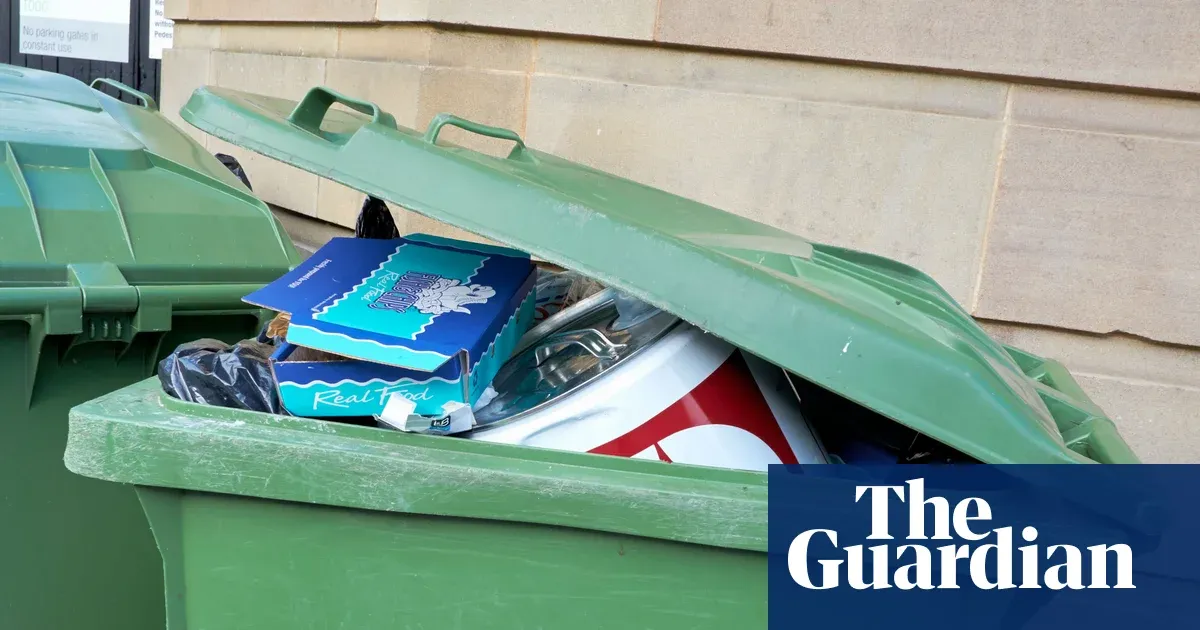
Under the new rules, councils across England are now mandated to collect certain waste streams separately. This means dedicated bins for food, garden waste, paper, card, and other dry recyclables like glass, metal, plastic, and cartons. Even non-recyclables get their own designated collection. And yes, this applies to all homes, including flats, so no more hiding behind apartment block ambiguity.
We're a new kind of news feed.
Regular news is designed to drain you. We're a non-profit built to restore you. Every story we publish is scored for impact, progress, and hope.
Start Your News DetoxThis isn't just about tidiness; it's a desperate plea to boost England's stubbornly stagnant recycling rates, which have been stuck around 44% for years. Meanwhile, Wales is showing off at 57% and Northern Ireland at 50%. The government's ambitious target? A cool 65% by 2035. An environment minister, Mary Creagh, mentioned councils even got more cash this year to help them get their act together.
Once collected, your meticulously sorted waste heads to facilities where magnets, scanners, and air jets perform a high-tech dance to separate everything. Then it's pressed into bales, ready to be reborn as new products.
Here's where it gets a bit murky: roughly half of the UK's recycled plastic gets shipped overseas, with Turkey, the Netherlands, and Malaysia being popular destinations. Turns out, plastic waste exports to developing nations shot up last year. Which, if you think about it, is less than ideal.
Some in the industry are less than thrilled, arguing that all this exporting stifles the UK's own recycling sector – a sector that could be worth £2 billion and create around 5,000 jobs. Over the past two years, 21 plastic recycling plants in the UK have shut down, blaming exports, low prices for new plastic, and cheap imports from Asia. The EU has banned plastic waste exports to developing countries, but the UK hasn't quite followed suit, despite previous promises. Meanwhile, 3.4 to 4.3 million tonnes of paper and cardboard waste are exported annually for recycling.
Your Food Waste, Reimagined
One of the biggest shifts is how we deal with food waste. From March 31, all councils must provide weekly, free food waste collection. You'll likely get two bins: a dinky one for the kitchen counter and a larger one for outside. Because, apparently, we're all going to be very intimate with our banana peels now.
When food waste is recycled separately, it doesn't just sit there stinking up a landfill. It can be transformed into renewable energy and biofertilizer for farms. This is crucial because when food waste rots in landfills, it belches out greenhouse gases, particularly methane – a gas far more potent than carbon dioxide. Plus, having a dedicated food bin might just make us all a bit more conscious of how much we're actually tossing.
Historically, recycling rules were a chaotic patchwork of local policies, infrastructure, and housing types. Some areas collected weekly, others bi-weekly. Some wanted you to separate everything, others preferred a mixed bag. This inconsistency, unsurprisingly, led to wildly different recycling rates. The new legislation aims to iron out those wrinkles.
While 31 councils have managed to snag special permission to delay food waste collection past March 31, all councils must hit the deadline for dry recycling collections – that's your glass, metal, plastic, paper, and card. So, no excuses there.
And a quick PSA: those "biodegradable" or "compostable" plastics? Keep them out of your regular recycling. They're made from different stuff and can contaminate an entire batch. Same goes for throwing recyclables in the general waste; they'll likely just end up in a landfill or incinerator, releasing more of those pesky greenhouse gases.
Oh, and those toothpaste tubes that used to be a recycling enigma? Thanks to a global waste organization called Wrap, most are now 100% recyclable. Check your local council, or if they're still playing catch-up, Boots stores are also collecting them. Because even our dental hygiene deserves a second life.