
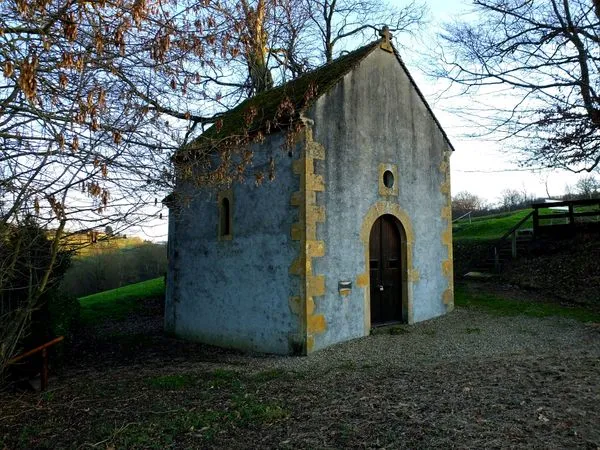
Perched on a remote hill in southern Burgundy, France, sits the tiny Saint-Thibault Chapel. Its exact age? A mystery. Its original purpose? Also a mystery. All we know for sure is that by 1672, it was already a ruin on a map. Because, apparently, even then, some places just existed to be enigmas.
The OG Pilgrim Stop
The chapel mostly kept to itself until 1870. That's when the local parish of Gueugnon decided, "Hey, this forgotten ruin would make a great starting line for pilgrimages!" They'd trek from there to places like Lourdes or even the Camino de Santiago. Which, if you think about it, is a pretty ambitious starting line.
It was likely always a pilgrim hotspot. The chapel is dedicated to Saint Thibault, a famous pilgrim from the 11th century who walked the Camino de Santiago himself. Inside and out, you'll find stone carvings of scallop shells — the ancient equivalent of a Camino bumper sticker.
We're a new kind of news feed.
Regular news is designed to drain you. We're a non-profit built to restore you. Every story we publish is scored for impact, progress, and hope.
Start Your News DetoxAfter its brief moment in the pilgrimage spotlight, the chapel once again embraced its inner recluse and fell into disrepair. Then, in 1997, someone said, "Wait, what's that?" It was rediscovered, renovated, and given viewing windows in the doors. Because even a forgotten chapel deserves a little curb appeal. Today, it's mostly empty, save for one open-air service a year. Talk about exclusive.
And for those seeking a little extra oomph, halfway up the hill is the Saint Thibault spring. Locals swear its water has healing powers. Pilgrims, presumably, just appreciate a good rest stop with potential magical benefits.
The Tree That Got a Haircut (for Centuries)
Next to the chapel stands a chestnut tree so old, its trunk is hollowed out like a tiny cave. Its bizarre, ancient shape isn't some natural anomaly; it's the result of centuries of very specific, very French, tree-trimming. Back in the day, farmers couldn't cut down trees. So, they repeatedly lopped off branches for firewood, and to let light into their fields. Imagine getting the same haircut for 500 years.
This practice eventually deformed the tree into what locals call an "écornât," from the word "écorner," meaning "to cut something off." Which, for a tree that's literally had bits cut off for centuries, is both accurate and a bit of an understatement. It's a living monument to human ingenuity and a tree's stubborn refusal to die.