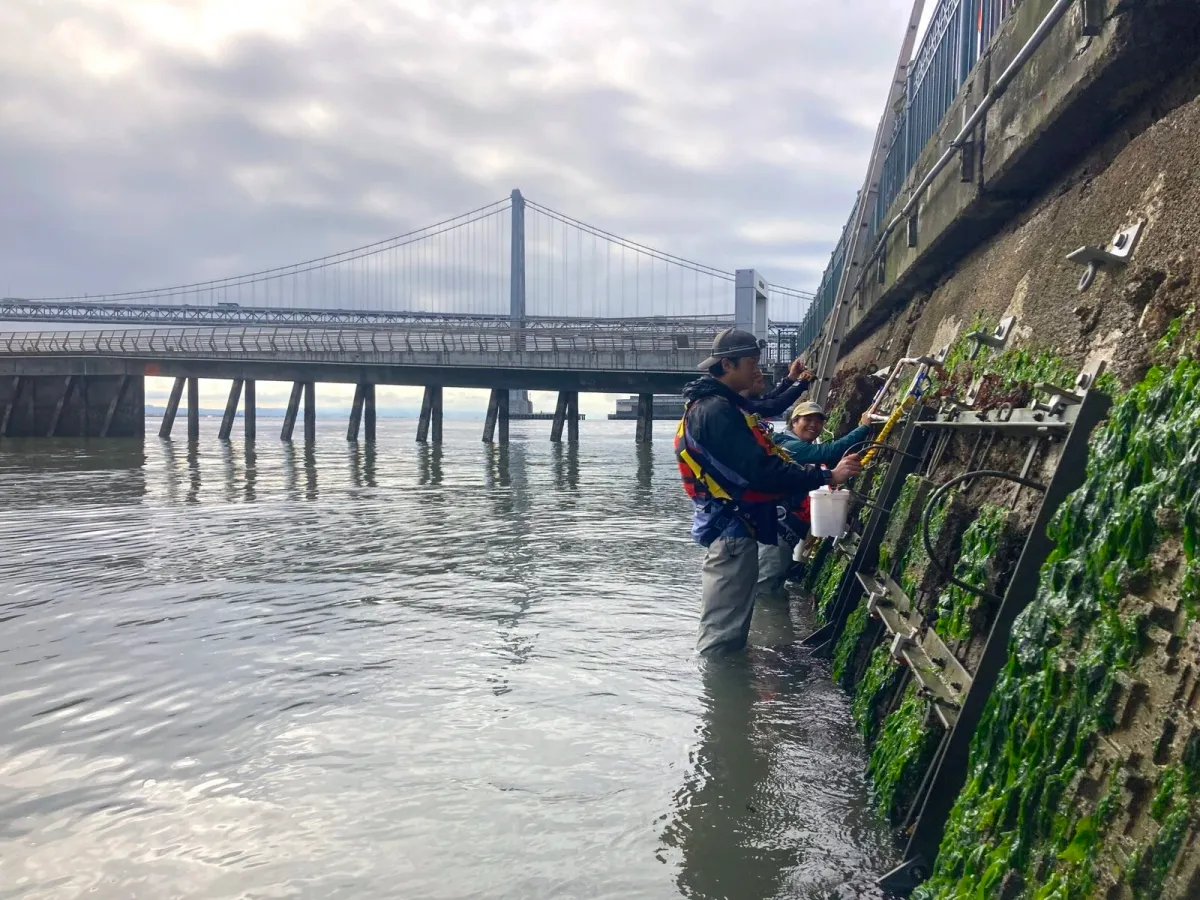
Last July, a team gathered along the San Francisco Embarcadero. They watched as Port staff removed concrete tiles from the waterfront wall. These tiles had been there for three years.
The tiles, once bare, were now covered in colorful seaweeds, oysters, limpets, and crabs. These tiles are part of a big plan to rebuild San Francisco's old seawall, focusing on marine life.
A New Approach to Seawalls
The San Francisco Port's Living Seawall Pilot Project is a team effort. It involves the Smithsonian Environmental Research Center (SERC) and the Port of San Francisco. They were inspired by successful living seawalls in other places, like Seattle's Elliott Bay.
We're a new kind of news feed.
Regular news is designed to drain you. We're a non-profit built to restore you. Every story we publish is scored for impact, progress, and hope.
Start Your News DetoxMuch of San Francisco's current waterfront is man-made. It doesn't offer much natural protection from waves, erosion, or flooding. A natural shoreline would have a gentle slope with lots of intertidal growth, explained Brad Benson, the Port's waterfront resilience program director.
Hard, steep man-made shorelines support less biodiversity. This includes birds, fish, and marine mammals, noted Andy Chang, a lead scientist on the project. Even without a slope, a seawall with habitable areas could boost biodiversity. It could help native seaweeds, mollusks, and plankton resist invasive species like brown kelp and European green crabs.
San Francisco's seawall is a three-mile concrete structure built between 1878 and 1915. It hasn't had major damage yet. However, its age and the eroding soil beneath it make rebuilding urgent. Rising sea levels are also a big concern.
Benson explained that the area has seen about nine inches of sea-level rise in the last century. This causes flooding around the Ferry Building during king tides.
The Living Seawall pilot aims to increase the natural biodiversity of the San Francisco Bay waterfront. It also seeks to strengthen its ability to handle climate change. The three-year tile experiment tested different possibilities.
Chang noted that when a seawall is necessary, engineering options are limited. He said adding features like texture, shelving, or small tidepools can create better habitats and promote more diverse species.
Testing the Tiles
ECOncrete, a company founded by marine biologists, provided special concrete for the tiles. This concrete is designed to reduce the harmful effects of industrial concrete. Dr. Ido Sella, the company's co-founder, said that concrete makes up at least 70% of the world's marine structures. This has a huge impact on coastal marine life. Standard concrete seawalls are often smooth and don't offer places for organisms to grow. Also, making standard concrete releases a lot of carbon.
SERC tested three types of tiles in three different Bay areas. They wanted to see which ones marine life preferred. The tiles were:
- Standard concrete
- Smooth ECOncrete
- Textured ECOncrete with ridges and small shelves

While the tiles were submerged, SERC team members regularly visited each site. They took photos, recorded marine life, tested water conditions, and collected samples. These visits were often challenging, happening before dawn or after dark in hard-to-reach places. Chang described the experience as "exhilarating," despite being cold and wet.
The seaweed-covered tiles from the Embarcadero show promising results. The textured ECOncrete tiles attracted and supported many native seaweeds, shellfish, sea snails, and small fish. This is a big plus for the San Francisco Bay, which is known as one of the world's most invaded bays, Chang pointed out.
These tiles highlight how natural and man-made marine ecosystems are connected.
Looking Ahead
Adding habitable surfaces to the Bay's seawalls and piers won't stop sea-level rise. However, it will help lessen the negative effects that the original structures had on native oyster, limpet, and seaweed populations.
The seawall project also allows marine life to help protect their industrialized habitats. They can act as buffers against weathering, help absorb carbon, and purify water. These are all vital functions within the larger ecosystem.
The Port is still waiting for the official scientific report from the pilot project. However, Benson estimates that nearly three miles of the Port's upcoming 7.5-mile flood plan will include nature-based engineering solutions, like living seawall features.
Benson said they want to show the public that these resilience investments do more than just reduce flood and earthquake risks. They also make the waterfront a better place.