Imagine a material so incredible it can help heal burn wounds and even repair damaged nerves. Now imagine that material comes from something you probably shoo out of your bathroom: spider webs. Scientists are looking to our eight-legged friends for the next big leap in medical tech.
Spider silk has been a scientific obsession for decades, and for good reason. It's not just strong; it's a marvel of natural engineering that could revolutionize how we treat some truly nasty injuries.
Not All Silk Is Created Equal
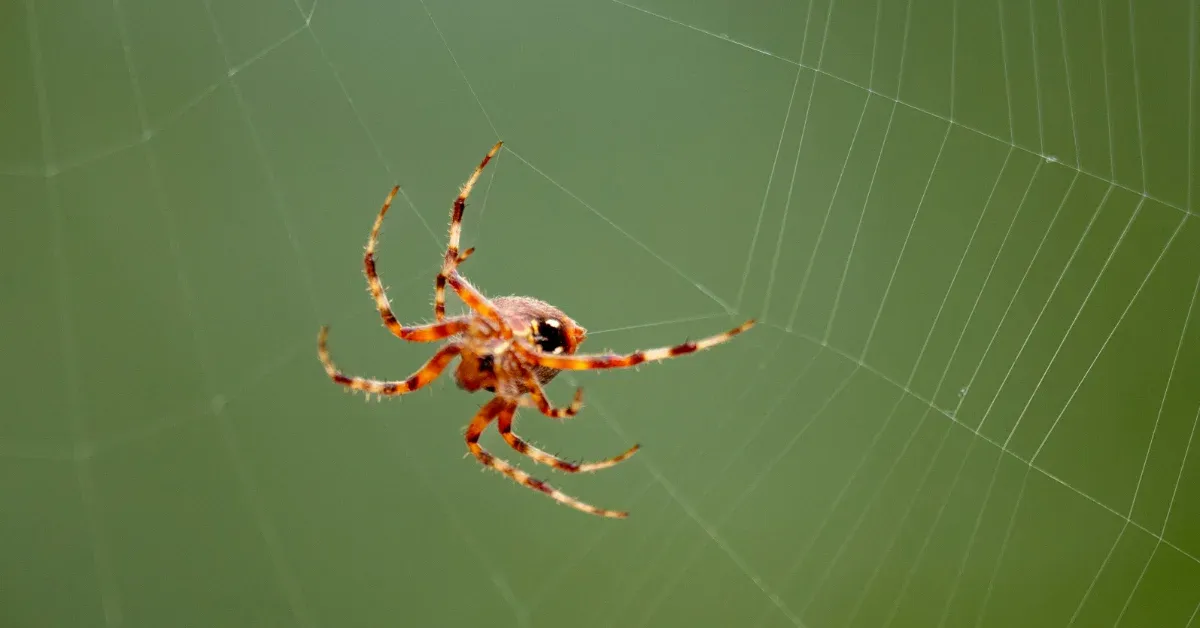
When you see a spider web, it looks like one uniform thing. But that's like saying a skyscraper is just one big brick. A web is a sophisticated structure built from several different types of silk, each with its own specific job. Even spiders that don't spin webs for dinner still use silk for everything from safety lines to comfy egg cases.
We're a new kind of news feed.
Regular news is designed to drain you. We're a non-profit built to restore you. Every story we publish is scored for impact, progress, and hope.
Start Your News DetoxTake the orb-weaver, for instance. Its classic wheel-shaped web is a masterclass in material diversity:
- The backbone? Super strong silk for the frame and spokes.
- The sticky trap? Stretchy silk that ensnares unfortunate insects.
- The nursery? Other silks protect precious eggs.
- The temporary scaffolding? A kind of throwaway silk used during construction.
That sticky stuff on the capture spiral isn't just glue; it's a carefully balanced cocktail of proteins, water, salts, and tiny molecules designed to stay soft and incredibly adhesive. Because apparently, even spider silk has a secret sauce.
From Liquid Glands to Life-Saving Fibers
At its core, spider silk is made of large proteins called spidroins. These aren't just simple chains; they're like molecular LEGOs with stiff blocks connected by stretchy springs. This gives some silks a one-two punch of strength (it takes a lot to break them) and toughness (they absorb a ton of energy before snapping).
Consider the Darwin's bark spider, whose silk is so tough it builds webs across entire rivers, with bridge lines stretching up to 80 feet. One study found its dragline silk could absorb ten times more energy than Kevlar, pound for pound. Which, if you think about it, is both impressive and slightly terrifying.
Now, before you picture a human-sized spider web stopping a car, remember these threads are incredibly thin. A whole web contains very little silk, so you can still walk through one (and then do the frantic spider dance). The real wonder is how these properties perform at a microscopic scale.
Spiders don't just have spools of ready-made thread. They store concentrated silk proteins as a liquid in glands. As this liquid moves through a narrow tube, water is removed, pH levels change, and ions shift. This precise, elegant process transforms the liquid into a solid fiber, all at room temperature, using just water. No harsh chemicals, no industrial heat. Nature's own high-tech manufacturing plant.
The Medical Marvel of Engineered Silk
Scientists aren't trying to harvest silk from millions of spiders (thank goodness). Instead, they're taking the silk genes and putting them into bacteria or other cells. These cells then churn out engineered silk proteins. Researchers can then mold these proteins into particles, films, gels, fibers, and porous scaffolds — essentially, whatever shape the medical problem demands.
For drug delivery, silk can act like a tiny, time-release capsule, slowly letting medicine out into the body. One lab study saw engineered spider-silk particles steadily releasing molecules for about two weeks. Imagine a material that not only protects delicate drugs like insulin but also breaks down naturally once its job is done.
Then there's the scaffold concept: a temporary 3D framework that tells cells, "Hey, come here, grow, and organize yourselves!" Scientists can add signals to these engineered silk scaffolds that specifically tell cells to attach. Depending on the injury, this scaffold could cover a severe burn wound or even bridge damaged tissue inside the body, guiding nerve repair. Animal studies are already showing promising results for burn wounds, and lab studies are exploring nerve regeneration.
While Spider-Man gives us the entertainment, real spiders are quietly delivering some of the most incredible material science the world has ever seen. And it might just be the future of healing.