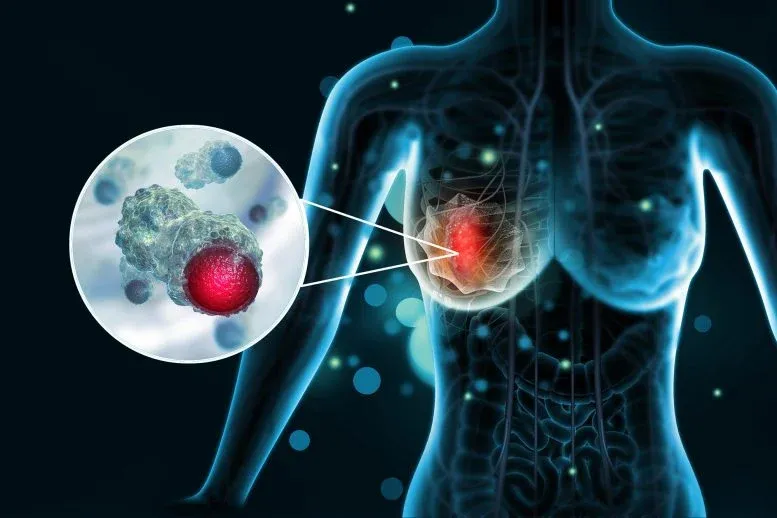
Good news for anyone already using GLP-1 drugs for weight loss or type 2 diabetes: your medication might be doing double duty. New research suggests these popular drugs could reduce a woman's breast cancer risk by a significant 30%.
Yes, you read that right. While we've been focused on the waistline-trimming benefits, it turns out these medications might be quietly fighting off cancer cells, too. Let that satisfying number sink in.
This isn't just a hunch. A study presented at the 2026 American Society of Clinical Oncology (ASCO) Annual Meeting and published in JCO Oncology Practice crunched the numbers on over 110,000 women. Dr. Elizabeth McDonald from the University of Pennsylvania, who led the charge, notes that while it's not a definitive 'proof,' it's a pretty strong hint.
We're a new kind of news feed.
Regular news is designed to drain you. We're a non-profit built to restore you. Every story we publish is scored for impact, progress, and hope.
Start Your News DetoxHow Your Body Gets a Little GLP-1 Boost
So, what exactly are these GLP-1 drugs doing? They're essentially impersonating a natural hormone in your body that's a master at managing blood sugar and taming your appetite. They started life as diabetes meds, then became the darlings of weight management. Now, cancer prevention might be added to their growing resume.
Scientists have been whispering about a potential cancer link for a while, but this study adds some serious volume to the conversation. Dr. McDonald’s team is now gearing up for a full-blown clinical trial to see if these drugs can indeed prevent breast cancer in high-risk women, including those who’ve already faced the disease. Because apparently, these drugs affect a whole host of pathways linked to cancer, even though they weren't designed to be cancer fighters.
The Study That Made Scientists Nod
The researchers dove deep into the health records of 111,646 women, all with a BMI of 25 or higher (meaning they were overweight) and who had undergone breast imaging at Penn Medicine between January 2022 and June 2025.
Of this massive group, about 15,264 women were on GLP-1 medications, while the other 96,382 were not. To keep things fair and square, the team ran two analyses. One looked at everyone, and the other performed a matched analysis, pairing GLP-1 users with non-users who were practically twins in terms of age, race, BMI, and breast density. Because science loves a good control group.
Both analyses pointed to the same conclusion: lower breast cancer rates among the GLP-1 users. The full group saw a 35.1% lower chance, while the matched group showed a 30.5% reduction. Which, if you think about it, is both impressive and slightly terrifying that we're only just figuring this out.
The 'Why' Behind the 'What'
Part of the reason is straightforward: GLP-1s are fantastic at helping people lose weight. And as we all know, maintaining a healthy weight is a solid strategy for reducing breast cancer risk, especially after menopause. Less excess body weight equals less risk.
But there’s more to it. These drugs also dial down inflammation in the body. Scientists suspect that chronic, low-level inflammation can fuel breast cancer. Plus, GLP-1s might be triggering metabolic and genetic shifts that slow or even stop tumor growth. It’s a multi-pronged attack, apparently.
Currently, options for breast cancer prevention beyond regular screenings are pretty limited. Some high-risk individuals might consider surgery or medications like Tamoxifen, but those come with their own set of side effects. Given that millions of Americans are already on GLP-1 medications, these drugs could become a new, accessible tool in the cancer prevention arsenal, assuming future trials confirm these findings.
Dr. McDonald sums it up perfectly: "Ultimately, we want to find better options to prevent breast cancer. It’s been encouraging to see the survival rates for breast cancer improve over recent decades, and we’d love to see the same gains in prevention." Here's hoping the little shot that helps you fit into your jeans also helps you stay cancer-free.