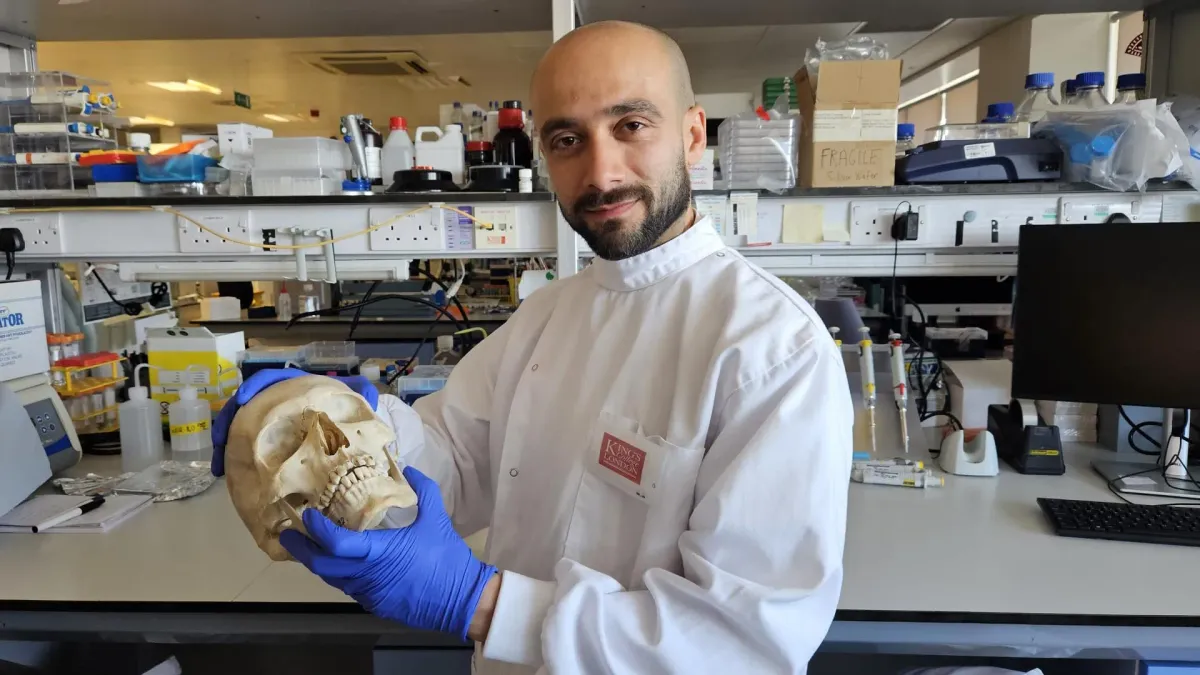
Scientists have found that wool could be a new, effective, and sustainable way to repair damaged bone. This research focuses on keratin, a natural protein found in wool.
When tested in animals, this wool-based material helped bones regrow. The new tissue looked more like healthy, natural bone compared to tissue grown with standard materials.
Wool: A Sustainable Solution for Bone Repair
Researchers at King's College London tested keratin from wool in animal models. They saw that it helped guide new bone growth in damaged areas.
We're a new kind of news feed.
Regular news is designed to drain you. We're a non-profit built to restore you. Every story we publish is scored for impact, progress, and hope.
Start Your News DetoxDr. Sherif Elsharkawy from King's Faculty of Dentistry, Oral & Craniofacial Sciences shared his excitement. He noted this is the first time a wool-based material has successfully repaired bones in a living animal.
Wool also offers a big advantage for the environment. It's a natural material that farmers often discard as waste. This makes it a renewable and widely available resource.
For many years, collagen has been the main material used in regenerative medicine and dentistry. Collagen scaffolds act like protective shields during healing. They stop soft tissue from getting in the way and give new bone space to grow.
However, collagen has some downsides. It's not very strong and can break down too quickly. This limits its use for bones that need to support weight or handle force. Getting collagen can also be complex and expensive.
Dr. Elsharkawy believes this is a major step for research. He said keratin could become a new type of material for regeneration, possibly replacing collagen.
Testing Wool Keratin for Bone Scaffolds
To see if keratin could be better, researchers made membranes from wool keratin. They treated the material chemically to make the scaffolds strong and stable.
First, they tested the membranes with human bone cells in the lab. The cells grew well and showed signs of healthy bone formation.
Next, the researchers moved to animal tests. They put the keratin membranes into rats with skull defects. These defects were too large to heal on their own. Over several weeks, the team watched how well the membranes helped new bone grow in the damaged spots.
Keratin Creates More Natural Bone
The results showed a key difference between keratin and collagen. Collagen membranes grew more bone overall. But the bone formed with keratin scaffolds was more organized and structurally sound. Its fibers were also better aligned, making the new tissue look more like natural, healthy bone.
The keratin membranes also stayed stable during healing. They blended well with the surrounding tissue. Both of these traits are important for future medical uses.
Dr. Elsharkawy concluded that they have successfully shown this technology works in animals. This means keratin can help bones regenerate in a living system. This brings the technology much closer to being used for patients.
Deep Dive & References
Scientists turn wool into sustainable material for bone repair - King's College London