


Ocean organisms have spent millions of years perfecting their sunscreen. Now scientists are finding that the same molecules algae and cyanobacteria use to shield themselves from harsh UV light might do something else entirely: protect your heart and slow visible aging.
Researchers at Meijo University isolated two compounds called mycosporine-like amino acids (MAAs) and tested them in the lab. What they found was unexpected. Beyond soaking up ultraviolet radiation, both compounds inhibited ACE — an enzyme that controls blood vessel constriction and blood pressure. This matters because most blood pressure medications work by blocking this same enzyme. "We discovered that MAAs can inhibit angiotensin-converting enzyme, suggesting a previously unrecognized potential for blood-pressure–related health benefits," says Prof. Hakuto Kageyama, who led the study published in Bioscience, Biotechnology, and Biochemistry.
The Details That Matter
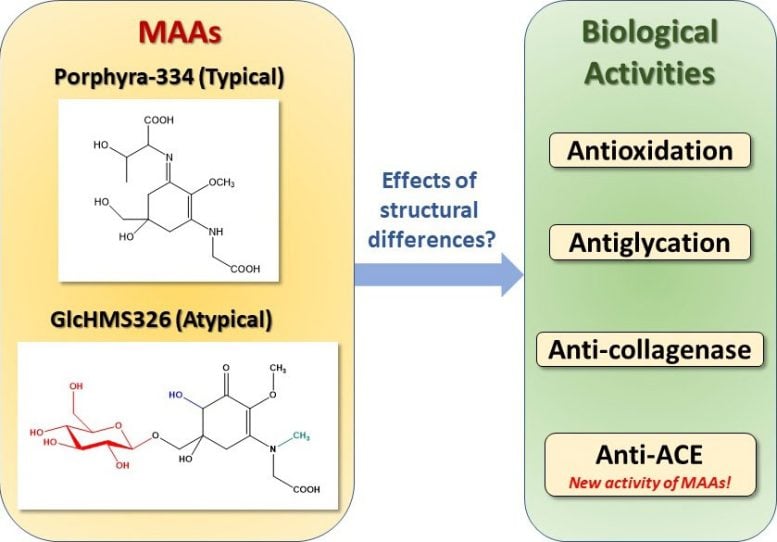
The two compounds came from different sources. Porphyra-334 was extracted from dried seaweed — the kind already eaten in many countries. GlcHMS326 came from a cyanobacterium collected at a hot spring in Thailand. The team exposed both to heat and light, then ran them through a battery of tests.
We're a new kind of news feed.
Regular news is designed to drain you. We're a non-profit built to restore you. Every story we publish is scored for impact, progress, and hope.
Start Your News DetoxOne compound proved especially good at neutralizing free radicals (the unstable molecules that damage cells and accelerate aging). GlcHMS326 worked slowly but steadily, suggesting longer-lasting protection. The other, porphyra-334, was less potent as an antioxidant but excelled at preventing glycation — the process where sugar molecules bind to proteins and make skin less flexible. When tested for collagenase inhibition (collagenase breaks down collagen and creates wrinkles), GlcHMS326 won again.
The ACE inhibition results were the real surprise. Neither compound was a powerhouse — the effects were moderate and measured only in lab conditions, not in living bodies. But this is the first time MAAs have shown this activity at all. "Chemical modifications can substantially shift their functional profiles," Kageyama notes, hinting that tweaking these molecules could amplify their effects.
Here's the practical angle: porphyra-334 is abundant in edible seaweed. People in coastal Asia have been eating it for centuries. That means the bioactive compounds might already be in your food, just unrecognized. The researchers are careful to emphasize that lab results don't automatically translate to human benefits — you can't yet pop a seaweed pill and expect your blood pressure to drop. But it's a starting point. Further studies in living organisms, and research into whether practical doses can be delivered through food or cosmetics, will determine whether this lab discovery becomes something you can actually use.
The research opens a new direction: nature's sun-protective chemistry might be doing more work than we realized, and small structural differences between compounds could unlock very different health benefits.





